
Articles
Here is where you’ll find all the latest print features from our contributors. If you’d like to browse specifically by grade level, topic, or contributor, you can use the links in the right sidebar.
Latest Content
Talking Through Characters
Melanie Meehan shares activities that help students talk about their characters before writing about them in a realistic fiction unit.

Moving from Whole-Class Texts to Independent Reading: Characterization
Gretchen Schroeder offers a starting point to help her high school students prepare to write an in-depth character analysis essay.

The Shades of Sadness: Character Feelings and Traits
Melissa Quimby is disappointed with the way her students expressed depth of character traits and feelings. By building on their strengths, Melissa creates a tool for students to use and adapt as they learn to be more specific and intentional about describing characters.

Choice Literacy Writing Guidelines
Are you interested in writing for Choice Literacy? Here are our guidelines.
Personal Touches Early in the Year – Classroom Design Photo Essay Series
Make it personal with these lovely design suggestions from "The Sisters" for bringing students' homes into your classroom.

I Think, I Wonder, I Understand: Making Sense of the Work of Literacy Coaches
Jan Miller Burkins works with colleagues to develop the “I Think I Wonder I Understand” reflective tool for literacy coaches.

Unlocking Student Thinking: The Power of Problem Posing in Story Problem Contexts
Choice Numeracy | Problem posing is a strategy that involves students creating mathematical problems to solve or reworking given problems to change them in some way. Mallory Messenger shows how this strategy allows students to explore and test their current thinking. Download the Problem Posing with Problem Stems Recording Sheet to get started in your classroom.

Picture Books for Naming Emotions
Mandy Robek continues her series on picture books for understanding emotional turmoil in students. In this installment, she shares a list of books that can help children name emotions.
Activities Linking Books and Visual Learners for Early in the Year
What are the best books for the visual learners in your classroom? Carol Wilcox draws on her experience as a mom to two boys who do not love her “world of words” in coming up with suggestions.
Writer’s Workshop: Planning for “Dips”
We love seeing growth, but how can we plan for plateaus or even dips with young writers? Aimee Buckner finds it's all about commitment.

Connecting with Students at Home
Julie Johnson learns some important lessons about connecting with students remotely, and few of them are about technology.

Forming Groups Using a Planner
Dana Murphy explains how her small-group planner is an essential tool for organizing groups in her fourth-grade classroom.

The 4 Fs of Assessment
Justin Stygles describes the four crucial components of effective assessment.

Haiku Writing
Mandy Robek shares the power of publishing poetry with her young writers.
Helping Kids Lead Every Day: Changing Who “Owns” Small Groups in the Classroom
Tammy Mulligan knows the most productive and engaging discussions to build reading comprehension are not monopolized by the teacher. She creates a structure to support students to engage in deeper work with each other in small groups. This is the first part of a three-part series.

Student-Led Conferences from Many Perspectives
Jennifer Schwanke and Franki Sibberson share four perspectives on student-led conferences — teacher, principal, student, and parent.
Overcoming: Helping Students Process Covid Feelings
Julie Cox reminds us that for many students, the loneliness and fear of COVID years clings like smoke, and they don’t always have the language to talk about it. While we have worked hard at helping students reclaim content knowledge, we must also help them express and process feelings they might not know how to recognize.

Using Whiteboards Before Writer’s Notebooks
Jen Court shares the way whiteboards and conversation lifted pressure from student writers so they could create poetry.

Giving Writers What They Need
Tara Barnett and Kate Mills are inspired by their own writing retreat experience to give students exactly what they need to thrive as writers. Take their advice to help writers thrive in your classroom, too.

Avoiding Implementation Through Lamination
Jennifer Schwanke questions the routines of how wall displays are used in classrooms.
Magnifying the Moment
Jodie Bailey breaks down how to magnify a moment to highlight key understandings during classroom discourse. By focusing on the words embrace, engage, and empower, a variety of different ideas can be uplifted.
Maximizing Instructional Time at the Start of a New Unit
Time is precious in classrooms, so Melanie Meehan shares strategies to ensure it isn't wasted at the start of new writing units by teaching skills students may already possess.

Instructional Routines That Promote Agency for Multilingual Learners
Cultivating agency is a matter of building small, intentional moves that ask students to be part of the learning process. Stella Villalba offers three ways educators can support the growth of multilingual learners in all learning spaces.

Shake It Up: Active Learning Strategies That Engage Students
When Gretchen Schroeder found herself wanting to make her lessons fun and enjoyable, she realized she was focused on trying to entertain and dazzle rather than facilitate learning. She offers three ways to help students be active learners through conversations, reflection, and collaboration.
Choice in Assessment
Christy Rush-Levine explores the way a shift in assessment questions can give students ownership of their thinking and responsibility for developing meaning from a text.
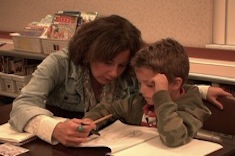
Field Experience: Kindergarten Writers
Spend time with the youngest writers and you will be mesmerized by their writing processes. Ruth Ayres assembled a field experience focused on kindergarten writers.
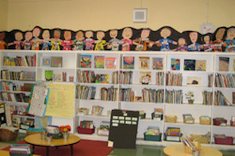
Classroom Tours: Learning from Colleagues
Barbara Coleman finds classroom tours are a terrific professional development activity early in the year, fostering unexpected collaboration among colleagues.
Writing Workshop Teacherisms
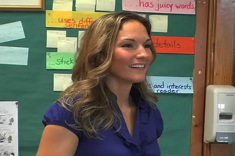
Jennifer Jones reflects upon the “teacherisms” in writing workshops — the language we use that defines our values and routines.
Browse Content By
Type
Category
- Assessment Tools
- Big Fresh Archives
- Booklists
- Choice Numeracy
- Classroom Design
- Common Core
- Community Building
- Conferring
- Content Literacy
- Digital Literacy
- English Language Learners
- Equity
- Family Relations
- Free Samples
- Guiding Groups
- Leadership
- Literacy Coaches
- Mentor Texts
- Minilessons
- New Teacher Mentors
- Podcasts
- Poetry
- Quote Collections
- Reading Strategies
- Self Care
- Struggling and Striving Learners
- Talking and Listening
- Teacher Study Groups
- Teaching Reading
- Teaching Writing
- Word Study and Vocabulary
Author
- Melissa Quimby
- Nawal Qarooni
- Gwen Blumberg
- Julie Cox
- The Lead Learners
- Hannah Tills
- Josie Stewart
- Ruth Metcalfe
- Mallory Messenger
- Becca Burk
- Jodie Bailey
- Vivian Chen
- Mary Brower
- Tiffany Abbott Fuller
- Stephanie Affinito
- Ruth Ayres
- Leigh Anne Eck
- Heather Fisher
- Shari Frost
- Julie Johnson
- Suzy Kaback
- Gigi McAllister
- Shirl McPhillips
- Melanie Meehan
- Cathy Mere
- Debbie Miller
- Tara Barnett and Kate Mills
- Tammy Mulligan
- Dana Murphy
- Bitsy Parks
- David Pittman
- Brenda Power
- Heather Rader
- Matt Renwick
- Mandy Robek
- Christy Rush-Levine
- Gretchen Schroeder
- Jen Schwanke
- Brian Sepe
- Katherine Sokolowski
- Stella Villalba
- Jennifer Vincent
Grade Level
Choice Literacy Membership
Articles
Get full access to all Choice Literacy article content
Videos
Get full access to all Choice Literacy video content
Courses
Access Choice Literacy course curriculum and training
