
Articles
Here is where you’ll find all the latest print features from our contributors. If you’d like to browse specifically by grade level, topic, or contributor, you can use the links in the right sidebar.
Latest Content
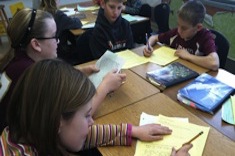
Peer Evaluation of Student Writing
Megan Ginther found she was spending too much time responding to student writing, and just as important, taking on too much of the responsibility for improvement. She tackled the issue by developing a new program for peer evaluation of student writing.
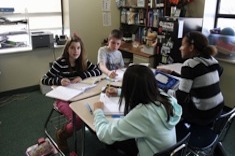
Using Writing Notebooks Authentically with My Fifth-Grade Students
Katherine Sokolowski reflects on a key component of her writing workshop, and finds ways for using writing notebooks more authentically.

My Middle Schoolers Still Can’t Spell!: Focusing on Individual Students
Gretchen Taylor concludes her two-part series on spelling instruction in middle school. In this installment, Gretchen visits a colleague in the primary grades to get advice and practical insight.
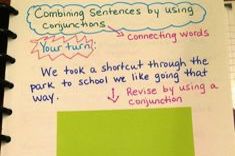
Rethinking Grammar Instruction in High School
What conventions can be taught in a way that sticks with older adolescents? Gretchen Schroeder slows down and focuses to improve her instruction.
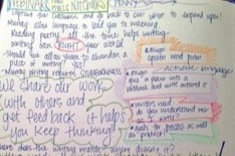
Writing Homework
If your students are already comfortable with an unstructured requirement of 20-30 minutes of reading each night, you may find adding 10 minutes of writing at home works wonders in fostering writing skills. Katherine Sokolowski explains how the assignment works in her classroom.

The Power of Reading Habits
Gretchen Taylor’s overscheduled middle school students have almost no time for reading outside the classroom. She finds that some reflective inquiry helps them build reading habits at home.

Helping Parents Talk with Students
Helping parents learn to talk with their children about what’s going on in the classroom may be more valuable than any homework teachers assign. Max Brand shares some practical tips and prompts he gives to families to launch conversations at the dinner table or in the car.

Word Work Basics
Max Brand explains the basics of word work, including a list of reflective questions teachers can ask themselves and students.
My Middle Schoolers Can’t Spell!
Gretchen Taylor has a common teacher's lament about spelling, so she decides to do something about it. This is the first installment in a two-part series.

Close Reading and Multiple Layers in Middle School
Christy Rush-Levine uses striking texts that inspire multiple readings by her middle school students.
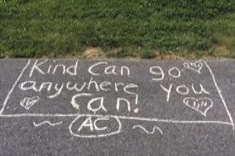
Spreading Out the Fun
Why save all the most enjoyable literacy activities for May or June? Gigi McAllister spreads out the fun all year long with literacy events and activities to break up routines.

Using Close Reading to Analyze Propaganda
Propaganda, word clouds, and close reading engage students in Holly Mueller’s sixth-grade class.
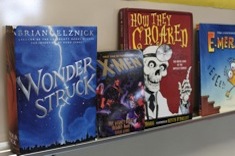
Can Books Harm Children? Support and Censorship
Shari Frost asks a provocative question: Can books harm children? She explores practical ways for teachers to walk the fine line between support and censorship in matching books to students.
What Kenny Taught Me
Jennifer Schwanke has a student who just won’t sit still and behave appropriately in her middle school classroom. She finally gives up. That’s where the learning begins.
Top 10 Intermediate Books for Boys
Katherine Sokolowski finds many of the boys in her classroom love to read about violence, weapons, and crude humor. She challenges teachers to appreciate boys’ interests and set some of our own criticism aside.
Getting Traction When There Is Nothing to Write About
Mary Lee Hahn finds herself stuck with nothing to write about at a writing retreat. She explores tools and strategies to get unstuck, and finds they are the same ones that work with writers of any age in classrooms.
Rethinking Writing Notebooks
What makes writing notebooks authentic? Katherine Sokolowski ponders the question.

Teacher as Mentor Writer
Tony Keefer takes the leap and commits to sharing more of his writing process with students.

Reader Response: Keeping It Real
Cathy Mere finds many authentic ways for her first graders to share reading insights.

Jumping Off the Buzz Wagon: The Value of Reading Logs
Are you ready to ditch your reading logs? Not so fast. Franki Sibberson explains why she still uses them in her third-grade classroom.

Reading Passports
Justin Stygles develops reading passports as an alternative to traditional reading logs with his fifth- and sixth-grade students.
Reorganizing the Classroom Library
Katherine Sokolowski looks at challenges from the previous year for ideas on reorganizing the classroom library.
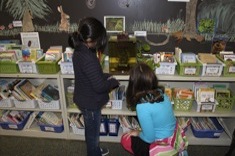
Inviting Book Tub Titles: Nonfiction Library Redesign
Andrea Smith discovers the value of more creative nonfiction book tub titles after listening to ideas from her students.
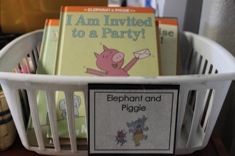
Books for Studying Illustration with First Graders
Katie DiCesare has suggestions for books to support an illustration unit early in the year.
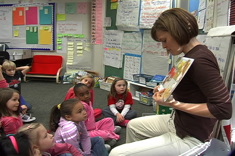
Understanding Study: Noticing Pictures
Katie DiCesare’s favorite beginning unit with first graders focuses on illustration.

Summer’s a Gypsy
Shirl McPhillips captures the fleeting joy of summer in a new poem.
Reader Response in the Digital Age
Franki Sibberson has suggestions for moving to more digital response options with students.
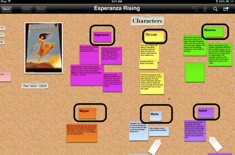
Digital Boards for Formative Assessment
Katharine Hale has moved much of her reading response to digital boards, which are also a useful tool for formative assessment.
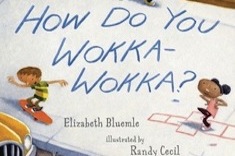
Books for Brain Breaks
Mandy Robek compiles a list of her favorite books for brain breaks with young learners.
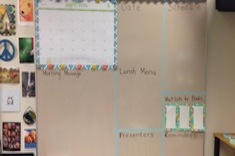
Community Board: Invitations to Independence
Students transition between home and school with the Community Board in Andrea Smith’s classroom. It’s a lively bulletin board that is updated and discussed daily in her fourth-grade classroom.
Browse Content By
Type
Category
- Assessment Tools
- Big Fresh Archives
- Booklists
- Choice Numeracy
- Classroom Design
- Common Core
- Community Building
- Conferring
- Content Literacy
- Digital Literacy
- English Language Learners
- Equity
- Family Relations
- Free Samples
- Guiding Groups
- Leadership
- Literacy Coaches
- Mentor Texts
- Minilessons
- New Teacher Mentors
- Podcasts
- Poetry
- Quote Collections
- Reading Strategies
- Self Care
- Struggling and Striving Learners
- Talking and Listening
- Teacher Study Groups
- Teaching Reading
- Teaching Writing
- Word Study and Vocabulary
Author
- Melissa Quimby
- Nawal Qarooni
- Gwen Blumberg
- Julie Cox
- The Lead Learners
- Hannah Tills
- Josie Stewart
- Ruth Metcalfe
- Mallory Messenger
- Becca Burk
- Jodie Bailey
- Vivian Chen
- Mary Brower
- Tiffany Abbott Fuller
- Stephanie Affinito
- Ruth Ayres
- Leigh Anne Eck
- Heather Fisher
- Shari Frost
- Julie Johnson
- Suzy Kaback
- Gigi McAllister
- Shirl McPhillips
- Melanie Meehan
- Cathy Mere
- Debbie Miller
- Tara Barnett and Kate Mills
- Tammy Mulligan
- Dana Murphy
- Bitsy Parks
- David Pittman
- Brenda Power
- Heather Rader
- Matt Renwick
- Mandy Robek
- Christy Rush-Levine
- Gretchen Schroeder
- Jen Schwanke
- Brian Sepe
- Katherine Sokolowski
- Stella Villalba
- Jennifer Vincent
Grade Level
Choice Literacy Membership
Articles
Get full access to all Choice Literacy article content
Videos
Get full access to all Choice Literacy video content
Courses
Access Choice Literacy course curriculum and training
