
Articles
Here is where you’ll find all the latest print features from our contributors. If you’d like to browse specifically by grade level, topic, or contributor, you can use the links in the right sidebar.
Latest Content
Unpacking the Common Core Standards: First Grade Information Texts
Franki Sibberson designs a booklist for tackling information texts in first grade.
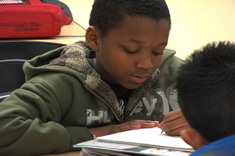
“School” Writing at the End of the Year
Writing about education is important in Erin Ocon's middle school classroom. Although Erin's students are in the eighth grade, this is a terrific project for readers of any age, and could even be used schoolwide for closure and celebration.
Common Core Conversations: Using Evidence From Text
Amanda Adrian and Heather Rader explain how the standard for finding evidence in texts might change instruction.

Respond, Reflect, Rejoice: The 3 Rs of Writing Celebrations
Ruth Ayres explains how teachers might put less focus on big, showy events, and more on the daily small pleasures and joys of writing success in classrooms.

Common Core Conversations: Vocabulary
Amanda Adrian and Heather Rader explore connections between the Common Core and vocabulary instruction.

Preparing Students for Summer Reading (ROUND-UP)
This round-up includes suggestions from Choice Literacy contributors Julie Johnson, Beth Lawson, Cathy Mere, Donalyn Miller, Colby Sharp, and Karen Terlecky.

When It’s Time to Abandon Your Writing
Writers in the real world abandon drafts all the time, yet it’s a strategy which isn’t often encouraged in classrooms. Heather Rader considers the thorny issue of how teachers can promote this strategy, yet still deal well with those students who never finish any drafts.
Perspective as a Component of Text Complexity: A Common Core Booklist
Franki Sibberson tackles the connections between text complexity and perspective in this Common Core booklist.
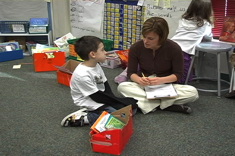
Helping Young Readers Become Independent
Teachers speak often about the importance of helping students become independent, but what does that look like in practical terms? Katie DiCesare considers her interactions with Evan, an emergent reader, on the road to independence.
Common Core Standards: Spreading the Word
Literacy leaders working in large districts face special challenges when implementing new programs. Suki Jones-Mozenter writes about the strategies being developed in one of the largest districts in the country.
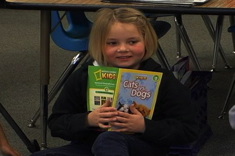
Previewing Nonfiction
Teachers are adding more nonfiction to their classroom libraries, and looking for ways to promote nonfiction with students in light of the emphasis on nonfiction in the Common Core. Franki Sibberson share tips for previewing nonfiction with students.

Best Practices in Spelling Instruction
Heather Rader wades through the research to find the best practices in spelling instruction.

Teaching and Assessing Persuasive Writing Skills
Heather Rader explores different ways into persuasive writing with teachers and students, highlighting the importance of helping students learn to cite and quote expert resources

Guided Reading in Perspective
Cathy Mere puts guided reading in perspective, explaining how it works as one piece of the puzzle when it comes to fostering a lifelong love of reading in students.
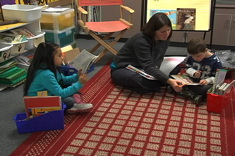
How Do We Know Small-Group Instruction is Effective?
Heather Rader considers how to assess the effectiveness of groups.
Stopping and Jotting
How can we be sure the writing tasks we ask of students are meaningful? Jennifer Jones looks at the issues of authenticity and control when it comes to assigning writing connected to reading in workshops.
The Affect of Tech on Splrs
Heather Rader considers the cultural divide between teachers and students who are “screenagers” when it comes to texting. If u r getting LOLed out in ur classroom u might want 2 read this.

Teacher Language and Listening with Ellin Keene (PODCAST)
In this podcast, Ellin Keene shares her thinking about linking oral language and literacy development.

Why Read? – A Question to End the School Year
“Why read?” This is the question asked every spring in Erin Ocon’s middle school classroom, and in the process of answering it, she and her students rediscover a lot of what they’ve learned together throughout the year.

Supporting New Teachers and Appreciating Their Gifts
Melanie Quinn thinks through the two common "phases" of early career teachers, and creates a checklist of guidance they will need from literacy leaders.

Beyond Harry Potter: Tapping Student Interest in Fantasy
Franki Sibberson taps into the fantasy craze among students with this booklist.

Oral Language and Understanding with Ellin Keene (PODCAST)
In this podcast, Ellin Keene poses important questions to herself about true understanding and its relationship to language in the classroom.
Books that Make Kids Squeal
Shari Frost shares books with “squeal appeal” — here is a booklist of texts that energize and delight kindergarten learners.

Standards and Magic: Digging Deep and Being Spontaneous with Infographics
If you’ve ever had 15 minutes or less to plan for a session with kids, you can appreciate the blend of panic and improvisation the experience inspires. Mary Lee Hahn devises an activity with an infographic for the 4th and 5th grade environmental science club at the last minute, and finds students exhibit many surprising literacy skills during the session.

Evocative Coaching in Action (PODCAST)
In this podcast, Bob Tschannen-Moran uses the strategy of imaginative listening to process an unsettling interaction Heather Rader had with a colleague.

The Power of Games for 21st Century Learners
Franki Sibberson explains how low-tech board games can be a powerful tool for developing skills that will be in high demand in the coming years.
Building Community Protocols
Clare Landrigan and Tammy Mulligan share two of their favorite protocols for building community among educators.
A Seating Arrangement that Empowers: The Conversation Circle
Ann Marie Corgill explains why a circle arrangement for middle school reading and writing workshop share sessions is vital for helping students focus and respond thoughtfully to peers.

Using Video to Build the Home-School Connection
Video is a terrific tool for building connections between home and school. Heather Rader explains how Kelli Demonte uses video to guide children and communicate with families.

What Can You Learn from Slice of Life Writing?
Ruth Ayres inspires us to develop the habit of writing on a regular basis by taking a bite out of the Slice of Life Story Challenge.
Browse Content By
Type
Category
- Assessment Tools
- Big Fresh Archives
- Booklists
- Choice Numeracy
- Classroom Design
- Common Core
- Community Building
- Conferring
- Content Literacy
- Digital Literacy
- English Language Learners
- Equity
- Family Relations
- Free Samples
- Guiding Groups
- Leadership
- Literacy Coaches
- Mentor Texts
- Minilessons
- New Teacher Mentors
- Podcasts
- Poetry
- Quote Collections
- Reading Strategies
- Self Care
- Struggling and Striving Learners
- Talking and Listening
- Teacher Study Groups
- Teaching Reading
- Teaching Writing
- Word Study and Vocabulary
Author
- Melissa Quimby
- Nawal Qarooni
- Gwen Blumberg
- Julie Cox
- The Lead Learners
- Hannah Tills
- Josie Stewart
- Ruth Metcalfe
- Mallory Messenger
- Becca Burk
- Jodie Bailey
- Vivian Chen
- Mary Brower
- Tiffany Abbott Fuller
- Stephanie Affinito
- Ruth Ayres
- Leigh Anne Eck
- Heather Fisher
- Shari Frost
- Julie Johnson
- Suzy Kaback
- Gigi McAllister
- Shirl McPhillips
- Melanie Meehan
- Cathy Mere
- Debbie Miller
- Tara Barnett and Kate Mills
- Tammy Mulligan
- Dana Murphy
- Bitsy Parks
- David Pittman
- Brenda Power
- Heather Rader
- Matt Renwick
- Mandy Robek
- Christy Rush-Levine
- Gretchen Schroeder
- Jen Schwanke
- Brian Sepe
- Katherine Sokolowski
- Stella Villalba
- Jennifer Vincent
Grade Level
Choice Literacy Membership
Articles
Get full access to all Choice Literacy article content
Videos
Get full access to all Choice Literacy video content
Courses
Access Choice Literacy course curriculum and training
