
Choice Lit Topic: Minilessons
Keeping it short, relevant, and meaningful is the challenge when it comes to designing lessons. Here is where you’ll find practical advice and dozens of video examples of master teachers in action.
Results
Revising Titles Minilesson
In this minilesson from Franki Sibberson's grades 3 and 4 classroom, Franki takes students through the process of selecting and revising titles. For young students having trouble understanding that writing revision involves more than just adding text, a minilesson on revising titles is a quick and easy way to show the power of making small changes to drafts.
Supporting Thoughtful Book Choice in Grades 3-4
In this video filmed in the spring, Franki Sibberson helps her third and fourth grade students think through what books they might select for independent reading. The discussion ranges from new books available in the class library, to individual quirks and preferences.
Setting Nonfiction Goals
Franki Sibberson facilitates a discussion with her class of third and fourth graders about their nonfiction reading. They are setting goals during Nonfiction Reading Time.
Sixth-Grade Lesson: Editing for Conventions
In this lesson with her sixth graders, Pam Pogson talks about a goal many students have mentioned during writing conferences: editing for conventions. This brief lesson gives everyone a chance...
Extreme Makeover: Revision Edition
Once upon a time in my third-grade classroom, I had an eight-foot pencil poster on my wall that listed the steps of the writing process from prewriting at the point...
Over the Top: Mystery Writing with Fourth Graders
Helping students navigate the boundaries between realistic fiction and fantasy can be tricky, especially when it comes to mystery writing. In this lesson from Beth Lawson's fourth-grade classroom, Beth uses...
Noticing Words in Second Grade
In this brief video from Linda Karamatic's 2nd grade classroom, students share words they are noticing, and Linda talks about making revisions to the wall displays of words in the...
The Sponge Summary Lesson Part 5
This is a companion video series to Heather Rader's article "A Sponge is a Summary." In this sequence of videos, Heather teaches a 4th grade class, using the analogy of...
The Sponge Summary Lesson Part 6
This is a companion video series to Heather Rader's article "A Sponge is a Summary." In this sequence of videos, Heather teaches a 4th grade class, using the analogy of...
Narrative Nonfiction in 5th Grade Part 2
In this lesson from a 5th grade classroom, Aimee Buckner guides students in a note-taking process to help understand the qualities of nonfiction narrative writing. In this second part of...
Nonfiction Read Aloud
Sean Moore reads nonfiction aloud to his second-grade students. This is the first video in a two-part series: Here are some tips for nonfiction read-alouds, based on Sean...
Nonfiction Read Aloud – Part 2
Here are some more tips for nonfiction read-alouds, based on Sean Moore's reading of Plants That Eat Animals: 1. Use nonverbal cues to focus students. Sean uses quick...
Astrigs, Asterisks, and Letting Students Lead
In this video from Linda Karamatic's second-grade classroom, Charlie shares his punctuation "find" of asterisks with his classmates. He is reading the book Miss Child Has Gone Wild by Dan...
Frogs as Learning Ambassadors Part 1: Literary Nonfiction in 4th Grade
There is a story behind the following video clips captured in my classroom. The research and writing lessons filmed that day were built upon experiences that launched the school year...
Essay Writing: Thesis Statements and Supporting Details Minilesson
Beth Lawson works with her 4th graders to develop essays with strong thesis statements and supporting details, using a folder organization system to highlight different thesis statements for each child....
Essay Writing: Teacher Modeling
Beth Lawson works with her fourth graders to develop essays with strong thesis statements and supporting details, using a folder organization system to highlight different thesis statements for each child....
The Sponge Summary Lesson Part 3
This is a companion video series to Heather Rader's article "A Sponge is a Summary." In this sequence of videos, Heather teaches a fourth-grade class, using the analogy of a...
The Sponge Summary Lesson Part 4
This is a companion video series to Heather Rader's article "A Sponge is a Summary." In this sequence of videos, Heather teaches a 4th grade class, using the analogy of...
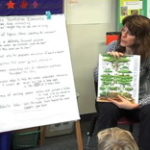
Digging Into Literary Nonfiction
Andrea Smith and her 4th grade students use an article from National Geographic for Kids to chart literary nonfiction elements.
Status of the Class and Monitoring Behavior
In this early year video from Beth Lawson's second-grade classroom, Beth uses a writing status-of-the-class time to help students monitor their behavior, using peers as role models.
Scaring Up Better Narratives Part I
Just before Halloween, Aimee Buckner leads a lesson on brainstorming topics in writer's notebooks using the mentor text Some Things Are Scary. In this first installment of a three-part series,...
