
Choice Lit Topic: Minilessons
Keeping it short, relevant, and meaningful is the challenge when it comes to designing lessons. Here is where you’ll find practical advice and dozens of video examples of master teachers in action.
Results
From Questions to Drafts
Aimee Buckner shares the mentor text Could You? Would You? with her 4th grade students. Aimee explains how questions are a springboard to interesting writing topics, and models connections she...
Writing Comics: Introducing the Activity
In this lesson from a 4th grade classroom, Sarah Thibault introduces students to a writing activity. Students will be creating their own comic books, after extensive preparation and experience with...
Helping Students Set Nonfiction Reading Goals
For years, no matter how hard I tried, fiction seemed to take over my students' reading workshop time. I realized that with only one block of time to read, students...
Book Choice and Planning Lesson
Book choice is something that we talk about all year long. Years ago, I did several minilessons on book choice early in the year and assumed that once my students...
Inferring Read Aloud Part I
Using picture books to teach strategy instruction is not only popular, but works. When my sixth graders see me pull out a picture book during the first week of school...
Crafting Characters in Writer’s Workshop
In this lesson from writer's workshop with grades 3 and 4 students, Franki Sibberson helps students analyze character traits through whole-class and partner work with the lead to The Secret...
Rule of 3: Writer’s Craft Whole-Class Lesson
The "Rule of 3" is well known among writers. From "The Three Little Bears" to sets of three adjectives in descriptions, authors know clusters of three are a powerful tool...
Narrative Nonfiction in Fifth Grade, Part 1
In this lesson from a fifth-grade classroom, Aimee Buckner guides students in a notetaking process to help them understand the qualities of nonfiction narrative writing.
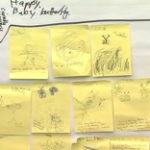
Creating Anchor Charts with Sticky Note Responses from Young Readers
Learners who focus on comprehension strategies rely on different tools. One of the most popular is the three by three inch sticky note. High school teachers like Cris Tovani and...
Word Choice Lesson: A Collaborative Coaching Session with a New Teacher
When I work with a new teacher in his or her classroom, it's a collaborative experience. We design and teach together over time, sharing what works and what doesn't. In...
Fonts Lesson: A Revision Strategy for Transitional Writers
I recently added a nonfiction reading time at the start of the day, and I've found this time has changed many of the conversations about reading and writing with the...
Revision Tools: Providing Options to Students
From old favorites like highlighters to new resources like kangaroo bags, this whole-class session with Franki Sibberson's grades 3-4 students highlights cool tools that will inspire learners to dive in...
Whole-Class Vocabulary Lesson, Grades K-2
In this five-minute video, Joan Moser of "The Sisters" teaches a whole-class vocabulary lesson. The focus is on helping students notice interesting words, and make connections between daily read-alouds and...
Spacing Words: A Minilesson with Young Writers
In this two-minute video, Andie Cunningham reinforces the concept of spacing words with her kindergartners using her own writing and a brainstorming web.
Mentor Texts and Teacher Modeling: The Listing Strategy
In this video from her fourth-grade classroom, Aimee Buckner teaches the "listing" strategy, using the book This Is the Tree: A Story of the Baobab as a mentor text. Aimee...

Finding Topics in Writer’s Notebooks Minilesson
Sean Moore shares the importance of using a writer's notebook to discover topics in this minilesson with his second-grade students from early in the year.
Teaching Rereading During Class Read Alouds
I teach my 4th graders the power of rereading using the mentor text Goblins in the Castle by Bruce Coville. In this video, you can see we use rereading as...
Revising Titles Minilesson
In this minilesson from Franki Sibberson's grades 3 and 4 classroom, Franki takes students through the process of selecting and revising titles. She uses the poem "Confessions of a Reader"...
A Minilesson on Minilessons
Franki Sibberson leads a minilesson in her fifth-grade classroom to help students design their own lessons. Students also assess what goes into a high-quality minilesson.
Teaching Punctuation Through Shared Reading in Kindergarten
The first purpose of shared reading is to provide children with an enjoyable reading experience, to introduce them to a variety of authors and illustrators and the ways these communicators...
Inside and Outside Views Minilesson
Ruth Ayres explains the importance of "inside" and "outside" views in writing using a student mentor text in this lesson with second graders.
