
Choice Lit Topic: Minilessons
Keeping it short, relevant, and meaningful is the challenge when it comes to designing lessons. Here is where you’ll find practical advice and dozens of video examples of master teachers in action.
Results
Expanding the Literacy Classroom with Flipped Minilessons
When I first heard about the “flipped” classroom learning model, I was absolutely against it. I could not wrap my mind around the idea that watching a video at home...
Word Observations
I am racing down the highway, traveling from Phoenix, Arizona to San Diego, California. Jagged mountain peaks, desert fauna, the Mexico/California border fence and periodically a town provide a backdrop...
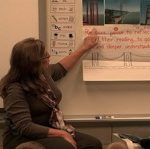
Bridge to Comprehension Minilesson
Deb Gaby uses images of a bridge to help second graders understand the importance of pausing and reflecting while reading.
“Article of the Week” Activity in Fourth Grade
Tony Keefer demonstrates how the article-of-the-week activity adapted from the work of Kelly Gallagher is a powerful tool for building skills and community in his fourth-grade classroom.
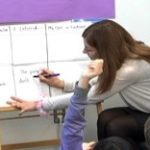
Rereading and Retelling to Inferring: Part 2
Linda Karamatic uses texts her second graders already know to build their inferring skills as they construct a chart together.
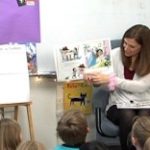
Exploring Inferring with Second Graders: Part 1
Linda Karamatic uses read alouds to begin the process of building an inferring chart with her second-grade students.
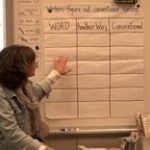
Words Chart Minilesson
Ruth Ayres introduces a word chart to help students monitor their spelling strategies in this second-grade minilesson.
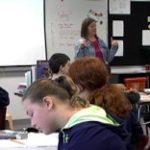
Modeling Annotation in 8th Grade
Katie Baydo-Reed models how to annotate text for her eighth graders.
Second-Grade Minilesson on Capital Letters
Ruth Ayres gives a brief minilesson on the use of capital letters to a class of second graders.

Finding Topics in Writer’s Notebooks Minilesson
Sean Moore shares the importance of using a writer's notebook to discover topics in this minilesson with his second-grade students from early in the year.
Thinking About Theme
“So WHY did I read that story? What was its purpose? What was its meaning?” These were the bigger questions that were difficult for my students to answer at times,...
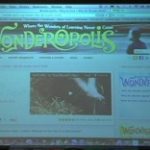
Using Wonderopolis in Classrooms
Franki Sibberson uses the website Wonderopolis with her fourth-grade students. By modeling how to navigate the site, she encourages her students to use the web in more thoughtful ways.
Two Lessons for Teaching Theme
I want students to know how to find theme in any fiction they are reading, and to be aware of the critical devices authors use to tell their story and...

The Art of the Book Talk
Book talks are a big part of our classroom and a critical part of our independent reading program. It is through book talks that I have created a frenzy over...
Whole-Class Research Planning
Andrea Smith leads her fourth graders through brainstorming for their owl research project.
Writing Leads Minilesson
Karen Terlecky uses mentor texts and an analogy to help students analyze leads in this minilesson from her fifth-grade classroom.
Kindergarten I-Pick Lesson
Mandy Robek presents a two-minute reminder minilesson to her kindergartners on the "I-Pick" strategy for selecting books during independent reading time.
Fourth Grade Writing Workshop Minilesson on Focusing
Franki Sibberson shares some tips and strategies with her fourth graders from the web for focusing and organizing their writing.
The Sponge Summary Lesson: Introduction
Heather Rader teaches a fourth-grade class, using the analogy of a sponge to explain how summaries work. In this video, the students review the four rules used for nonfiction summaries and corresponding kinesthetic movements and brainstorm a list of “what’s important to know about summaries.”
Launching a Fiction Writing Unit with Fifth Graders
Towards the end of the school year my students start to get a little bit antsy. I try to find units to teach in reading and writing that give them...
5th Grade Sentence Observation
Karen Terlecky leads students through a sentence study routine in her 5th grade classroom.
