
I pulled open one of the heavy double doors and stepped into the library. I marveled that when we returned after the summer break, this would be the place I went to every day as the school librarian—a role new to me after many years as a district-level literacy leader. The building was empty at the end of this last day of school, so I closed my eyes and savored the book smell that surrounded me and the empty peacefulness of this space. I opened my eyes, took another step in, and began to reimagine the space.
The large, L-shaped footprint had tremendous potential but lacked character and wasn’t cozy. Immediately to my left, at the vertex of the space, two desks—one for the librarian and one for the assistant—took up a sizable amount of real estate. As the first things seen when entering the library, they projected, “This space is for adults.” Glancing to my right, the foot of the L-shape housed an area intended for story time and whole-class lessons. Soft risers in bright orange and blue were pushed up against three of the walls to create a U-shape.
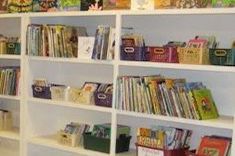
As I looked from the front of the library beyond the teacher desks to the back, I saw shelves lined up like soldiers marching in rows that had the unfortunate consequence of creating a sea of blind spots. The rows of shelves were broken up by two table areas, one for younger children with lower tables and small chairs and one with a set of larger tables and chairs for older students at the back of the library. Two round tables appeared to be haphazardly placed in other areas, and a smattering of soft seating was used to provide a raised base for plastic bins of books.
I couldn’t wait to change everything.
Over the summer, I embraced David Thornburg’s Learning Space model that I had learned about in one of my graduate school library courses. I began to create spaces he defined as campfires, watering holes, and caves to support the different kinds of learning I hoped students would do in our library. I moved existing furniture and advocated for and received approval for some more specialized pieces.
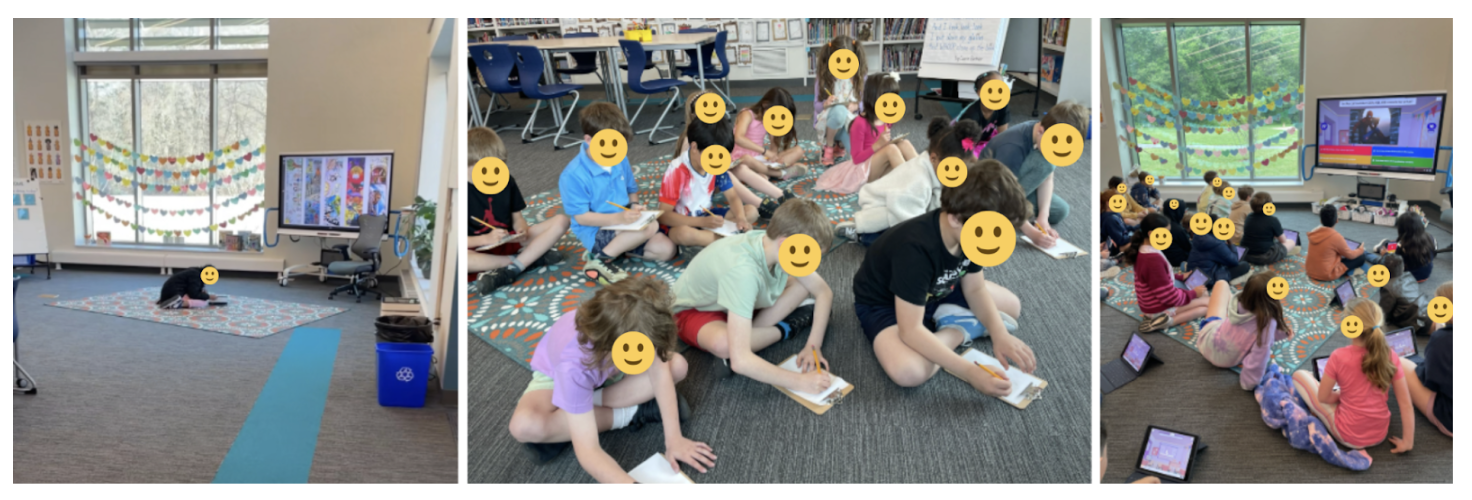
Campfire spaces would be designed to replicate gathering around a campfire where a leader tells a story and is generally the focus of the message being delivered. Campfire spaces are where we would gather for whole-group instruction, storytelling, or read aloud. I selected a spot with lots of natural light and a place for a smartboard to be visible but out of the way, and added a rug to better define the space.
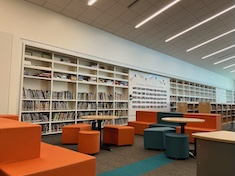
 Watering Holes are spaces designed for students to share, connect, and exchange information. I added several watering holes throughout the library so students could spread out. These spaces consisted of rocker chairs around an ottoman, high-top tables, and a “living room” area made from rearranging the former story-time seating into couch-like seating and repurposing the once random tables and soft seating formerly used to hold bins of books.
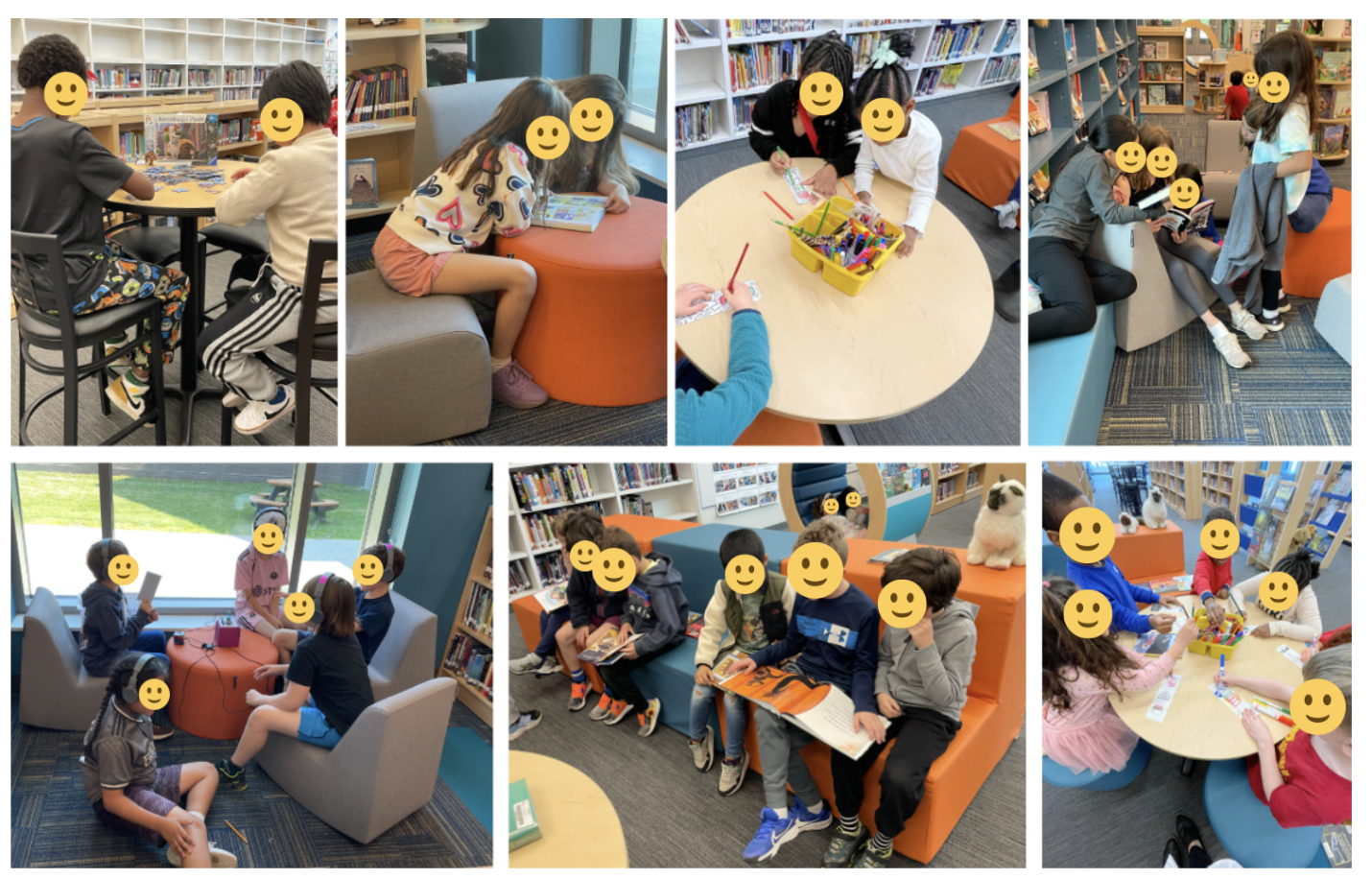
Caves offer spots for students to retreat, rest, reflect, or reset. Cave spaces provide students with quiet, more private places to think deeply or work independently. Some “naturally occurring” caves appeared as I rearranged the furniture and nooks and crannies and small cozy spots emerged. I also designated a set of tables on the fringe of the campfire area to be caves and added noise-canceling headphones for students who needed more quiet in that more solitary space. I was also able to add some unique seating that students called reading circles to provide a sense of a smaller space within our much larger library space.
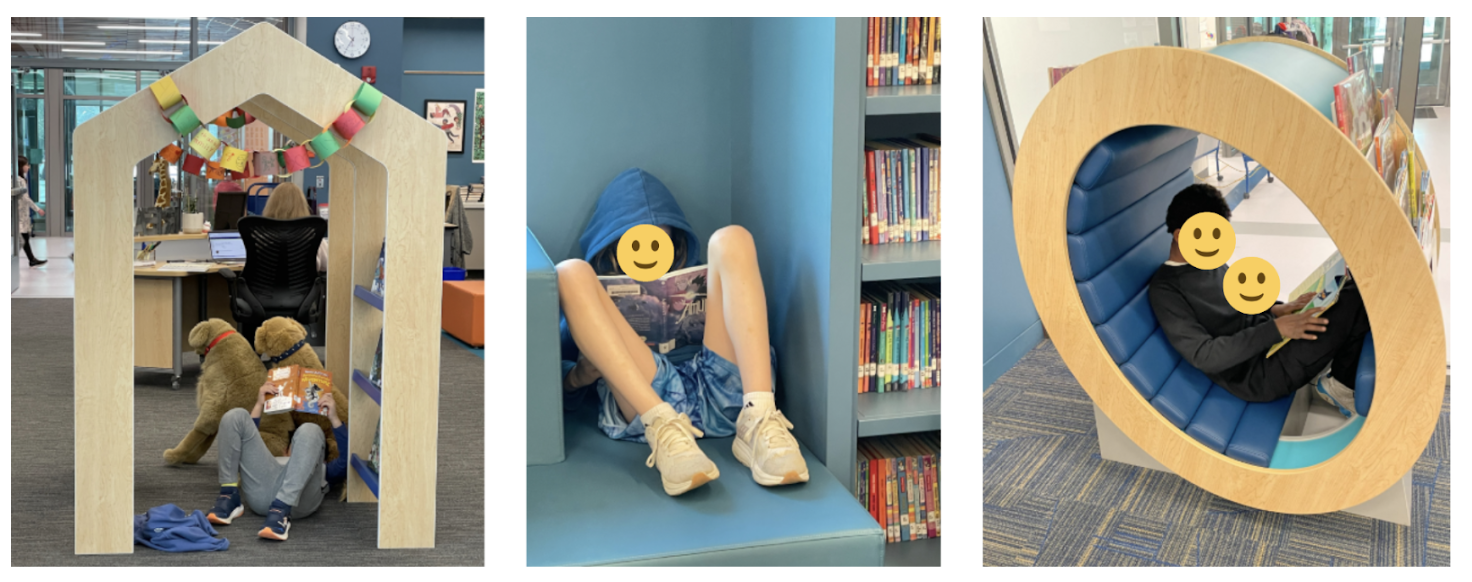
As we progressed through the year, I watched how students blurred the lines between these spaces, created their own spaces, and used different spaces for different purposes. Students sometimes asked to move furniture or use it in nonstandard ways. As long as they were safe, my answer was typically, “Give it a try!”
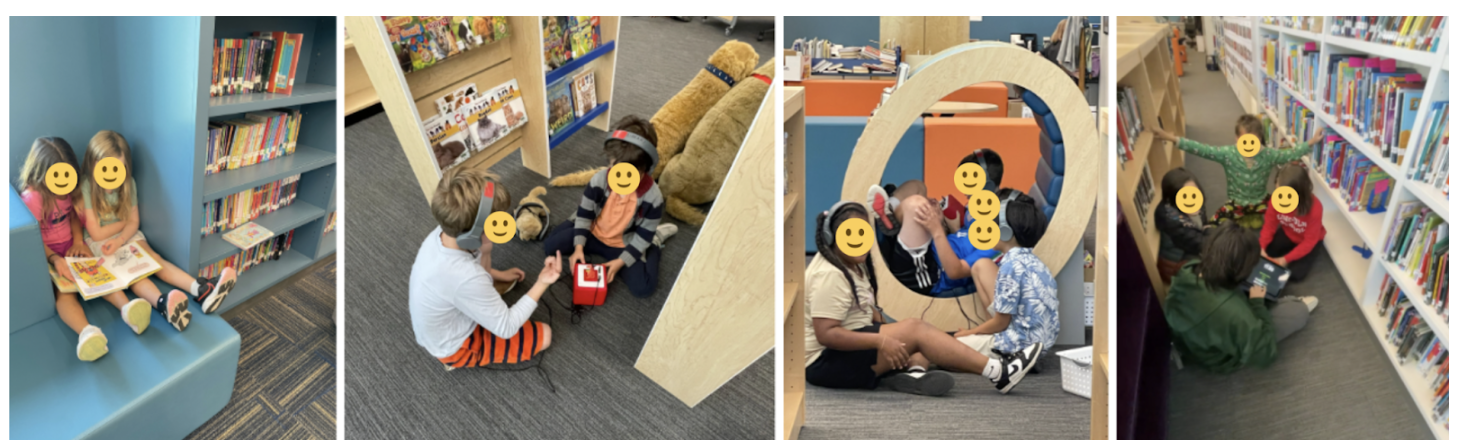
These changes and the revised spaces were exciting and energizing to the students when they returned in the fall. They described the library as open, bright, and—my favorite—cozy. We began every library class in the campfire space. Students used the watering holes on a daily basis, some claiming favorites and some trying a new area every visit. Caves provided a smaller, more peaceful space within our larger space for many students. Thornburg’s design principles had served me well.
One year later, as I stood in that same doorway, looking out over the library after finishing my first year as a school librarian, my heart was full. This space and all of the learning it held and will hold is exactly the space where I want to be.