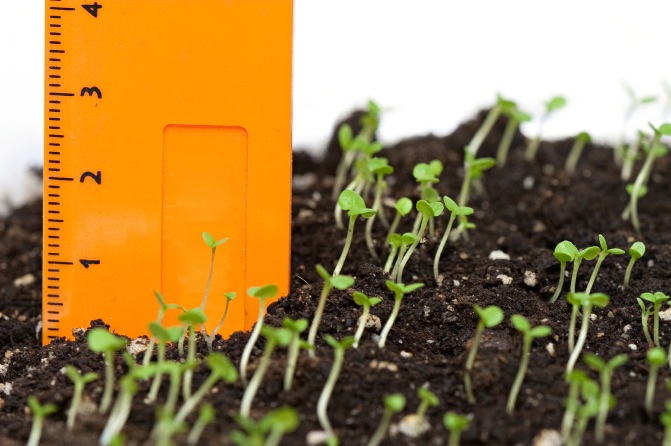
When we began to remodel our home recently, we realized that the opening between the dining room and the kitchen had pencil lines vining up the wall from the late 1980s that we needed to preserve. These were small markings that documented the names and dates of our children’s, grandchildren’s, and their friends’ heights over the span of almost three decades. Visions of children standing tall against the wall as my husband or I made a mark came to mind. Each child would record their name and the date. They would compare it with the other lines with their names. Eyes would open wide as they climbed closer to an adult line. It was a wall of growth and celebration lines. We finally photographed the wall section by section and decided to move it to a different place.
Making a growth wall wasn’t intentional. One of our kids had simply asked, “How tall am I?” Our answer from the last doctor’s visit wasn’t satisfying, so we began measuring. “Stand here and we will mark where you are.” You could see brain gears moving as they visualized how tall they were compared with other objects in the room.
As the children became older, they wanted their friends to be measured also. Children grew into adults, and we were blessed with grandchildren. Their names were added. The first moments of a new visit were spent standing along the height wall. We would often say, “We just measured you a month ago! Sometimes growth takes more time than that.” Often we would be surprised that a child did experience a huge growth spurt in a short amount of time. And oh, the excitement when a teenager’s line passed a parent’s or grandparent’s line. It was interesting to notice the different growth journeys of each one. Sometimes there would be little growth, and then a line would shoot up like a rocket even in a small amount of time—each at its own rate.
Growth Lines in Classrooms
As I reflected on the wall, I thought of students at school. Growth and change is exciting. Do we give children enough opportunities to notice and reflect on their changes and growth? Do we give them choice in what they want to notice? Because of state and federal mandates, schools keep good track of standardized test scores. Those growth lines are not usually measured with the same measuring stick. Most teachers monitor progress on summative testing and reading levels, but there are many other growth indicators and changes to celebrate.
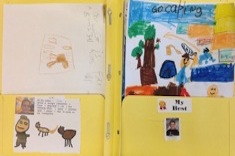
The beginning days of a new school year are a good time for everyone to reflect on and measure their learning height. As you build a class community with your students, have them create their first “marks on the wall.” It’s difficult to notice growth and change if you don’t have a beginning point. Create a reflection folder or notebook. Here are a few ideas for getting started.
Interest Inventories
There are several great interest inventories online and in professional books. Information from interest inventories is useful when guiding students to books, writing topics, and projects. Knowing their favorite movies, television programs, hobbies, subjects, sports, foods, and so on can all be entry points to reading and writing. It will also help you facilitate engaging learning.
Me as a Learner
You might ask students to write or talk through some of these prompts: Who am I as a learner? What words describe me? What motivates me to be engaged? What is my grit level? What motivates or drives me when the going gets rough? How do I work best? Where do I work best? What am I interested in? What do I want to explore deeply? What do I already know a lot about? Who am I as a reader? A writer? A mathematician? A scientist? A historian? An artist? A musician?
Me as a Friend or Community Member
Here are more questions for writing and discussion: Do I make friends easily? What qualities do I have that are helpful to the community or to a friend? How do I support others? What qualities do I want to develop? What is difficult about making friends? How do I need to be supported by my friends and community members?
Setting Goals
Making goals a part of the classroom environment from the first day of school inspires continual reflection. Here are some questions to start the process for students: What goals do I want to create? Are my goals specific? What can I do to meet these goals? How will I keep track of the steps I take to meet my goals? What are my big dreams? How do my learning goals help me reach my big dreams?
Noticing growth and change empowers us to move forward, but we first have to know where we are. Celebrate growth and change with your students by making that first “mark on the wall” at the start of the year, and then establish consistent reflection and growth times.