
Choice Lit Topic: Reading Strategies
Are your students buried in post-its? Oversharing with those text-to-self connections? Parroting back comprehension tips but rarely applying them when they are actually reading? Our contributors sort through what works with strategy instruction, and have wise advice for avoiding superficial approaches to developing comprehension skills.
Results
Abandoning Books Discussion
Franki Sibberson meets with a group of her fourth-grade students who often abandon books during independent reading. The previous day the group had brainstormed reasons why they abandoned books on...
Nonfiction Reading Group in First Grade
Katie DiCesare brings together a group of her first-grade students who are reading nonfiction, helping them to expand the ways they share what they are learning with classmates.
Owl Research: Whole Class Explanation of Marking Up Text
Andrea Smith explains a close reading activity her fourth-grade students will complete as part of their owl research.
Chris Lehman and Kate Roberts on Close Reading (PODCAST)
Franki Sibberson chats with Chris Lehman and Kate Roberts about close reading in this 30-minute podcast. Chris and Kate are the authors of Falling in Love with Close Reading: Lessons...

Emphasizing Empathy: September Literacy Contracts
September holds a lot of promise and excitement for teachers and students, but it can also be a stressful month. We are all trying to get back into the swing...

How to Eat an Elephant One Bit(e) at a Time: Reading Complex Texts
There is a saying: “When eating an elephant take one bite at a time.” Attributed to Creighton Abrams, we have come to use this phrase to help us understand that...
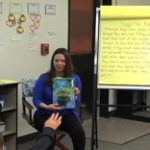
The Sponge Summary Lesson: Introduction
Heather Rader teaches a fourth-grade class, using the analogy of a sponge to explain how summaries work. In this video, the students review the four rules used for nonfiction summaries and corresponding kinesthetic movements and brainstorm a list of “what’s important to know about summaries.”

Fireflies and Background Knowledge
Recently, I was eating lunch with a group of friends and two of them shared how excited they were because the previous night they had seen their first fireflies ever....
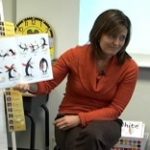
First Grade Read Aloud: Sergio Saves the Game
Katie DiCesare reads Sergio Saves the Game to her first graders as part of their fictional character study unit.
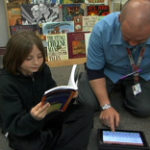
Decoding and Meaning: Conferring in 4th Grade
Tony Keefer confers with Amanda, a fourth grader who comprehends texts well, but struggles at times with fluency, decoding, and book selection.
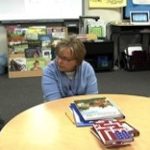
Assessment to Grouping: Fifth-Grade Group on Character Traits
Karen Terlecky meets with fifth graders who both share the same need identified on a recent formative assessment, inferring character traits.

They Can Sing and Define It, But Can They Use It?
One early fall afternoon, I casually walked into my colleague Linda Karamatic’s second-grade classroom and asked, “What are you working on in reading?” Linda said, “Well, I’m still working on...
Kindergarten I-Pick Minilesson
Mandy Robek presents a two-minute reminder minilesson to her kindergartners on the I-Pick strategy for selecting books during independent reading time.
The “Tys” of Student Research: Safety and Credibility (Primary Research Series Part 2)
I’ve been feeling very “meta” lately as I research research about research. Christopher Lehman’s book: Energize Research Reading and Writing: Fresh Strategies to Spark Interest, Develop Independence, and Meet Key...

Poetry and Fluency Minilesson in Second Grade
Sean Moore uses poetry for a short minilesson on fluency, and then follows with a partner share and vocabulary discussion. The poem Sean reads with the children is The Busy...
Shared Reading and Annotation in 6th Grade
With the Common Core swiftly coming to many classrooms, I hear a lot of talk about rigor and shared texts. One of the challenging shared texts in my sixth-grade classroom...
Backing Up and the Bossy E
In this conference with second grader TJ from Sean Moore's classroom, the strategies of backing up and rereading as well as attending to the "bossy e" are discussed.

Eliminating the Conga Line: Teaching Young Children About Strategic Thinking
In the past few months we have spent a lot of time in classrooms establishing systems and structures. We have been busy modeling how we use materials, work independently, and...
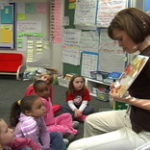
Picture Reading in First Grade
In this read-aloud lesson from Katie DiCesare's first-grade classroom, Katie demonstrates the importance of picture reading using the picture book The Zoo by Suzy Lee. Because the students need the pictures to help understand the characters, setting and events, they are able to see how pictures help us “think in the story” and “figure out the words.”
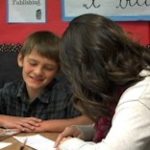
Tracking Thinking While Reading
Melissa Styger confers with a fourth-grade student using a template to help students track thinking and comprehension. The template is a simple two-column organizer that students have available during their...

Conferring, Rereading, and Comprehension
Aimee Buckner confers with Brendan, who is rereading Hoot and needs some strategies for holding his thinking.
