
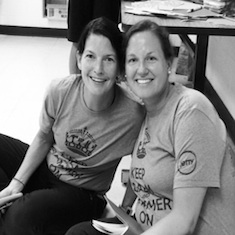
Kate’s sister, Emily, was visiting and they had just dropped Kate’s kids off at a camp on the bay. They planned to spend the time on a long walk, and made a stop along a boardwalk that led over the bay. Kate had seen bird-watchers walking off the boardwalk the day before after dropping the kids off, and thought it would be a good spot to go with Emily, who had gotten into bird-watching over the last few months.
As they approached the end of the boards, they saw a bird-watcher sitting on a bench. He had binoculars around his neck, a scope on a tripod in front of him, and another small device that looked like a speaker sitting next to him. Kate and Emily stood along the railing, trying to spot birds and checking the bird sounds Emily’s Merlin app was picking up.
When they were ready to walk on, Kate whispered, “Do you think he’d want to share what he’s seen today?”
“You should ask,” Emily replied.
“What’s the most exciting thing you’ve seen today?” Kate asked, taking a few steps toward the bird-watcher. He launched into his spotting of a brown pelican, and how it was exciting because, although brown pelicans are not rare as a species, they stop in our area for only a few weeks in the year, on their way to another destination. He shared that five had been there the day before, but just one was there today.
In the 10 minutes we talked with Al—he introduced himself to us at the end of our conversation—we learned that our location is like a highway for migratory birds, that the next step for Emily after the Merlin app is eBird, that bird-watchers consider birding a sport (!), that low tide is the best time to see birds on the bay, that many people got into bird-watching during COVID, and that your ear is just as good a tool to identify birds as your eyes.
As Kate and Emily walked away, they couldn’t help but talk about how eager Al had been to share his experience and his knowledge of birds. His eyes were truly sparkling as he talked, and his voice was joyful.
It all got us thinking: How can we make space for this kind of joyful sharing of our passions in our classrooms?
Learn your students’ passions. Our passions are an important part of our identity. Knowing our students’ passions means we know them better as people, which means we’ll teach them better. A beginning-of-the-year questionnaire shared with families—or with the students themselves if they’re older—is an easy way to begin learning about their passions. Having share time during morning meeting and listening intentionally to snack-time conversations can give us insight into what they care about. A few seconds of observing Al as a bird-watcher—noticing his gear and his focus—was all we needed to do to identify his passion.
Ask questions. Knowing our students’ passions means we can ask targeted questions about them. We can check in when we know they’ve had a soccer game, they’ve auditioned for a part in the play, or they’ve finished a Lego build they were working on. Kate had seen Al perk up and a change in his energy, so assumed there had been something exciting. “What’s the most exciting thing you’ve seen today?” was all the invitation needed for Al to share.
Create space for sharing as the expert. Kids are in a role to receive information and follow directions for most of the days of their childhood; they go from student at school to player on the soccer field to child at home. Building in time for them to share their knowledge and expertise around their passions flips their role and gives them the opportunity to be the one offering information to others. Were Al’s eyes sparkling and was his voice joyful because he was talking about birds or because he was getting to share his knowledge with others? Maybe it was a little of both. Having a receptive audience, space to share, and a chance to be the expert reinforces and grows passions.
We know our students are entering our classroom with passions, and we’re excited to do our part to create the space for their eyes to sparkle as they share with joyful voices.