
Choice Lit Topic: English Language Learners
Whether you have one English language learner in your classroom, or hundreds in your school, there is little doubt meeting the needs of these students will be at the top of most schools' agendas for professional development for many years to come.
Results
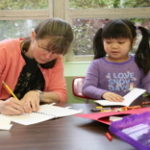
Selecting Texts for Strategy Teaching with English Language Learners in Mind
Over the past several months we have spent time thinking and teaching with a group of educators whose students are predominantly English language learners (ELLs). During our visits to their...
Multicultural Books for Beginning Readers
"Why isn't there an African American Henry and Mudge?" asked a teacher in the audience of a session on multicultural children's literature. I reminded her of a previous slide stating...
Preschool Letter Detectives
"What is a letter?" "A mystery." Five-year-old Gabe's response to my question stunned me. I realized from listening and observing his teacher Melissa's gentle nudging and guiding that letters are...
On Not Fretting
This morning, I was fretting. Cleaning my desk, I misplaced writing I was going to share with colleagues after school. The day ahead already began to seem scattered and rushed,...
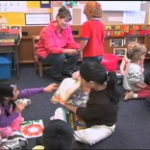
Many Languages, Many Texts: Book Time in Preschool
In this brief video, Melissa Kolb explains "Book Time" in her preschool class. It's a time when many volunteers read books informally to small groups of children in their home...
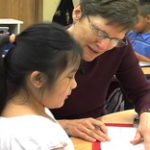
Conferring with Emily: Moving from Questions to Content
In this conference with six-year-old Emily, Ruth Shagoury looks for a way into a conversation by using Emily's drawings, previous writing, and interests. Emily's first language is Hmong, and she...
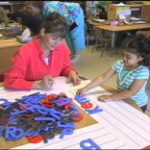
Keeping the M
In an age of standardization, when even preschoolers are expected to perform flawlessly on literacy tests such as letter naming and recognition, it is important for early childhood teachers to...
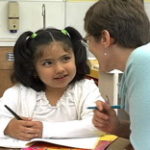
Conferring with Leonela: A Two-Day Progression
Leonela is a six-year-old student whose first language is Spanish. In these videos of conferences with Ruth Shagoury filmed over two days, she makes connections between her drawing, writing, and...

Conferring with Eddie
Eddie is a six-year-old student who speaks Cantonese as his first language. In this conference with Ruth Shagoury, little English is spoken, and yet there is much communication through gestures...
The Art of Listening in Writing Conferences with English Language Learners
Listening looks easy, but it is not simple. Every head is a world. —Cuban proverb Researchers have studied the physiology of listening and speaking. One of the things they discovered...
Webbing to Learn: A Writing Strategy to Chart Thinking with Young Learners
Teachers and teacher educators used to think that a web structure was too advanced for our youngest school learners, and reserved this work for more academically experienced students. A couple...
Family Dichos: Bringing the Language of Home into the Classroom
A friend and colleague, Espie dela Vega, mentioned a dicho that guided her and her family as she was growing up: En cada cabeza, el mundo. When someone acted differently, or in...
Honor Books: Helping Children and Families Build Bridges Between Home and School
The students I teach come from home environments of limited resources, but their years of family and life experiences are rich. Many of these families only recently immigrated to America,...
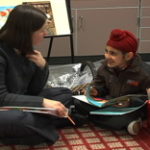
Helping Young Readers Understand the Middle East: A Booklist of the Best Fiction Picture Books
I still remember the first time I read Day of Ahmed's Secret. I showed the book to colleagues and friends, telling them, "He looks just like my uncle Girgi! " or...
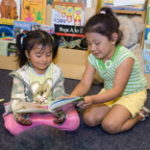
Alphabet Books for English Language Learners
Five-year-old Bao Jun lived two-thirds of her young life in China, then moved to Portland, Oregon. On the first day of kindergarten, her mother told me, "You say, she understand....
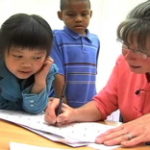
Introducing Bull’s-Eye and Waves Written Responses in Synthesis Work
My students helped me understand that to synthesize what you are reading, you have to stand in two places at once: in your own shoes and in the shoes of...
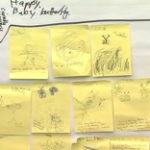
Creating Anchor Charts with Sticky Note Responses from Young Readers
Learners who focus on comprehension strategies rely on different tools. One of the most popular is the three by three inch sticky note. High school teachers like Cris Tovani and...
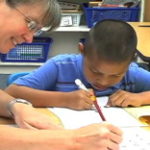
In the Zone: Conferring with a Young English Language Learner
The Zone of Proximal Development (ZPD) is a concept developed by the Russian language researcher Lev Vygotsky nearly a century ago. The theory simply stated is there is a learning...

Understanding the “Silent Period” with English Language Learners
If you have a new English language learner in your class who is not speaking, don't worry. According to language researcher Stephen Krashen, most new learners of English will go...
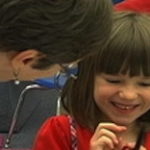
Conferring with a Child in the “Silent Period”
Larisa is a six-year-old who speaks Russian at home, and is in the "silent period" in school. In this conference, Ruth Shagoury demonstrates different strategies for eliciting responses from Larisa....

Writing About a War-Torn Home: Zerina Talks About Finding Her Writer’s Voice
English language learners enter our classrooms with histories from many different cultures—sometimes as immigrants from other countries. Although there are many reasons why families choose to immigrate, none are more...
