
Article Content Type: Article
Results

15 Minutes on Friday: Writing on Demand with Students
I have learned that if I wait to write until I think I have something to write about, it is often a very long wait. On the other hand, if...
Jennifer Serravallo on Formative Assessment (PODCAST)
Franki Sibberson chats with Jennifer Serravallo about formative assessment in this podcast. Jennifer is the author of The Literacy Teacher's Playbook, Grades 3-6: Four Steps for Turning Assessment Data into...

Formative Spelling Assessment
“In order to tailor instruction appropriately for children, it is important for teachers to learn about their students’ orthographic understandings. Ongoing monitoring of students’ writing is one part of the...

Liberty and Dystopia: February Literacy Contracts
Since it is February and we celebrate President’s Day this month, we focus on government and leadership in reading. We chose dystopian literature as the theme of the February Literacy Contract. ...

Quick! Hide the Chocolate: Challenging Coaching Relationships
If you don’t like something, change it. If you can’t change it, change your attitude. Maya Angelou As an instructional coach, I collaborate with colleagues as they try new...
Instructional Coach: A Position of Contradictions
Love. Hate. Productive. Frustrated. Peace. Stress. We live in a world of tension. We are constantly pushed and pulled. This is especially true for an instructional coach because it is...
Smarter Charts (PODCAST)
In this podcast, Franki Sibberson chats with Kristi Mraz and Marjorie Martinelli (the authors of Smarter Charts K-2: Optimizing an Instructional Staple to Create Independent Readers and Writers) about ways...
Picture Walks Gone Wild: Supporting Teachers in the Appropriate Use of Picture Walks
Rita was literally sitting on her hands and biting her lips to keep them clamped shut. I checked the clock on the wall again. Rita was right – this picture...

The Shape of Stories
One of the first language arts units of study I teach combines narrative structure in reading workshop and writing narratives in writing workshop. To help students understand exactly what I...

Act III: Exploring Subtext with A Midsummer Night’s Dream (Shakespeare and the Common Core Series)
The Common Core states that high school students should be able to “adjust their use of spoken, written, and visual language to communicate effectively with a variety of audiences and...

Act II: Understanding Hamlet Through Close Reading (Shakespeare and the Common Core Series)
I love to start out the study of Hamlet with these instructions for my students: "Number your paper from 1-4. In this order, write down your name, your mother's name,...
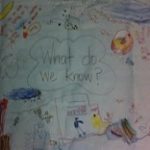
Penguins Are Amazing!: Informational Writing Comes Alive in Kindergarten
Gathered at the carpet one rainy February day, I said to my kindergartners, “We are going to begin researching penguins today. Do you know what it means to do research?’...

Streamlining Research Check-ins
For an obsessive person, I’m oddly disorganized. It’s strange: I am meticulous about list making, obnoxious about planning ahead, and consumed with noting everything on my calendar (I break into...

Common Core Research Shifts
As expository writing becomes more integrated in Common Core, many changes are occurring in my classroom as I redefine student research. There are four shifts that I am making with...
Act I: Delving into Deep Questions with Macbeth (Shakespeare and the Common Core Series)
The Common Core State Standards describe students who are “college and career ready” as exhibiting the following qualities: demonstrating independence building strong content knowledge responding to the varying demands of...

Keep Going
If you have a positive attitude and constantly strive to give your best effort, eventually you will overcome your immediate problems and find you are ready for greater challenges. —Pat...
Mentor Texts for the Writing Process
A staple in every literacy coach’s toolbox is a library of mentor texts. Coaches share these books with teachers as well as students in minilessons to show them how published...
How to Start a Writing Group
Thinking about starting a writing group? Follow these steps. 1. Consider Who You Should Invite Consider people you know who want to write. When I put together my writing group,...
Slow Down: The Power of Two-Word Goals
For the past few years, I’ve made a simple two-word goal for myself. Last year, it was “Talk Less.” I established the goal because I had become irritated with my...
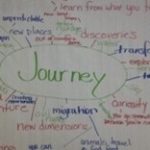
Journeys and Quests: January Literacy Contracts
January is the month of new beginnings, resolutions, and transformations. We love the month of January in the school year because we’ve got long stretches of teaching time. There is...
A Closer Look at Engagement
Yesterday I sat with a small group of first graders during reader’s workshop discussing characters in a book we were reading. I took a second to glance up and around...
