“Hey, Mrs. Burk, I have to come sit in here.” I looked to the doorway from the rocking chair where I was doing my read aloud to see Taleah, a student from last year, standing there with tears streaming down her cheeks.
I motioned for her to join us on the rug as I kept reading. In my brain, I was thinking, This is the third time she’s been sent out of the room this week. This never happened last year. What happened?
I settled my kindergartners into an activity and went over to Taleah. The tears that had dried during the read aloud started flowing again, and she flopped her head onto my shoulder. We sat together for a few minutes. No words were said, but she was communicating her desperation in each tear that dropped onto my shirt.
“How can I help, sweet girl?” I whispered to her when her sobs settled to a sniffle. I knew to wait a minute for her to answer.
“Those pictures you make, I need them for my brain.” The words fell out of her mouth so fast that it took me a second to understand what she was saying.
“Oh, you want a chart to help your brain?”
“I think that’s what will help me. You know how to help my brain.”
I went on to make Taleah her own chart, asking what kind of things would help her brain. Taleah was struggling when math got hard and didn’t ask for help. We made her a chart called “When I am frustrated or bothered, I can…”
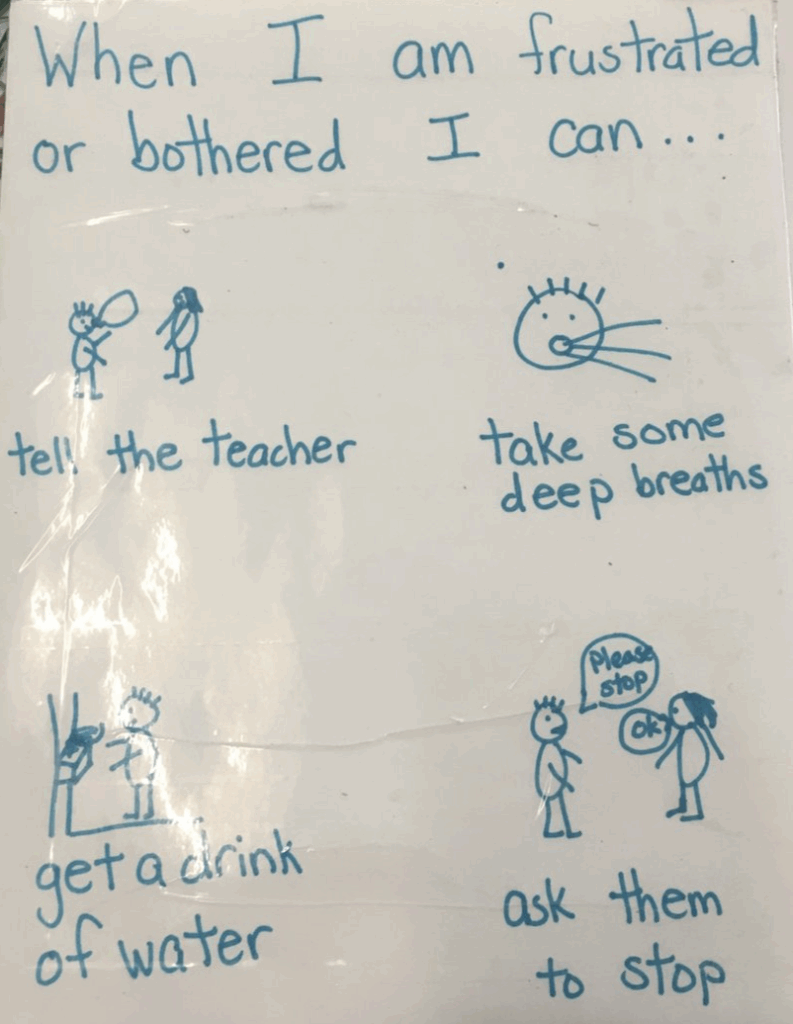
On the drive home, I was in awe of the fact that she had come to me, almost all the way through her first-grade year, asking for my help to make a tool she’s seen be helpful for other kids, knowing that I would help. I thought about all the charts I’ve made for kids over the years and how the process can be adapted for kids and situations.
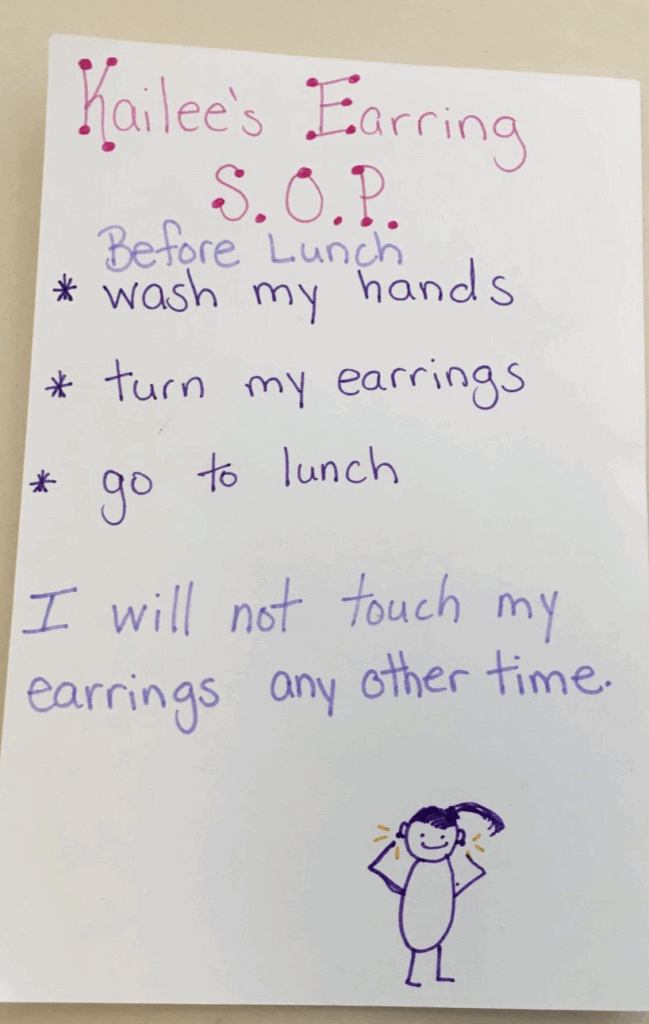
Kailee got her ears pierced and couldn’t stop touching them. We made her “Kailee’s Earring SOP.”
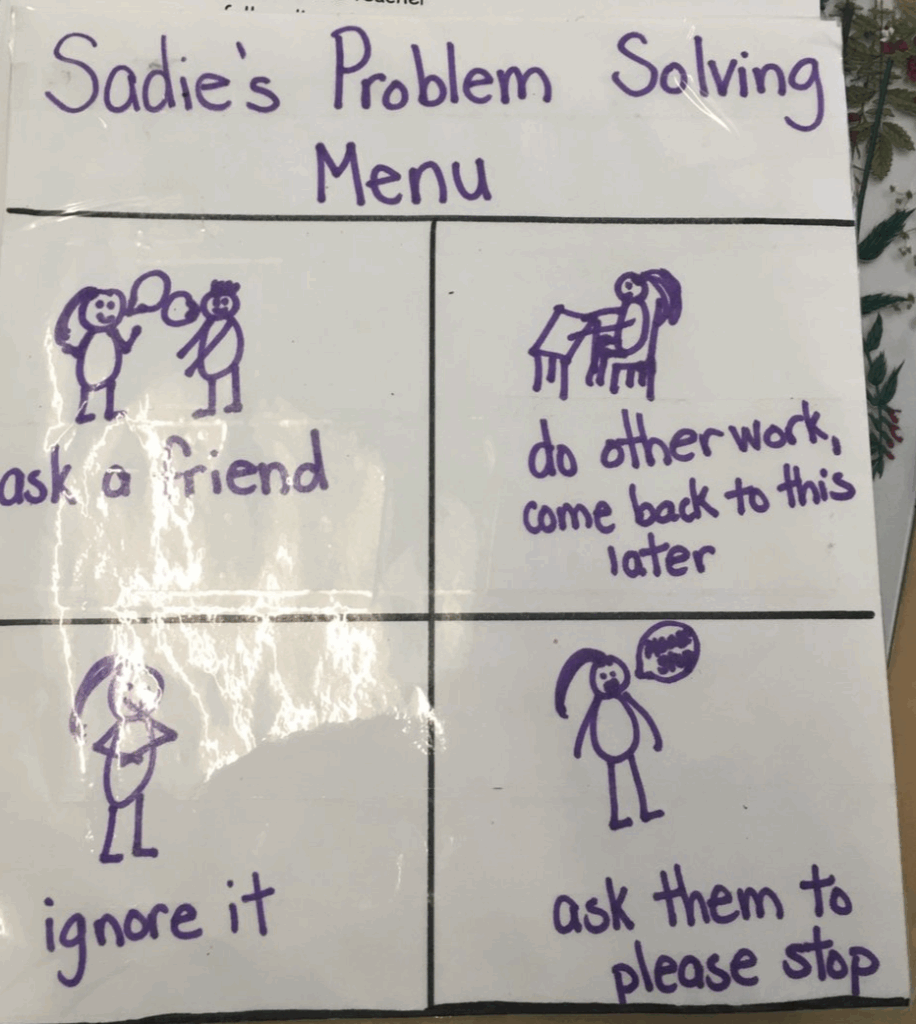
Sadie couldn’t stay in her space and was always interrupting. We made her “Sadie’s Problem Solving Menu.”
Priya got frustrated fast and needed reminders to regulate. We made “Priya can calm down.”
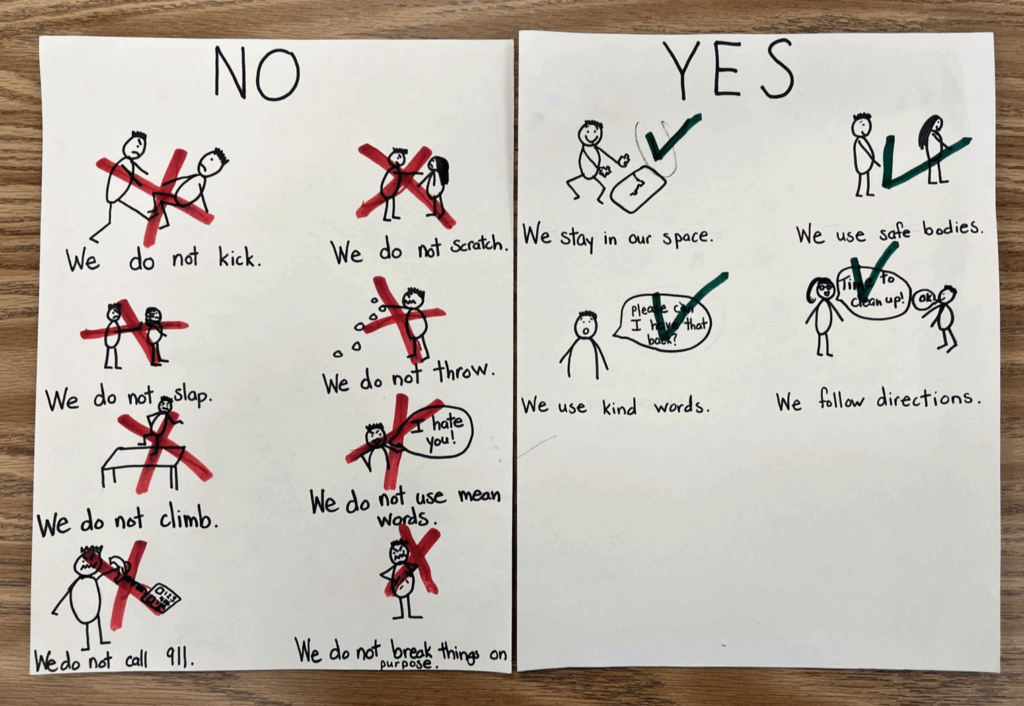
- Riyam was having a hard time being a kind friend. We made her “I can be a kind friend!”
- Watson’s mom traveled for work, and he had a hard time doing what he needed to do when his routine at home was off. We made “Watson’s Mommy Comes Back.”
- Imani got mad FAST and said and did things she later regretted. We made her “Imani’s Regulation Menu.”
There were many more, with a variety of purposes. I saw how effective they were and used them to support kids often. Taleah helped me to see that kids noticed, too. Not in a negative way, but in a “that’s a helpful tool” kind of way.
It can be a quick process to make these, and the impact is long-lasting.
Identify a need.
- A struggle to remain regulated
- A behavior that needs to change
- A reminder that the child needs
- A visual to process something
Name the chart. (It helps to use the child’s name as part of the title; they tend to buy in faster.)
- _______’s Regulation Menu
- _______ Can Do Hard Things
- _______ Is a Kind Friend
- _______ Is a Problem-Solver
Ask the child to brainstorm the strategies that will help. (They will identify the tools most helpful for them.)
- Regulation: belly breathing, take a sip of water, lemon squeezes, etc.
- Perseverance: try again; ask for help; take space, then come back; try a new way; etc.
- Kindness: loving words, safe body, compromise, take turns, etc.
- Problem-Solver: give your brain kind words, try again, ask for help, take space, etc.
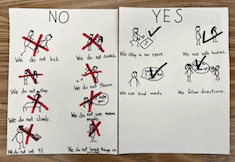
Draw a picture and write the words for each piece of the chart. (You can adjust the number of choices based on the age and stage of the child. You don’t have to be an artist; the pictures can be basic!)
- Simple pictures
- Words that they can read or that other adults can read quickly
- One color so that it’s not too distracting
- Half a sheet of card stock is the sturdiest
Make a copy.
- Keep an extra in their backpack.
- Send a copy home.
- Send a picture and explain the reasoning to their grown-ups.
- Send a picture to the staff who work with the child, explaining how it is to be used.
Reinforce usage.
- Praise the child when they use a strategy.
- Prompt them when you see a time they could use it.
- Encourage the child to take it with them if it will help.
- Accept feedback and make adjustments if necessary.
Support the tool until it becomes irrelevant, and then let it go.
- Eventually, kids will internalize the skills and use them independently.
- Name it, when that happens, to bring their attention to their abilities.
- Slowly encourage them to leave the tool behind as they need it less and less.
- Be sure to communicate the change in the use of the tool to all stakeholders.
Remember, when you give kids the visuals they need, they can be far more independent and internalize the skills necessary to regulate themselves or navigate challenging situations. These tools are designed to provide short-term support to help kids develop skills they need assistance with. As kids internalize skills, they become more successful and are able to build stronger relationships and develop academic strengths.