

Approach with Curiosity
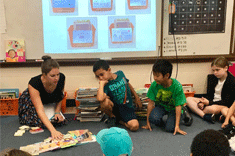
I leaned over to peek at the sticky note jot that launched a book club’s conversation, and I crouched down with curiosity as their talk continued. Their efforts were strong as they attempted to analyze a repeated object in the story that helped them better understand the relationship between two characters. After a brief moment of listening, these readers realized they were stuck, unsure where to take themselves next. Yet I could see that they were right on the edge of a new idea. I linked arms with Cameron, and prompted, “Are Charlotte and Vern connected like this, arm in arm?” They giggled and said no because the two characters were not physically together anymore.
“I wonder if the words even though… might help you here.”
“Oh!” a reader exclaimed. “Even though they are far apart, they are still connected.”
Again, I linked arms with Cameron, and prompted, “If they aren’t connected like this, what part of them is connected?”
Victoria considered thoughtfully, and then said, “Well, their hearts are connected.” I smiled.
“I wonder how your thinking about the characters’ hearts will help your club continue mapping your journey of thought. Keep going!”
This made me consider, What structures have I learned as an educator that support a book club’s level of success? If you’re also wrestling with the challenge of elevating your readers’ thinking through talk, you may consider the following teaching moves.
Plan with Intention
Mirror, Mirror (Inquiry)
Watching videos to mirror what we see and hear is one way we can encourage book club members to strengthen their speaking and listening skills. I’ve tried this in a few ways and encourage you to try them too:
- Searching online. Vimeo and YouTube offer us book club conversations free of charge. Be sure to watch the video yourself first. You’ll want to ensure the video spotlights the speaking and listening skills you are trying to strengthen in your reading community. Once you’ve found the right fit, anchor your readers in a video inquiry. What do they notice these other readers doing well?
- Recording your own. Have you noticed a book club engaged in thoughtful discussion? It could be that they are a model for something as simple as taking turns. It is possible that you have noticed a group of readers who have impressed you with the way they support each other’s comprehension through their abilities to track the plot or word-solve together. Maybe there is a club in your classroom that is skilled at growing new ideas together. They could become a model for inferential thinking. Whatever the strength may be, it’s time to hit Record! Play the video for your reading community and notice what is going well.
- Facilitating a live fishbowl. It could be that a club has caught your attention and you prefer to have your class circle up around them. Compliment the club on their strength and ask if they’d be willing to rewind their conversation and enter the “fishbowl” so that others can learn from them. As students in the larger circle listen, they can take notes mentally or on paper. This could lead to a new speaking and listening chart for your classroom.
Bring a Gift (Analogy)
Years ago, my team sat around a table with Tammy Mulligan to make a new book club plan. “When we go to book club, we need to bring a gift!” she said. It was emphasized that this gift must be an idea, not a simple detail from the text. We went on to discuss how a greater gift would be leaving book club with a new or emerging idea that did not exist when the meeting began. Like a party favor, I thought. I took another glance at Jennifer Serravallo’s “Conversation Playing Board,” a lesson we formerly leaned on during book club units, envisioning how I could merge the structure with Tammy’s analogy.
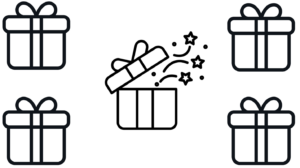
The concept of sticky notes along the outer edge and having one “in play” stayed the same. I simply collected images of closed and open gifts. Before a meeting/discussion/talk party, I remind readers to “wrap a gift of thought.” When they arrive at their meeting/discussion/talk party, they share and consider, Which gift will we open and talk about first? Once the club has worked together to build upon the gift of thought in the middle of the conversation board, they may recognize that there’s not much left to say. In that moment, it’s time to wrap that gift back up for now, jot down any new ideas that were grown, and decide, Which gift will we open and talk about next?
This year, I have noticed readers latching on to this analogy in a strong way. One morning, I heard a reader say, “I need to get my gift ready!” Another alluded to the fact that she had already wrapped hers. Some readers were even sketching a picture of a gift on their sticky note along with their idea. In trying out this tool, it was clear that readers understood the basic structure of the conversation board. However, based on where they were in their novels, I expected more elevated thinking.
Map Your Journey (Organizer)
With students requiring more support to talk long about one thing and balance details with ideas, I set out to answer the question How can I support these readers in having connected conversations? I aimed to offer a structure that would lift readers’ thinking to meet my expectations. Let’s map our journeys of thought. I had been witness to impressive thought journeys during interactive read aloud time, and I knew what readers were capable of. Yet it was clear readers required more structured guidance.
We began by anchoring ourselves in our read aloud text. Here are the steps we tried:
- I presented the class with two jots and asked, “Which jot is a gift we would want to open, keep, and talk more about?”
- I invited think time by saying, “I bet you’re thinking about how you could add to this…”
- I called on one reader who could respond to the presented gift and jotted down their thinking.
- Readers were asked to keep the conversation going with their own club. I leaned in and listened.
- When we came back together, I tracked the journey I overheard.
- Lastly, I prompted the group, “When we add up all of our thoughts across our map here, what new idea do we have to conclude our journey?”
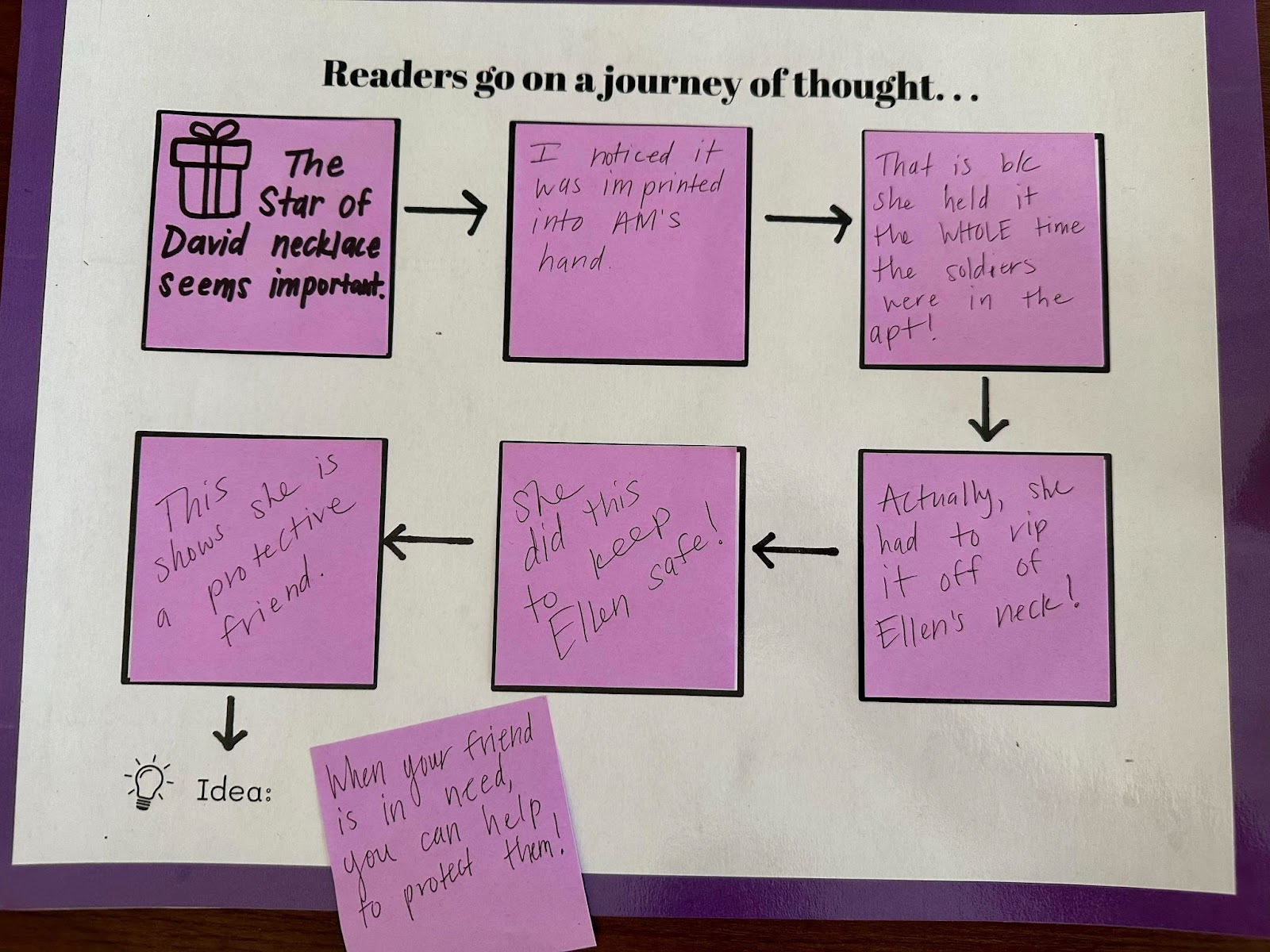
- Book clubs went off to try this work with their own texts.
“Pitfall: Club discussions may feel rigid at first, and students may need to practice having authentic conversations.”
—Sonja Cherry-Paul, Breathing New Life Into Book Clubs: A Practical Guide for TeachersOne might say that this format created rigid conversation—talk, record, talk, record, repeat! However, what I observed was authentic conversations emerging where the arrows lie. Readers were thoughtfully considering the big topic of the conversation. They could rely on a club-mate repeating what they had just said or visually look at their journey of thought to reread what was shared as they considered how to build on others’ ideas. They were no longer just retelling events or repeating the same ideas in different words. Readers were on journeys that led them to new thinking.
Celebrate Success
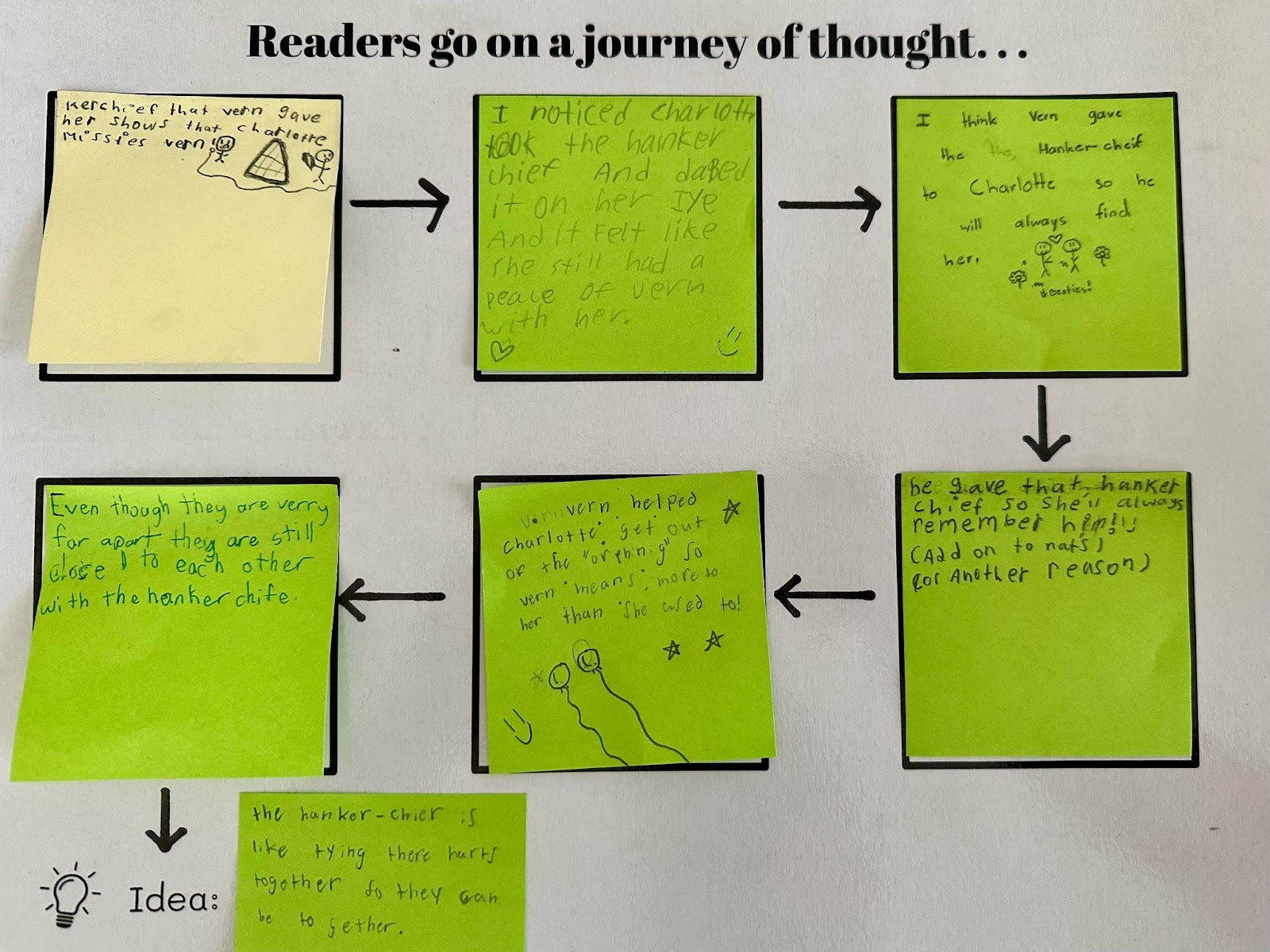
Later, I again crouched down with curiosity to see how Cameron’s book club had moved forward.
When I revisited their conversation map, my heart beamed with pride. This club’s conversation began with “The handkerchief that Vern gave her shows that Charlotte misses Vern” and transformed into “The handkerchief is like tying their hearts together so they can be together.” While it may appear that they reached success by using this new structured tool, I am confident that the accumulation of speaking and listening work—inquiries, the gift analogy, and the journey-of-thought map—helped this club feel successful.