This piece on reflection really struck a chord with me. Your point about taking the time to truly notice the subtle shifts in how students engage is so vital. It actually connects deeply with a project I’ve been pouring my heart into lately, THE Kid at THE BACK Game, which focuses on that exact classroom perspective of the quiet, overlooked observer. Thank you for this beautiful reminder to pause, look closer, and value every student’s unique presence.
This reflective image really pulls you into a contemplative mood. I’ve been exploring similar themes lately and found that learn more about atmospheric shots from a photography site helped me understand composition better.
Welcome to sprunkipyramixed.app, home to Sprunki Pyramixed — the Egyptian-themed Incredibox mod created by Pyramix. We host free browser-based music creation games that you can play instantly with no downloads, no accounts, and no payments. https://sprunkipyramixed.app/
The Kid at the Back
You sit down for your first class. Everyone’s talking, shuffling papers, finding seats. And there he is -back row, not saying a word. You almost didn’t notice him. That was your last chance.
By loading this site or playing the survive min game through this portal, you accept the terms below. If something here doesn’t sit right with you, close the tab. These terms apply only to this fan page — not to FATHER’s official itch.io listing or the game itself.
Love this reminder! It’s so easy to get caught up in the daily hustle, but taking a moment to pause and reflect really makes a huge difference. Thanks for sharing!
This piece really resonates with me. Taking the time to pause and truly notice the quiet, often overlooked students is such an important reminder for anyone working in a classroom. Thank you for sharing this beautiful perspective on observation and reflection.
Fascinating read! Your take on this practice is unique. I’ve seen similar ideas discussed in different contexts and it’s interesting to see the overlap. What’s your take on where this field is heading? More at xchatai.org
This resonates deeply with my own experiences exploring this practice. Thank you for articulating these ideas so clearly. I’ll definitely be following your work going forward! More at free-minesweeper.online
Thank you for sharing this! this approach has been on my mind a lot recently. Your perspective adds a new dimension to my understanding. How did you first become interested in this area? More at pixsprout.com
Fascinating read! Your take on self-expression is unique. I’ve seen similar ideas discussed in different contexts and it’s interesting to see the overlap. What’s your take on where this field is heading? More at growagardencalculator.click
This article on these ideas came at the perfect time for me. I’ve been looking for resources to deepen my understanding. Your writing style makes the subject so engaging. How long have you been writing about this? More at huntprompts.com
Excellent analysis! these themes is an area I’m passionate about and your article adds real value to the conversation. The connections you draw between different aspects are particularly insightful. More at omoggleai.com
This is exactly the kind of content I’ve been looking for on this methodology. Your insights are valuable and well-presented. Have you considered creating more in-depth guides on specific subtopics? More at karmictail.com
This is a really interesting perspective on this framework. I’ve been exploring similar themes on my own journey and it’s fascinating to see how everything connects. What resources would you recommend for someone just starting to explore these concepts? More at omni-flash.me
This resonates deeply with my own experiences exploring self-expression. Thank you for articulating these ideas so clearly. I’ll definitely be following your work going forward! More at sbtitest.me
This really opened my eyes to new possibilities in this methodology. I’ve been studying related concepts and your article connects dots I hadn’t considered. What inspired you to write about this specific angle? More at nanobanana2pro.online
This is exactly the kind of content I’ve been looking for on these themes. Your insights are valuable and well-presented. Have you considered creating more in-depth guides on specific subtopics? More at parseword.net
This article on personal discovery came at the perfect time for me. I’ve been looking for resources to deepen my understanding. Your writing style makes the subject so engaging. How long have you been writing about this? More at cutia.net
I love how you’ve broken down these ideas in such an accessible way. The connections you draw are thought-provoking. Have you noticed any patterns in how people respond to learning about these themes? More at squareface.app
I’ve bookmarked this for future reference. The way you present this practice is both educational and inspiring. It reminds me of some work I’ve been doing on related topics. Would love to connect and discuss further! More at hyperframes.app
This is a really interesting perspective on personal discovery. I’ve been exploring similar themes on my own journey and it’s fascinating to see how everything connects. What resources would you recommend for someone just starting to explore these concepts? More at z-img.net
What a thoughtful exploration of these themes! I’ve shared this with a few friends who are also interested in these themes. Do you accept guest contributions from other writers in this space? More at tomolingo.com
This really opened my eyes to new possibilities in self-expression. I’ve been studying related concepts and your article connects dots I hadn’t considered. What inspired you to write about this specific angle? More at impostergamegenerator.online
This article on this field came at the perfect time for me. I’ve been looking for resources to deepen my understanding. Your writing style makes the subject so engaging. How long have you been writing about this? More at gardenhorizons.app
I’ve bookmarked this for future reference. The way you present these ideas is both educational and inspiring. It reminds me of some work I’ve been doing on related topics. Would love to connect and discuss further! More at amiunc.org
Great article! I’ve been researching these ideas lately and your insights really resonate with me. Do you have any book recommendations for deeper study? More at looksmaxxingai.app
What a thoughtful exploration of this practice! I’ve shared this with a few friends who are also interested in these themes. Do you accept guest contributions from other writers in this space? More at makelookscanned.com
Fascinating read! Your take on this framework is unique. I’ve seen similar ideas discussed in different contexts and it’s interesting to see the overlap. What’s your take on where this field is heading? More at pantonebirthchart.org
Great article! I’ve been researching self-expression lately and your insights really resonate with me. Do you have any book recommendations for deeper study? More at okiaimx.app
This is a really interesting perspective on this practice. I’ve been exploring similar themes on my own journey and it’s fascinating to see how everything connects. What resources would you recommend for someone just starting to explore these concepts? More at growagardencalculator.click
Fascinating read! Your take on self-expression is unique. I’ve seen similar ideas discussed in different contexts and it’s interesting to see the overlap. What’s your take on where this field is heading? More at omoggleai.com
I’ve bookmarked this for future reference. The way you present this methodology is both educational and inspiring. It reminds me of some work I’ve been doing on related topics. Would love to connect and discuss further! More at karmictail.com
This is a really interesting perspective on personal discovery. I’ve been exploring similar themes on my own journey and it’s fascinating to see how everything connects. What resources would you recommend for someone just starting to explore these concepts? More at omni-flash.me
I love how you’ve broken down self-expression in such an accessible way. The connections you draw are thought-provoking. Have you noticed any patterns in how people respond to learning about these themes? More at sbtitest.me
This is exactly the kind of content I’ve been looking for on self-expression. Your insights are valuable and well-presented. Have you considered creating more in-depth guides on specific subtopics? More at nanobanana2pro.online
I’ve bookmarked this for future reference. The way you present personal discovery is both educational and inspiring. It reminds me of some work I’ve been doing on related topics. Would love to connect and discuss further! More at parseword.net
This really opened my eyes to new possibilities in this framework. I’ve been studying related concepts and your article connects dots I hadn’t considered. What inspired you to write about this specific angle? More at cutia.net
This is exactly the kind of content I’ve been looking for on these ideas. Your insights are valuable and well-presented. Have you considered creating more in-depth guides on specific subtopics? More at squareface.app
This is exactly the kind of content I’ve been looking for on this subject. Your insights are valuable and well-presented. Have you considered creating more in-depth guides on specific subtopics? More at squareface.app
This really opened my eyes to new possibilities in this practice. I’ve been studying related concepts and your article connects dots I hadn’t considered. What inspired you to write about this specific angle? More at hyperframes.app
I appreciate the depth of research in this piece. this approach is such a rich subject and you’ve managed to capture its complexity beautifully. Are there any upcoming projects you’re working on related to this? More at hyperframes.app
This article on creative exploration came at the perfect time for me. I’ve been looking for resources to deepen my understanding. Your writing style makes the subject so engaging. How long have you been writing about this? More at z-img.net
This resonates deeply with my own experiences exploring this approach. Thank you for articulating these ideas so clearly. I’ll definitely be following your work going forward! More at tomolingo.com
I keep coming back to this article. Your treatment of this methodology is nuanced and well-researched. It’s refreshing to find content that doesn’t oversimplify complex subjects. What’s your background in this field? More at impostergamegenerator.online
What a thoughtful exploration of these ideas! I’ve shared this with a few friends who are also interested in these themes. Do you accept guest contributions from other writers in this space? More at gardenhorizons.app
I love how you’ve broken down these ideas in such an accessible way. The connections you draw are thought-provoking. Have you noticed any patterns in how people respond to learning about these themes? More at amiunc.org
I love how you’ve broken down these concepts in such an accessible way. The connections you draw are thought-provoking. Have you noticed any patterns in how people respond to learning about these themes? More at growagardencalculator.click
Really well-written piece on creative exploration. The examples you use make the concepts much more tangible. I’ve been exploring similar ideas and it’s great to find quality content like this. What’s your writing process like? More at huntprompts.com
This resonates deeply with my own experiences exploring this subject. Thank you for articulating these ideas so clearly. I’ll definitely be following your work going forward! More at omoggleai.com
This resonates deeply with my own experiences exploring this field. Thank you for articulating these ideas so clearly. I’ll definitely be following your work going forward! More at squareface.app
This is a really interesting perspective on this practice. I’ve been exploring similar themes on my own journey and it’s fascinating to see how everything connects. What resources would you recommend for someone just starting to explore these concepts? More at hyperframes.app
This image has such a calm, contemplative feel to it — the composition really draws you in. It reminds me of something I read on Choice Voicer about how stillness shapes perspective, and this feels like a perfect visual for that idea. Lovely work.
This really opened my eyes to new possibilities in this practice. I’ve been studying related concepts and your article connects dots I hadn’t considered. What inspired you to write about this specific angle? More at growagardencalculator.click
Thank you for sharing this! creative exploration has been on my mind a lot recently. Your perspective adds a new dimension to my understanding. How did you first become interested in this area? More at huntprompts.com
I keep coming back to this article. Your treatment of this approach is nuanced and well-researched. It’s refreshing to find content that doesn’t oversimplify complex subjects. What’s your background in this field? More at squareface.app
This is a really interesting perspective on this field. I’ve been exploring similar themes on my own journey and it’s fascinating to see how everything connects. What resources would you recommend for someone just starting to explore these concepts? More at hyperframes.app
This kind of image really makes me pause and read into it more than I expected. It has that same “simple but you keep looking for meaning” vibe I get when checking a Minecraft Recipe and trying to figure out what fits where.
This one has that quiet, unsettling vibe that sticks with you, especially with the repeating image and the way it feels a little off on purpose. It actually reminded me of narinig mo ba, where the calm surface only makes the hidden tension hit harder.
This image really captures the spirit of reflective practice. The title ‘reflecting235’ makes me think about how we can pause and notice the quiet moments in a classroom—the students who don’t raise their hands, the subtle shifts in engagement. So often we rush through lessons, but an image like this asks us to slow down and consider what we might be missing. It’s a small but powerful reminder to look closer before we move on.
The title “reflecting235” makes me stop and think about how often we rush past quiet moments in the classroom. This image feels like a nudge to slow down and notice the students who don’t demand attention, and to consider what their stillness might be telling us. It’s a simple but effective reminder for anyone who teaches.
The title ‘reflecting235’ immediately made me think about how often we rush past the quiet, unremarkable moments in a classroom. The image itself feels like an invitation to pause and notice the students who don’t demand attention, and to ask what their stillness might be telling us. It’s a small but meaningful reminder that reflection isn’t just about looking back—it’s about looking closer.
The title ‘reflecting235’ makes me stop and think about how often we rush past the quiet, unremarkable moments in a classroom. This image feels like an invitation to slow down and truly notice the students who don’t demand attention, and to consider what their stillness might be telling us. It’s a small but meaningful reminder that reflection isn’t just about looking back—it’s about looking closer.
The post is essentially a single image, yet the title reflecting235 carries a lot of weight. It made me think about how often we rush past quiet moments in the classroom—the students who don’t raise their hands or call for attention. A small, still image like this can be a useful reminder to slow down and look closer before moving on.
Reflecting235 as a title makes me pause and think about how often we rush past the quiet, unremarkable moments in a classroom. This image feels like an invitation to slow down and truly notice the students who don’t demand attention, and to consider what their stillness might be telling us. It’s a small but meaningful reminder that reflection isn’t just about looking back—it’s about looking closer.
Something about the eflection blurs at the edges really works here, and 614 × 408 feels almost too tight for how much depth is in the frame. It has that quiet, moody atmosphere I go looking for on narinigmobagame.org when I want something slow and ambient. Lovely shot from October.
The reflection in this shot has such a calm, almost hypnotic feel to it. I love how quiet images like this can pull you in, kind of like the focus I get from something like Krillion. Would be curious what time of day you captured this at.
Ja, der Kontrast zwischen einem sachlichen Text und plötzlichen Viral-Memes fasziniert mich auch — genau so etwas wie Daily Meme Songs aus Viral Momenten zeigt, wie schnell aus einem ernsten Thema ein teilbares Entertainment-Format wird.
Would like to know if the field guide includes photos or illustrations for tricky species IDs. Birdly Yard seems handy for sorting birds by state and season.
Reflection as a routine rather than an afterthought is the difference between twenty years of teaching experience and one year repeated twenty times. The habit of writing down what actually happened in a lesson — not the plan, the reality — builds professional judgment faster than any workshop. Literacy coaches could borrow this structure for their debriefs too. Thoughtful piece.
Reflection as a routine rather than an afterthought is the difference between twenty years of teaching and one year repeated twenty times — and frameworks matter less than the honesty of the questions. Numerology as a reflection lens is a stretch teachers joke about over lunch, but a colleague ran her birth date through a destiny matrix reading and used it as a journaling prompt for a semester; the framework mattered less than the consistency. Whatever gets reflective writing done is the right tool. Thoughtful piece.
Ez a cikk jól mutatja, mennyire fontos a bizalom. Ha saját képeidből készítenél matricákat, a Sticker Background Remover segíthet letisztítani a hátteret, majd egy lapra rendezni a figurákat. Nekem tetszik, hogy előbb átnézhetem és vághatom a képeket.
Como el artículo no trae mucho contenido, me queda la sensación de que es una pieza de reflexión que solo invita a pensarlo uno mismo. De hecho, mi página sobre Faye recoge guías de historia y perfiles de personajes para profundizar en ese tipo de lecturas con más calma: guías de Faye.
What a fitting image for the theme of reflection – sometimes a single photograph captures the spirit of a teaching moment better than a whole article could. The Choice Literacy collections always have this thoughtful quality. Looking forward to more from this series. And for teachers unwinding after a long classroom day, a quick round of a browser game is a fun way to recharge: https://skate3browser.org/
The reminder to notice how students engage—especially the quiet child in the back row—makes reflection feel practical, not abstract. I’d be curious what routines help teachers catch those small shifts consistently; for turning written reflections into spoken notes, kokoro tts may be worth exploring.
Reflection is such an underrated part of teaching practice. Taking even ten minutes after a lesson to note what landed and what fell flat makes the next day’s teaching so much stronger. Love that Choice Literacy keeps prompting educators to build this habit — the best literacy teachers tend to be the ones who treat every lesson as data for the next one. https://okiaimx.app/
The way this piece circles back to small daily observations stuck with me, especially the part about noticing what we usually rush past. I’ve started keeping a short evening note of one thing I actually looked at closely that day, and it’s changed how I pay attention. Slowing down seems less like a technique and more like a habit worth building.
The way this piece circles back to the same memory three times really stuck with me, each pass adding a detail the earlier ones missed. I’ve found that kind of revisiting necessary too, since the first telling usually protects something. My only pushback is that the ending resolves a little too neatly for how messy the middle feels.
Photos like this say so much about the quiet moments of teaching life — thanks for sharing it. Reflection is such an underrated part of the work we do with readers, and posts like this are a gentle prompt to slow down and notice. I hope the image reflections keep coming. When I step away from planning, I recharge with a few minutes of Stick Run, a simple stickman running game — a short reset like that works wonders before the next idea arrives.
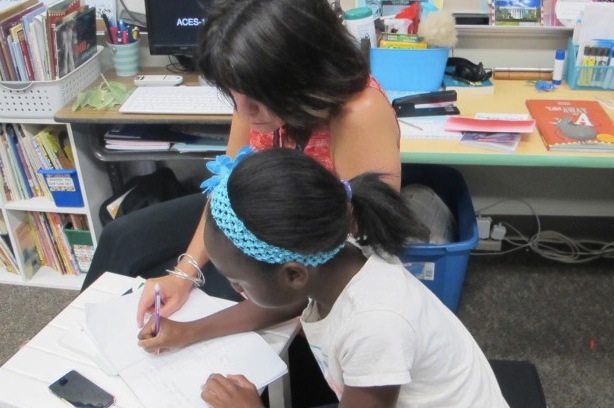
The one-on-one moment captured here says a lot — reflection so often happens in exactly these quiet, side-by-side minutes rather than in formal meetings. The teachers who get the most out of it seem to keep it small: a quick note about what worked, jotted down before the next group walks in. Small touches matter in the room too — even marking a child’s finished work with a stamp from our custom stamp maker turns feedback into a little moment kids look forward to. Thanks for sharing this photo.
I enjoy that Choice Literacy keeps even the small archive images like this one accessible – photos from 2018 like reflecting235 are little time capsules of classroom life, and scrolling back through them is half the charm of a well-tended education site. Images like this always spark ideas for reflection prompts with colleagues. Light aside from a fellow lover of small squares: my after-work hobby is building pixel avatars at squareface.app (https://squareface.app/) – blocky faces, instant joy. Thanks for keeping the archives open to visitors!
Second pass through this archive image and it still works as a reflection prompt – photos like reflecting235 freeze a classroom moment that words alone rarely capture, and that is exactly what makes them useful in professional development conversations. Choice Literacy keeps proving that education sites benefit from accessible archives. Fun break between reading sessions: short browser races – flying roadster rounds at tesla-roadster-ai.com (https://tesla-roadster-ai.com/) reset my focus in minutes. Thanks for keeping these open!
A single photograph like this makes a surprisingly good springboard for classroom talk – asking students what they notice before they interpret always surfaces more careful looking. Reflection works that way in writing too: the first description is easy, but the second layer, why it matters, is where the growth shows. Do the accompanying materials suggest ways to turn images like this into quick-write prompts, or is that left to each teacher?
What a lovely snapshot of one-on-one conferring in action. The way the teacher leans in at the students eye level while keeping her own notebook open says a lot about how writing conferences should work – modeling alongside, not over the shoulder. You can also see how a well-stocked classroom library in the background makes the whole space feel like a place where reading is simply part of the day. Thanks for sharing this glimpse of practice.
The focus on the notebook rather than the ceiling picture is what makes this photo work – it reads as a teacher mid-thought, which is exactly the kind of candid documentation literacy coaches ask for. Natural window light beats the flash-in-a-centered-portrait look most professional development slides suffer from. Source lists like this are handy when building staff meeting decks too. Would love to see the second frame from the same moment if it exists.
What a lovely reflective image — the kind of quiet scene that works so well as a writing prompt in the classroom. Photos like this invite students to slow down and notice details before putting words on the page. Thanks for sharing it as a resource for literacy work!
What a striking reflective image – the way the light doubles the scene in the water makes you pause and look twice. Reflections like this are a wonderful writing prompt for students too. We generate quick visual prompts with https://z-img.net/ for classroom warm-ups. Thanks for sharing this quiet moment!
Reflection is such an underrated part of teaching practice — the moments between lessons are often where the real growth happens. Taking time to notice how students engage, which questions landed and which fell flat, turns everyday classroom routines into professional learning. I appreciate that Choice Literacy keeps encouraging educators to slow down and look closer. Looking forward to more reflections like this one.
Reflection is where real learning happens – whether it’s a student looking back at a reading journal or a teacher reviewing a lesson that didn’t land. The stillness in this image says it well: reflection needs quiet. Even in play, the games I’ve noticed stick best (like Date Everything, https://dateeverything.live/) are the ones that make you pause and think about ordinary things differently. Thanks for the visual reminder to slow down.
This was genuinely informative. Lately I’ve seen more people ask about Headphones or speaking role selection, and I Love the Smiths AI looks like a helpful place to start. Appreciate you sharing it.
Continuous reflection and deliberate practice are essential components of effective teaching and lifelong learning. Taking time to pause, assess, and adapt makes all the difference in growth and literacy leadership.
Visual prompts like reflecting235 on Choice Literacy are a thoughtful reminder of how much quiet observation matters in literacy workshops and Book Guides discussions. Giving readers visual sheets or photo prompts often sparks quicker, more authentic reflections than starting from a blank page. In a lighter everyday context, https://mytypefyi.org/ also uses visual contact sheets to show how intuitive eye-catching choices reveal consistent preferences. Are archived article photos like this one still linked inside the PD2Go or Library lessons?
Really enjoyed this post. I ended up checking out Bulin 47 AI while digging into Bulin 47 AI, and the angle on Prepared freestyle motion is especially interesting. Glad to have found this.
Appreciate the clear write-up here. I’ve been looking into Private 720p video delivery lately, and Crazy Frog AI seems like a practical option. Thanks again for putting this together.
This was genuinely informative. I’ve been comparing a few options around Angry Dance Filter AI, and Angry Dance Filter AI tool feels more focused than most. Thanks again for putting this together.
Glad I came across this article. 13-second vertical 720p video has been on my radar lately, and Day 1 of Owning a Roadster tool looks refreshingly straightforward. Glad to have found this.
Thanks for sharing this. I’ve been looking into 15-second 720p MP4 lately, and AI Zombie tool seems like a practical option. Definitely bookmarking this one.
Really enjoyed this post. the Verity Mod Guide site came up for me recently while I was researching configuring Groq or Ollama, and it looks genuinely useful. Thanks again for putting this together.
This was genuinely informative. I ended up checking out Ozil Goal AI tool while digging into Private 15-second vertical 720p download, and the angle on One-photo goal video generation is especially interesting. This gave me a few good ideas.
Appreciate the clear write-up here. 16-second landscape 720p MP4 has been on my radar lately, and Alors on Danse AI looks refreshingly straightforward. Thanks again for putting this together.
Thanks for sharing this. I ended up checking out AI Raindance while digging into two-photo duo modes, and the angle on Private task history is especially interesting. This gave me a few good ideas.
Thanks for sharing this. Lately I’ve seen more people ask about Prompt-free private delivery, and the A2O Lite Neon Dance site looks like a helpful place to start. Thanks again for putting this together.
Thanks for sharing this. I’ve been comparing a few options around AI Effect Studio, and AI Effect Studio feels more focused than most. This gave me a few good ideas.
This was genuinely informative. I ended up checking out Your First Time in a Fancy Cafe while digging into the original sound, and the angle on 12-second 9:16 720p videos is especially interesting. Thanks for the thoughtful post.
Glad I came across this article. I ended up checking out Tiny Desk AI tool while digging into Tiny Desk AI, and the angle on trio photo-to-video generation is especially interesting. Definitely bookmarking this one.
Reflective practice is foundational for literacy coaches and educators. Taking time to step back, evaluate student growth, and share takeaways enriches classroom practice. For literacy leaders who want to convert written lesson reflections and teaching guides into concise visual video overviews for teacher workshops, AnyToVideo ( https://anytovideo.app/ ) offers an automated way to repurpose educational articles into video presentations. Appreciate the thoughtful insights!
Reflective practice in learning and literacy creates deeper understanding and lasting engagement. Taking time to reflect on creative processes brings so much clarity and fresh perspectives. https://tomolingo.com/
best audio to text converter The point about slowing down to really notice quiet students applies just as much to reviewing your own work. I often record reflection sessions and read the transcript back later, since the parts I skimmed over live in the small pauses. TranscribeBolt turns those recordings into timestamped, editable text right in the browser, so revisiting a lesson takes minutes instead of another listen-through.
music video generator Your note on pausing to notice subtle shifts in student engagement resonates—that same attentiveness matters when creating. For independent musicians and Suno creators, being able to audition the exact 5–10 second hook before paying mirrors that careful observation, and hearing your own MP3 or WAV become a 1080p visual with a clear direction makes the final piece feel intentional rather than rushed.
meme GIF maker The part about pausing to notice how students engage really resonates — attention to small details is what makes any creative work land. I’ve found the same applies to short video content: the difference between dull and shareable often comes down to timing and one clearly observed detail. When I want to turn a quick classroom inside joke into a 5-15 second clip, I’ve been using a photo-to-meme generator that needs no editing skills and exports watermark-free MP4 or GIF straight from the browser.
RapTwins The point about pausing to notice how students engage applies just as well to creative work — a class that looks quiet on the surface often has the most going on underneath. That’s part of why I’ve enjoyed experimenting with RapTwins: you feed it two photos, or just one for a solo, and the AI writes bars from names and an occasion, produces the beat and vocals, and lip-syncs a full 9:16 performance in about three minutes on a stage like Hotel Lobby or Studio Session. No app, no watermark, and failed runs are refunded, which makes it a low-stakes way to give every kid a moment in the spotlight instead of only the loudest voices.
crazy frog ai character swap The point about pausing to notice quiet, overlooked students resonates, and it makes me think about how reflection also applies to the trends we chase. I recently came across a tool that turns one or two photos into the 15-second Crazy Frog chase from the 2026 TikTok trend, complete with the crouch on the invisible moped, the look back, the backflip and the getaway. You can pick a background like a neon city or overpass, choose 16:9 or 9:16, and download the MP4 with no prompt needed since the credit cost appears upfront.
Malfoid comic Your note about pausing to notice subtle shifts in how students engage resonates with how creative tools can also slow us down and make observation feel tangible. I’ve been experimenting with turning a rough selfie into a short animated clip on Malfoid Video, where the credit cost shows up front and failed runs are refunded, which makes playful visual reflection feel low-risk.
AI car video generator The idea of pausing to notice subtle shifts applies just as well to how we test new tools before trusting them with a classroom or a creative project. I’ve been experimenting with a simple photo-to-video workflow that turns a single vehicle image into a short AI clip, and the preview-before-you-commit approach made the process feel far less risky. It’s a nice reminder that reflection isn’t only about students—it’s also about giving ourselves room to try something small and see what actually happens.
gas station dance trend This piece on pausing to truly notice students really resonates — that same attention to small details is what makes a trend work. I’ve been playing with a browser-based tool that recreates the viral gas station dance from just a few photos, keeping the original three-shot template, moves, and music in a 15-second clip. It’s a fun way to join in without filming or writing prompts.
car reveal from photo The point about pausing to truly notice quiet, overlooked students resonates, and it makes me think about how much of that noticing now happens through a screen. Creators chasing the 24 UNO car reveal have a similar challenge, which is why generating the trend video from a single selfie instead of filming a real car feels like a small but genuine shortcut worth exploring.
ai pet video maker The idea of pausing to notice the quiet, overlooked moments in a classroom resonates, and it’s interesting how a single image can carry that reflective weight. For anyone who works with photos of pets, that same principle of capturing personality in a still frame applies—I’ve been using FloofVid to turn one dog or cat photo into a short dancing or talking clip, which is a surprisingly fun way to bring a static moment to life.
Ozil goal AI The point about pausing to notice subtle shifts in how students engage really resonates, and reflection can be a creative act too. That’s the same spirit behind turning a single photo into your own version of Özil’s famous 2016 chip against Ludogorets — keeper, defenders and stadium intact, your clothes kept, finished as a vertical clip.
two photo video generator The idea of truly noticing subtle shifts feels a lot like what happens when you feed two ordinary photos into a trend template and watch familiar faces take on a whole new performance. That same quiet observation is what makes the seaside-pier recast so striking — you pick 5 to 30 seconds, choose a Seedance model and resolution, and get a 4:3 MP4 with the reference soundtrack, no filming or prompt writing required.
Seedance video Your point about truly noticing the quiet, overlooked students resonates—that same attention to subtle detail is what makes a single clear photo work so well in the Bulin 47 AI dance trend, where every gesture and the red-lit restaurant door stay intact while the AI swaps in your face for a ready-to-post vertical clip.
Migos AI trend Your point about truly noticing the quiet, overlooked student connects with something I’ve been thinking about lately—how a simple creative outlet can help people feel seen. That’s part of why the Hotel Lobby AI trend took off: upload two photos and it turns them into a video of those people doing the original dance in the orange A COLORS SHOW booth, complete with the real moves, camera cuts and audio, no prompt or green screen required. Picking a 5, 10 or 15 second clip and posting the MP4 to TikTok or Reels is a small way for anyone to step out of the background and join in.
character consistency The point about quiet observation in the classroom resonates—noticing subtle shifts is often about consistency and attentiveness, which is also why I like tools that keep a character visually consistent from a single photo. For storytellers and game devs especially, having a character hold the same look across poses and scenes matters more than it sounds.
Consistent Character AI 博客 Your note on pausing to notice the quiet, overlooked students really resonates — that same attention to consistency matters when a character has to look like the same person across every image and scene. For storytellers and educators building visual narratives, keeping a face consistent from frame to frame is its own form of care.
humanize chatgpt text Your point about pausing to notice the quiet, overlooked students resonates, and it makes me think about how much of teaching is really about revision—of our attention, our wording, our feedback. When I draft comments or lesson notes with AI now, I run them through a humanizer first so they read like something I’d actually say to a student rather than generic output, and the tone options help match the moment.
chipmunks dance ai Your reflection on noticing the quiet, overlooked students resonates, and it makes me think about how observation can extend into play—three friends in a row, one middle dancer, any empty spot filled by an AI friend, all from a photo or two. It’s a low-effort way to bring a classroom’s quiet energy into a 10- or 15-second trend clip.
same face AI Your point about pausing to truly notice subtle shifts in how students engage applies just as much to visual storytelling—keeping a character’s face consistent across every scene is its own form of careful observation. I’ve been using a free tool that generates images and videos of the same character without any LoRA training, which makes it easy to preserve that quiet, familiar presence from one frame to the next.
transparent PNG layers The reminder to slow down and truly notice subtle shifts applies just as much to visual work—I’ve found that isolating a subject from its background forces that same kind of close looking. Instead of hand-masking for an hour, I’ve been letting AI split an image into separate transparent layers in about a minute, which frees up the attention for actual reflection on composition.
image to video The point about pausing to notice subtle shifts in how students engage applies just as well to creative work — I’ve found that short AI video experiments, like the 4–15 second clips from text or a single frame on tryh3, force that same kind of close observation. Worth a look if you want a quick reflective exercise.
Remove Text Your reflection on noticing the quiet, overlooked students really resonates—it’s easy to get caught up in the daily hustle and miss those subtle shifts in engagement. Taking a moment to pause and truly observe is something more of us should practice, and it’s a good reminder to slow down and pay attention to the details that matter.
motion transfer The reminder to slow down and truly notice subtle shifts really resonates, and it makes me think about how much footage gets shot but never revisited. Instead of re-shooting to swap a character or restyle a scene, tools like Genjutsu AI let you upload a clip, add up to nine reference images, and describe the change while the original motion and timing stay intact.
manga image translator This reflection on noticing the quiet, overlooked students resonates, and it makes me think about how much subtle context we miss when reading across languages. For manga and manhwa pages, keeping the artwork intact while translating dialogue in the speech bubbles is exactly the kind of close attention that helps readers stay connected to those small visual cues.
AI video generator pets The point about pausing to notice how students engage resonates, especially since reflection often happens through playful formats too—turning two photos into a short white-studio keyboard meme video is a surprisingly fun way to capture that creative, collaborative energy with friends or pets.
Rumpelstiltskin AI Video Generator That point about noticing the quiet, overlooked observer in a classroom connects perfectly with how the tiptoe dance meme works: the second photo becomes the onlooker covering their mouth while the first sneaks through the hay in curled shoes. Rumpelstiltskin AI Video even lets you use the same photo twice to play both roles, and it delivers a ready 12-second MP4 with the meme soundtrack — no prompt or editing needed.
ai object remover The reflection on noticing quiet students resonates, and it makes me think about how often small distractions—like an unnoticed watermark or stray object in a classroom photo—pull attention away from the moment itself. When I want a clean image without fiddling with layers, I just brush over the distraction in the browser and let AI rebuild the background, then download a PNG with no extra watermark.
prompt to video online Your observation about pausing to notice subtle shifts in how students engage applies just as much to how we present ideas—clarity matters more than noise. That’s why tools that keep text, numbers, and brand colors exact while turning a prompt into a finished 1080p explainer feel like a natural extension of that reflective mindset, especially for launch videos and animated charts.
photo to music video Your point about pausing to notice subtle shifts in how students engage applies just as well to how we present ourselves online. I’ve been experimenting with turning a single photo into a short, desk-concert-style clip that mirrors that same five-shot rhythm, and it’s surprisingly useful for capturing a playful moment without overproducing it.
goodbye gta v ai Your point about pausing to notice the quiet, overlooked observers in a classroom resonates, and it makes me think about how small, intentional moments can carry real meaning. That same idea of stepping into a brief, focused scene is what drew me to GoodbyeGTA — you upload one photo and become the traveler in a sunset pier farewell, choosing a 15-second ending or the full 29-second cut and downloading a clean 4:3 MP4 right in the browser.
Roadster ramp flip AI Your point about noticing the quiet students who rarely speak up made me think about how often we overlook things until someone forces us to look closer. I recently tried a tool that does something similar for vehicles: you upload one photo of a car or even a toy car, and it generates a short AI video of that object running a ramp flip, with no app or prompt required. It’s a strange but fun way to see something familiar from a completely new angle, and the credit cost shows upfront with no watermark on the results.
viral TikTok trend video The reflection on noticing quiet students resonates, and it makes me think about how much a single photo can carry a character’s whole presence. I recently came across a tool that turns one upload into a short vertical clip of a French-style character performing across eight rebuilt scenes, complete with original sound and no prompting needed. It’s a surprisingly fun way to explore expression and persona from just one still.
AI character generator Your point about noticing the quiet, overlooked students really resonates with me — that same attention to consistent detail is what makes a character feel real across a whole story. I’ve been using a consistent character generator that locks one reference face across anime, watercolor, and photoreal styles, then animates it into video with lip sync, which finally keeps the visual identity steady. It’s a nice parallel to the kind of careful observation you’re describing.
Reflection images like this work so well as writing prompts – give students five quiet minutes with a photo like this and the observations they produce are always surprising. The way the water repeats the landscape invites questions about perspective, which fits beautifully into literacy work. We’ve been experimenting with turning classroom photo prompts into short video writing starters; cutting footage into brief clips with https://openshortsai.app/ makes each prompt feel fresh without extra prep. Thanks for sharing this quiet, thoughtful image!
This post on reflection really resonates. Taking time to notice the quiet shifts in how students engage is exactly the kind of habit that gets lost in a busy classroom day, and your reminder to pause and look closer is well taken. I’ve found that short, low-pressure breaks help me reset and come back to students with fresher attention, and lately I’ve been using a quick browser game for that — Krillion Unlimited — easy to dip into between lessons. Thanks for the thoughtful nudge to slow down and really observe.
This reflection on noticing the quiet students really resonates. It’s easy to focus on the loudest voices, but the subtle shifts in engagement often tell the truest story. Pausing to observe takes patience, and that same patience pays off elsewhere—in reading, in conversation, and in the kind of focused downtime I find at Krillion. Thanks for the reminder to slow down and look closer; I’ll carry that into my next classroom observation.
This piece on reflection really resonates. Taking time to notice the quiet, overlooked students is such an important part of classroom observation—and it’s easy to forget when the day gets busy. I appreciate the reminder to slow down and look closer. Lately I’ve also found that a thoughtful break, like Dig Out the Village, can help reset that same observant mindset. If that sounds useful, it’s worth a look here: Dig Out the Village. Thanks for sharing this beautiful perspective.
This reflection on noticing the quiet shifts in a classroom really resonates. It’s easy to focus on the students who speak first and miss the ones observing everything from the back row. Taking a moment to pause and look closer—rather than rushing to the next activity—can change how we understand engagement. I’ve been trying to bring that same patience into my own reading and planning, keeping curiosity light instead of making every observation a formal assessment. For anyone who enjoys a more playful angle on reflection, Suzy Says play is worth a look.
This reflection on slowing down and truly noticing students really resonates. It’s easy to get caught up in the daily rush and miss the quiet cues that tell us how a learner is actually doing. Taking a moment to pause and observe carefully can shift how we respond to every student, not just the loudest ones. I’ve found that having a simple space to step back and reset my focus makes that kind of attention easier to sustain, which is why I’ve been spending time with Sumbreak lately. Thanks for the reminder to look closer.
This reflection on noticing subtle shifts in student engagement really resonates. It’s easy to focus on the loudest voices, but the quiet observers often carry the most important clues. Taking time to pause and look closer changes how we understand a classroom. I’ve been keeping that idea in mind during my own reflective downtime, and Chibichu has become a pleasant place to visit when I want a gentle mental reset. If you’re curious, you can explore it here: Chibichu. Thanks for the thoughtful reminder to value every student’s presence.
This reflection on noticing the quiet shifts in a classroom really resonated with me—so much of teaching happens in the pauses we almost miss. It’s the same habit of attention that keeps us sharp elsewhere, whether we’re reading a room or making a practical decision like choosing a car. I’ve found that slowing down and looking closely beats rushing every time. If you’re weighing that kind of decision, it’s worth a look at Grand City Auto Vi. Thanks for the reminder to pause and pay attention.
Reflection is one of those practices that sounds simple but takes real discipline — pausing long enough to notice the quiet students, the subtle shifts in energy, the small moments that get lost in a busy day. I appreciate the reminder to slow down and look closer rather than rushing to the next thing. I’ve found that even a short, playful break can reset attention and make room for that kind of noticing; lately I’ve been using Throw Food For Animals as a quick, silly way to lighten the mood before we dive back in. Thanks for the thoughtful piece.
Reflection really is the heart of good teaching—those small shifts in how students engage are easy to miss when the day gets busy, but pausing to notice them changes everything. I’ve found the same habit helps outside the classroom too: taking a moment to look closer before jumping to conclusions. Lately I’ve been pairing that reflective approach with a reliable place to check medical and health-related information, Medical Krillion, and it’s made me a more careful reader overall. Thanks for the reminder to slow down and truly see the quiet students in front of us.
For quick, no-install display testing—especially when evaluating contrast, dead pixels, or uniformity—I’ve found browser-based black screen tools incredibly handy. They’re lightweight, accessible anywhere, and perfect for educators setting up classroom tech or designers calibrating monitors on the fly. If you also test input devices regularly (like checking keyboard responsiveness before a demo or mic clarity during virtual lessons), you’ll appreciate having everything in one place—no downloads, no sign-ups. Try the free all-in-one tool at https://inputchecks.com

 Loading...
aw, i love children, they’re so cute
Snow Rider
For anyone testing a new display, black screen for focus is an easy way to see imperfections without installing anything.
For anyone testing a new display, black screen for focus is an easy way to see imperfections without installing anything. https://blackscreen.space
This piece on reflection really struck a chord with me. Your point about taking the time to truly notice the subtle shifts in how students engage is so vital. It actually connects deeply with a project I’ve been pouring my heart into lately, THE Kid at THE BACK Game, which focuses on that exact classroom perspective of the quiet, overlooked observer. Thank you for this beautiful reminder to pause, look closer, and value every student’s unique presence.
This reflective image really pulls you into a contemplative mood. I’ve been exploring similar themes lately and found that learn more about atmospheric shots from a photography site helped me understand composition better.
slope game is popular for its minimalist design and challenging mechanics that test players’ reaction speed and hand-eye coordination.
Welcome to sprunkipyramixed.app, home to Sprunki Pyramixed — the Egyptian-themed Incredibox mod created by Pyramix. We host free browser-based music creation games that you can play instantly with no downloads, no accounts, and no payments. https://sprunkipyramixed.app/
The Kid at the Back
You sit down for your first class. Everyone’s talking, shuffling papers, finding seats. And there he is -back row, not saying a word. You almost didn’t notice him. That was your last chance.
By loading this site or playing the survive min game through this portal, you accept the terms below. If something here doesn’t sit right with you, close the tab. These terms apply only to this fan page — not to FATHER’s official itch.io listing or the game itself.
Love this reminder! It’s so easy to get caught up in the daily hustle, but taking a moment to pause and reflect really makes a huge difference. Thanks for sharing!
This piece really resonates with me. Taking the time to pause and truly notice the quiet, often overlooked students is such an important reminder for anyone working in a classroom. Thank you for sharing this beautiful perspective on observation and reflection.
Fascinating read! Your take on this practice is unique. I’ve seen similar ideas discussed in different contexts and it’s interesting to see the overlap. What’s your take on where this field is heading? More at xchatai.org
This resonates deeply with my own experiences exploring this practice. Thank you for articulating these ideas so clearly. I’ll definitely be following your work going forward! More at free-minesweeper.online
Thank you for sharing this! this approach has been on my mind a lot recently. Your perspective adds a new dimension to my understanding. How did you first become interested in this area? More at pixsprout.com
Fascinating read! Your take on self-expression is unique. I’ve seen similar ideas discussed in different contexts and it’s interesting to see the overlap. What’s your take on where this field is heading? More at growagardencalculator.click
This article on these ideas came at the perfect time for me. I’ve been looking for resources to deepen my understanding. Your writing style makes the subject so engaging. How long have you been writing about this? More at huntprompts.com
Excellent analysis! these themes is an area I’m passionate about and your article adds real value to the conversation. The connections you draw between different aspects are particularly insightful. More at omoggleai.com
This is exactly the kind of content I’ve been looking for on this methodology. Your insights are valuable and well-presented. Have you considered creating more in-depth guides on specific subtopics? More at karmictail.com
This is a really interesting perspective on this framework. I’ve been exploring similar themes on my own journey and it’s fascinating to see how everything connects. What resources would you recommend for someone just starting to explore these concepts? More at omni-flash.me
This resonates deeply with my own experiences exploring self-expression. Thank you for articulating these ideas so clearly. I’ll definitely be following your work going forward! More at sbtitest.me
This really opened my eyes to new possibilities in this methodology. I’ve been studying related concepts and your article connects dots I hadn’t considered. What inspired you to write about this specific angle? More at nanobanana2pro.online
This is exactly the kind of content I’ve been looking for on these themes. Your insights are valuable and well-presented. Have you considered creating more in-depth guides on specific subtopics? More at parseword.net
This article on personal discovery came at the perfect time for me. I’ve been looking for resources to deepen my understanding. Your writing style makes the subject so engaging. How long have you been writing about this? More at cutia.net
I love how you’ve broken down these ideas in such an accessible way. The connections you draw are thought-provoking. Have you noticed any patterns in how people respond to learning about these themes? More at squareface.app
I’ve bookmarked this for future reference. The way you present this practice is both educational and inspiring. It reminds me of some work I’ve been doing on related topics. Would love to connect and discuss further! More at hyperframes.app
This is a really interesting perspective on personal discovery. I’ve been exploring similar themes on my own journey and it’s fascinating to see how everything connects. What resources would you recommend for someone just starting to explore these concepts? More at z-img.net
What a thoughtful exploration of these themes! I’ve shared this with a few friends who are also interested in these themes. Do you accept guest contributions from other writers in this space? More at tomolingo.com
This really opened my eyes to new possibilities in self-expression. I’ve been studying related concepts and your article connects dots I hadn’t considered. What inspired you to write about this specific angle? More at impostergamegenerator.online
This article on this field came at the perfect time for me. I’ve been looking for resources to deepen my understanding. Your writing style makes the subject so engaging. How long have you been writing about this? More at gardenhorizons.app
I’ve bookmarked this for future reference. The way you present these ideas is both educational and inspiring. It reminds me of some work I’ve been doing on related topics. Would love to connect and discuss further! More at amiunc.org
Great article! I’ve been researching these ideas lately and your insights really resonate with me. Do you have any book recommendations for deeper study? More at looksmaxxingai.app
What a thoughtful exploration of this practice! I’ve shared this with a few friends who are also interested in these themes. Do you accept guest contributions from other writers in this space? More at makelookscanned.com
Fascinating read! Your take on this framework is unique. I’ve seen similar ideas discussed in different contexts and it’s interesting to see the overlap. What’s your take on where this field is heading? More at pantonebirthchart.org
Great article! I’ve been researching self-expression lately and your insights really resonate with me. Do you have any book recommendations for deeper study? More at okiaimx.app
This is a really interesting perspective on this practice. I’ve been exploring similar themes on my own journey and it’s fascinating to see how everything connects. What resources would you recommend for someone just starting to explore these concepts? More at growagardencalculator.click
Fascinating read! Your take on self-expression is unique. I’ve seen similar ideas discussed in different contexts and it’s interesting to see the overlap. What’s your take on where this field is heading? More at omoggleai.com
I’ve bookmarked this for future reference. The way you present this methodology is both educational and inspiring. It reminds me of some work I’ve been doing on related topics. Would love to connect and discuss further! More at karmictail.com
This is a really interesting perspective on personal discovery. I’ve been exploring similar themes on my own journey and it’s fascinating to see how everything connects. What resources would you recommend for someone just starting to explore these concepts? More at omni-flash.me
I love how you’ve broken down self-expression in such an accessible way. The connections you draw are thought-provoking. Have you noticed any patterns in how people respond to learning about these themes? More at sbtitest.me
This is exactly the kind of content I’ve been looking for on self-expression. Your insights are valuable and well-presented. Have you considered creating more in-depth guides on specific subtopics? More at nanobanana2pro.online
I’ve bookmarked this for future reference. The way you present personal discovery is both educational and inspiring. It reminds me of some work I’ve been doing on related topics. Would love to connect and discuss further! More at parseword.net
This really opened my eyes to new possibilities in this framework. I’ve been studying related concepts and your article connects dots I hadn’t considered. What inspired you to write about this specific angle? More at cutia.net
This is exactly the kind of content I’ve been looking for on these ideas. Your insights are valuable and well-presented. Have you considered creating more in-depth guides on specific subtopics? More at squareface.app
This is exactly the kind of content I’ve been looking for on this subject. Your insights are valuable and well-presented. Have you considered creating more in-depth guides on specific subtopics? More at squareface.app
This really opened my eyes to new possibilities in this practice. I’ve been studying related concepts and your article connects dots I hadn’t considered. What inspired you to write about this specific angle? More at hyperframes.app
I appreciate the depth of research in this piece. this approach is such a rich subject and you’ve managed to capture its complexity beautifully. Are there any upcoming projects you’re working on related to this? More at hyperframes.app
This article on creative exploration came at the perfect time for me. I’ve been looking for resources to deepen my understanding. Your writing style makes the subject so engaging. How long have you been writing about this? More at z-img.net
This resonates deeply with my own experiences exploring this approach. Thank you for articulating these ideas so clearly. I’ll definitely be following your work going forward! More at tomolingo.com
I keep coming back to this article. Your treatment of this methodology is nuanced and well-researched. It’s refreshing to find content that doesn’t oversimplify complex subjects. What’s your background in this field? More at impostergamegenerator.online
What a thoughtful exploration of these ideas! I’ve shared this with a few friends who are also interested in these themes. Do you accept guest contributions from other writers in this space? More at gardenhorizons.app
I love how you’ve broken down these ideas in such an accessible way. The connections you draw are thought-provoking. Have you noticed any patterns in how people respond to learning about these themes? More at amiunc.org
The Tip Calculator makes splitting large group bills stress-free.
I love how you’ve broken down these concepts in such an accessible way. The connections you draw are thought-provoking. Have you noticed any patterns in how people respond to learning about these themes? More at growagardencalculator.click
Really well-written piece on creative exploration. The examples you use make the concepts much more tangible. I’ve been exploring similar ideas and it’s great to find quality content like this. What’s your writing process like? More at huntprompts.com
This resonates deeply with my own experiences exploring this subject. Thank you for articulating these ideas so clearly. I’ll definitely be following your work going forward! More at omoggleai.com
This resonates deeply with my own experiences exploring this field. Thank you for articulating these ideas so clearly. I’ll definitely be following your work going forward! More at squareface.app
This is a really interesting perspective on this practice. I’ve been exploring similar themes on my own journey and it’s fascinating to see how everything connects. What resources would you recommend for someone just starting to explore these concepts? More at hyperframes.app
This image has such a calm, contemplative feel to it — the composition really draws you in. It reminds me of something I read on Choice Voicer about how stillness shapes perspective, and this feels like a perfect visual for that idea. Lovely work.
This really opened my eyes to new possibilities in this practice. I’ve been studying related concepts and your article connects dots I hadn’t considered. What inspired you to write about this specific angle? More at growagardencalculator.click
Thank you for sharing this! creative exploration has been on my mind a lot recently. Your perspective adds a new dimension to my understanding. How did you first become interested in this area? More at huntprompts.com
I keep coming back to this article. Your treatment of this approach is nuanced and well-researched. It’s refreshing to find content that doesn’t oversimplify complex subjects. What’s your background in this field? More at squareface.app
This is a really interesting perspective on this field. I’ve been exploring similar themes on my own journey and it’s fascinating to see how everything connects. What resources would you recommend for someone just starting to explore these concepts? More at hyperframes.app
I enjoyed reading this post. The examples around “reflecting235 – Choice Literacy” gave me a useful perspective on the topic.
This kind of image really makes me pause and read into it more than I expected. It has that same “simple but you keep looking for meaning” vibe I get when checking a Minecraft Recipe and trying to figure out what fits where.
This one has that quiet, unsettling vibe that sticks with you, especially with the repeating image and the way it feels a little off on purpose. It actually reminded me of narinig mo ba, where the calm surface only makes the hidden tension hit harder.
This image really captures the spirit of reflective practice. The title ‘reflecting235’ makes me think about how we can pause and notice the quiet moments in a classroom—the students who don’t raise their hands, the subtle shifts in engagement. So often we rush through lessons, but an image like this asks us to slow down and consider what we might be missing. It’s a small but powerful reminder to look closer before we move on.
The title “reflecting235” makes me stop and think about how often we rush past quiet moments in the classroom. This image feels like a nudge to slow down and notice the students who don’t demand attention, and to consider what their stillness might be telling us. It’s a simple but effective reminder for anyone who teaches.
The title ‘reflecting235’ immediately made me think about how often we rush past the quiet, unremarkable moments in a classroom. The image itself feels like an invitation to pause and notice the students who don’t demand attention, and to ask what their stillness might be telling us. It’s a small but meaningful reminder that reflection isn’t just about looking back—it’s about looking closer.
The title ‘reflecting235’ makes me stop and think about how often we rush past the quiet, unremarkable moments in a classroom. This image feels like an invitation to slow down and truly notice the students who don’t demand attention, and to consider what their stillness might be telling us. It’s a small but meaningful reminder that reflection isn’t just about looking back—it’s about looking closer.
The post is essentially a single image, yet the title reflecting235 carries a lot of weight. It made me think about how often we rush past quiet moments in the classroom—the students who don’t raise their hands or call for attention. A small, still image like this can be a useful reminder to slow down and look closer before moving on.
Reflecting235 as a title makes me pause and think about how often we rush past the quiet, unremarkable moments in a classroom. This image feels like an invitation to slow down and truly notice the students who don’t demand attention, and to consider what their stillness might be telling us. It’s a small but meaningful reminder that reflection isn’t just about looking back—it’s about looking closer.
Something about the eflection blurs at the edges really works here, and 614 × 408 feels almost too tight for how much depth is in the frame. It has that quiet, moody atmosphere I go looking for on narinigmobagame.org when I want something slow and ambient. Lovely shot from October.
The reflection in this shot has such a calm, almost hypnotic feel to it. I love how quiet images like this can pull you in, kind of like the focus I get from something like Krillion. Would be curious what time of day you captured this at.
Ja, der Kontrast zwischen einem sachlichen Text und plötzlichen Viral-Memes fasziniert mich auch — genau so etwas wie Daily Meme Songs aus Viral Momenten zeigt, wie schnell aus einem ernsten Thema ein teilbares Entertainment-Format wird.
Would like to know if the field guide includes photos or illustrations for tricky species IDs. Birdly Yard seems handy for sorting birds by state and season.
Reflection as a routine rather than an afterthought is the difference between twenty years of teaching experience and one year repeated twenty times. The habit of writing down what actually happened in a lesson — not the plan, the reality — builds professional judgment faster than any workshop. Literacy coaches could borrow this structure for their debriefs too. Thoughtful piece.
Reflection as a routine rather than an afterthought is the difference between twenty years of teaching and one year repeated twenty times — and frameworks matter less than the honesty of the questions. Numerology as a reflection lens is a stretch teachers joke about over lunch, but a colleague ran her birth date through a destiny matrix reading and used it as a journaling prompt for a semester; the framework mattered less than the consistency. Whatever gets reflective writing done is the right tool. Thoughtful piece.
Ez a cikk jól mutatja, mennyire fontos a bizalom. Ha saját képeidből készítenél matricákat, a Sticker Background Remover segíthet letisztítani a hátteret, majd egy lapra rendezni a figurákat. Nekem tetszik, hogy előbb átnézhetem és vághatom a képeket.
Switching one sound can change the feel of the whole composition. 4237d20d.
Como el artículo no trae mucho contenido, me queda la sensación de que es una pieza de reflexión que solo invita a pensarlo uno mismo. De hecho, mi página sobre Faye recoge guías de historia y perfiles de personajes para profundizar en ese tipo de lecturas con más calma: guías de Faye.
What a fitting image for the theme of reflection – sometimes a single photograph captures the spirit of a teaching moment better than a whole article could. The Choice Literacy collections always have this thoughtful quality. Looking forward to more from this series. And for teachers unwinding after a long classroom day, a quick round of a browser game is a fun way to recharge: https://skate3browser.org/
The reminder to notice how students engage—especially the quiet child in the back row—makes reflection feel practical, not abstract. I’d be curious what routines help teachers catch those small shifts consistently; for turning written reflections into spoken notes, kokoro tts may be worth exploring.
The site runs the game on your own device rather than streaming it from a server. 548e8d7e.
Cloud saves and leaderboards are available when you play online. 94a7d735.
Reflection is such an underrated part of teaching practice. Taking even ten minutes after a lesson to note what landed and what fell flat makes the next day’s teaching so much stronger. Love that Choice Literacy keeps prompting educators to build this habit — the best literacy teachers tend to be the ones who treat every lesson as data for the next one.
https://okiaimx.app/
The way this piece circles back to small daily observations stuck with me, especially the part about noticing what we usually rush past. I’ve started keeping a short evening note of one thing I actually looked at closely that day, and it’s changed how I pay attention. Slowing down seems less like a technique and more like a habit worth building.
The way this piece circles back to the same memory three times really stuck with me, each pass adding a detail the earlier ones missed. I’ve found that kind of revisiting necessary too, since the first telling usually protects something. My only pushback is that the ending resolves a little too neatly for how messy the middle feels.
I’ve been using Skyrim Khajiit Names on similar projects. Skyrim Khajiit Names
Photos like this say so much about the quiet moments of teaching life — thanks for sharing it. Reflection is such an underrated part of the work we do with readers, and posts like this are a gentle prompt to slow down and notice. I hope the image reflections keep coming. When I step away from planning, I recharge with a few minutes of Stick Run, a simple stickman running game — a short reset like that works wonders before the next idea arrives.
The one-on-one moment captured here says a lot — reflection so often happens in exactly these quiet, side-by-side minutes rather than in formal meetings. The teachers who get the most out of it seem to keep it small: a quick note about what worked, jotted down before the next group walks in. Small touches matter in the room too — even marking a child’s finished work with a stamp from our custom stamp maker turns feedback into a little moment kids look forward to. Thanks for sharing this photo.
I enjoy that Choice Literacy keeps even the small archive images like this one accessible – photos from 2018 like reflecting235 are little time capsules of classroom life, and scrolling back through them is half the charm of a well-tended education site. Images like this always spark ideas for reflection prompts with colleagues. Light aside from a fellow lover of small squares: my after-work hobby is building pixel avatars at squareface.app (https://squareface.app/) – blocky faces, instant joy. Thanks for keeping the archives open to visitors!
Second pass through this archive image and it still works as a reflection prompt – photos like reflecting235 freeze a classroom moment that words alone rarely capture, and that is exactly what makes them useful in professional development conversations. Choice Literacy keeps proving that education sites benefit from accessible archives. Fun break between reading sessions: short browser races – flying roadster rounds at tesla-roadster-ai.com (https://tesla-roadster-ai.com/) reset my focus in minutes. Thanks for keeping these open!
A single photograph like this makes a surprisingly good springboard for classroom talk – asking students what they notice before they interpret always surfaces more careful looking. Reflection works that way in writing too: the first description is easy, but the second layer, why it matters, is where the growth shows. Do the accompanying materials suggest ways to turn images like this into quick-write prompts, or is that left to each teacher?
What a lovely snapshot of one-on-one conferring in action. The way the teacher leans in at the students eye level while keeping her own notebook open says a lot about how writing conferences should work – modeling alongside, not over the shoulder. You can also see how a well-stocked classroom library in the background makes the whole space feel like a place where reading is simply part of the day. Thanks for sharing this glimpse of practice.
The focus on the notebook rather than the ceiling picture is what makes this photo work – it reads as a teacher mid-thought, which is exactly the kind of candid documentation literacy coaches ask for. Natural window light beats the flash-in-a-centered-portrait look most professional development slides suffer from. Source lists like this are handy when building staff meeting decks too. Would love to see the second frame from the same moment if it exists.
What a lovely reflective image — the kind of quiet scene that works so well as a writing prompt in the classroom. Photos like this invite students to slow down and notice details before putting words on the page. Thanks for sharing it as a resource for literacy work!
What a striking reflective image – the way the light doubles the scene in the water makes you pause and look twice. Reflections like this are a wonderful writing prompt for students too. We generate quick visual prompts with https://z-img.net/ for classroom warm-ups. Thanks for sharing this quiet moment!
Reflection is such an underrated part of teaching practice — the moments between lessons are often where the real growth happens. Taking time to notice how students engage, which questions landed and which fell flat, turns everyday classroom routines into professional learning. I appreciate that Choice Literacy keeps encouraging educators to slow down and look closer. Looking forward to more reflections like this one.
Reflection is where real learning happens – whether it’s a student looking back at a reading journal or a teacher reviewing a lesson that didn’t land. The stillness in this image says it well: reflection needs quiet. Even in play, the games I’ve noticed stick best (like Date Everything, https://dateeverything.live/) are the ones that make you pause and think about ordinary things differently. Thanks for the visual reminder to slow down.
This was genuinely informative. Lately I’ve seen more people ask about Headphones or speaking role selection, and I Love the Smiths AI looks like a helpful place to start. Appreciate you sharing it.
Continuous reflection and deliberate practice are essential components of effective teaching and lifelong learning. Taking time to pause, assess, and adapt makes all the difference in growth and literacy leadership.
Visual prompts like reflecting235 on Choice Literacy are a thoughtful reminder of how much quiet observation matters in literacy workshops and Book Guides discussions. Giving readers visual sheets or photo prompts often sparks quicker, more authentic reflections than starting from a blank page. In a lighter everyday context, https://mytypefyi.org/ also uses visual contact sheets to show how intuitive eye-catching choices reveal consistent preferences. Are archived article photos like this one still linked inside the PD2Go or Library lessons?
Really enjoyed this post. I ended up checking out Bulin 47 AI while digging into Bulin 47 AI, and the angle on Prepared freestyle motion is especially interesting. Glad to have found this.
Appreciate the clear write-up here. I’ve been looking into Private 720p video delivery lately, and Crazy Frog AI seems like a practical option. Thanks again for putting this together.
This was genuinely informative. I’ve been comparing a few options around Angry Dance Filter AI, and Angry Dance Filter AI tool feels more focused than most. Thanks again for putting this together.
Glad I came across this article. 13-second vertical 720p video has been on my radar lately, and Day 1 of Owning a Roadster tool looks refreshingly straightforward. Glad to have found this.
Thanks for sharing this. I’ve been looking into 15-second 720p MP4 lately, and AI Zombie tool seems like a practical option. Definitely bookmarking this one.
Really enjoyed this post. the Verity Mod Guide site came up for me recently while I was researching configuring Groq or Ollama, and it looks genuinely useful. Thanks again for putting this together.
This was genuinely informative. I ended up checking out Ozil Goal AI tool while digging into Private 15-second vertical 720p download, and the angle on One-photo goal video generation is especially interesting. This gave me a few good ideas.
Appreciate the clear write-up here. 16-second landscape 720p MP4 has been on my radar lately, and Alors on Danse AI looks refreshingly straightforward. Thanks again for putting this together.
Thanks for sharing this. I ended up checking out AI Raindance while digging into two-photo duo modes, and the angle on Private task history is especially interesting. This gave me a few good ideas.
Thanks for sharing this. Lately I’ve seen more people ask about Prompt-free private delivery, and the A2O Lite Neon Dance site looks like a helpful place to start. Thanks again for putting this together.
Thanks for sharing this. I’ve been comparing a few options around AI Effect Studio, and AI Effect Studio feels more focused than most. This gave me a few good ideas.
This was genuinely informative. I ended up checking out Your First Time in a Fancy Cafe while digging into the original sound, and the angle on 12-second 9:16 720p videos is especially interesting. Thanks for the thoughtful post.
Glad I came across this article. I ended up checking out Tiny Desk AI tool while digging into Tiny Desk AI, and the angle on trio photo-to-video generation is especially interesting. Definitely bookmarking this one.
Reflective practice is foundational for literacy coaches and educators. Taking time to step back, evaluate student growth, and share takeaways enriches classroom practice. For literacy leaders who want to convert written lesson reflections and teaching guides into concise visual video overviews for teacher workshops, AnyToVideo ( https://anytovideo.app/ ) offers an automated way to repurpose educational articles into video presentations. Appreciate the thoughtful insights!
页面只有标题,没有提供文章正文,暂时无法针对其中的观点或方法展开讨论。能否补充文章内容?
yix.ai
Reflective practice in learning and literacy creates deeper understanding and lasting engagement. Taking time to reflect on creative processes brings so much clarity and fresh perspectives. https://tomolingo.com/
best audio to text converter The point about slowing down to really notice quiet students applies just as much to reviewing your own work. I often record reflection sessions and read the transcript back later, since the parts I skimmed over live in the small pauses. TranscribeBolt turns those recordings into timestamped, editable text right in the browser, so revisiting a lesson takes minutes instead of another listen-through.
music video generator Your note on pausing to notice subtle shifts in student engagement resonates—that same attentiveness matters when creating. For independent musicians and Suno creators, being able to audition the exact 5–10 second hook before paying mirrors that careful observation, and hearing your own MP3 or WAV become a 1080p visual with a clear direction makes the final piece feel intentional rather than rushed.
meme GIF maker The part about pausing to notice how students engage really resonates — attention to small details is what makes any creative work land. I’ve found the same applies to short video content: the difference between dull and shareable often comes down to timing and one clearly observed detail. When I want to turn a quick classroom inside joke into a 5-15 second clip, I’ve been using a photo-to-meme generator that needs no editing skills and exports watermark-free MP4 or GIF straight from the browser.
RapTwins The point about pausing to notice how students engage applies just as well to creative work — a class that looks quiet on the surface often has the most going on underneath. That’s part of why I’ve enjoyed experimenting with RapTwins: you feed it two photos, or just one for a solo, and the AI writes bars from names and an occasion, produces the beat and vocals, and lip-syncs a full 9:16 performance in about three minutes on a stage like Hotel Lobby or Studio Session. No app, no watermark, and failed runs are refunded, which makes it a low-stakes way to give every kid a moment in the spotlight instead of only the loudest voices.
crazy frog ai character swap The point about pausing to notice quiet, overlooked students resonates, and it makes me think about how reflection also applies to the trends we chase. I recently came across a tool that turns one or two photos into the 15-second Crazy Frog chase from the 2026 TikTok trend, complete with the crouch on the invisible moped, the look back, the backflip and the getaway. You can pick a background like a neon city or overpass, choose 16:9 or 9:16, and download the MP4 with no prompt needed since the credit cost appears upfront.
Malfoid comic Your note about pausing to notice subtle shifts in how students engage resonates with how creative tools can also slow us down and make observation feel tangible. I’ve been experimenting with turning a rough selfie into a short animated clip on Malfoid Video, where the credit cost shows up front and failed runs are refunded, which makes playful visual reflection feel low-risk.
AI car video generator The idea of pausing to notice subtle shifts applies just as well to how we test new tools before trusting them with a classroom or a creative project. I’ve been experimenting with a simple photo-to-video workflow that turns a single vehicle image into a short AI clip, and the preview-before-you-commit approach made the process feel far less risky. It’s a nice reminder that reflection isn’t only about students—it’s also about giving ourselves room to try something small and see what actually happens.
gas station dance trend This piece on pausing to truly notice students really resonates — that same attention to small details is what makes a trend work. I’ve been playing with a browser-based tool that recreates the viral gas station dance from just a few photos, keeping the original three-shot template, moves, and music in a 15-second clip. It’s a fun way to join in without filming or writing prompts.
car reveal from photo The point about pausing to truly notice quiet, overlooked students resonates, and it makes me think about how much of that noticing now happens through a screen. Creators chasing the 24 UNO car reveal have a similar challenge, which is why generating the trend video from a single selfie instead of filming a real car feels like a small but genuine shortcut worth exploring.
ai pet video maker The idea of pausing to notice the quiet, overlooked moments in a classroom resonates, and it’s interesting how a single image can carry that reflective weight. For anyone who works with photos of pets, that same principle of capturing personality in a still frame applies—I’ve been using FloofVid to turn one dog or cat photo into a short dancing or talking clip, which is a surprisingly fun way to bring a static moment to life.
Ozil goal AI The point about pausing to notice subtle shifts in how students engage really resonates, and reflection can be a creative act too. That’s the same spirit behind turning a single photo into your own version of Özil’s famous 2016 chip against Ludogorets — keeper, defenders and stadium intact, your clothes kept, finished as a vertical clip.
two photo video generator The idea of truly noticing subtle shifts feels a lot like what happens when you feed two ordinary photos into a trend template and watch familiar faces take on a whole new performance. That same quiet observation is what makes the seaside-pier recast so striking — you pick 5 to 30 seconds, choose a Seedance model and resolution, and get a 4:3 MP4 with the reference soundtrack, no filming or prompt writing required.
Seedance video Your point about truly noticing the quiet, overlooked students resonates—that same attention to subtle detail is what makes a single clear photo work so well in the Bulin 47 AI dance trend, where every gesture and the red-lit restaurant door stay intact while the AI swaps in your face for a ready-to-post vertical clip.
Migos AI trend Your point about truly noticing the quiet, overlooked student connects with something I’ve been thinking about lately—how a simple creative outlet can help people feel seen. That’s part of why the Hotel Lobby AI trend took off: upload two photos and it turns them into a video of those people doing the original dance in the orange A COLORS SHOW booth, complete with the real moves, camera cuts and audio, no prompt or green screen required. Picking a 5, 10 or 15 second clip and posting the MP4 to TikTok or Reels is a small way for anyone to step out of the background and join in.
character consistency The point about quiet observation in the classroom resonates—noticing subtle shifts is often about consistency and attentiveness, which is also why I like tools that keep a character visually consistent from a single photo. For storytellers and game devs especially, having a character hold the same look across poses and scenes matters more than it sounds.
Consistent Character AI 博客 Your note on pausing to notice the quiet, overlooked students really resonates — that same attention to consistency matters when a character has to look like the same person across every image and scene. For storytellers and educators building visual narratives, keeping a face consistent from frame to frame is its own form of care.
humanize chatgpt text Your point about pausing to notice the quiet, overlooked students resonates, and it makes me think about how much of teaching is really about revision—of our attention, our wording, our feedback. When I draft comments or lesson notes with AI now, I run them through a humanizer first so they read like something I’d actually say to a student rather than generic output, and the tone options help match the moment.
chipmunks dance ai Your reflection on noticing the quiet, overlooked students resonates, and it makes me think about how observation can extend into play—three friends in a row, one middle dancer, any empty spot filled by an AI friend, all from a photo or two. It’s a low-effort way to bring a classroom’s quiet energy into a 10- or 15-second trend clip.
same face AI Your point about pausing to truly notice subtle shifts in how students engage applies just as much to visual storytelling—keeping a character’s face consistent across every scene is its own form of careful observation. I’ve been using a free tool that generates images and videos of the same character without any LoRA training, which makes it easy to preserve that quiet, familiar presence from one frame to the next.
transparent PNG layers The reminder to slow down and truly notice subtle shifts applies just as much to visual work—I’ve found that isolating a subject from its background forces that same kind of close looking. Instead of hand-masking for an hour, I’ve been letting AI split an image into separate transparent layers in about a minute, which frees up the attention for actual reflection on composition.
image to video The point about pausing to notice subtle shifts in how students engage applies just as well to creative work — I’ve found that short AI video experiments, like the 4–15 second clips from text or a single frame on tryh3, force that same kind of close observation. Worth a look if you want a quick reflective exercise.
Remove Text Your reflection on noticing the quiet, overlooked students really resonates—it’s easy to get caught up in the daily hustle and miss those subtle shifts in engagement. Taking a moment to pause and truly observe is something more of us should practice, and it’s a good reminder to slow down and pay attention to the details that matter.
motion transfer The reminder to slow down and truly notice subtle shifts really resonates, and it makes me think about how much footage gets shot but never revisited. Instead of re-shooting to swap a character or restyle a scene, tools like Genjutsu AI let you upload a clip, add up to nine reference images, and describe the change while the original motion and timing stay intact.
manga image translator This reflection on noticing the quiet, overlooked students resonates, and it makes me think about how much subtle context we miss when reading across languages. For manga and manhwa pages, keeping the artwork intact while translating dialogue in the speech bubbles is exactly the kind of close attention that helps readers stay connected to those small visual cues.
AI video generator pets The point about pausing to notice how students engage resonates, especially since reflection often happens through playful formats too—turning two photos into a short white-studio keyboard meme video is a surprisingly fun way to capture that creative, collaborative energy with friends or pets.
Rumpelstiltskin AI Video Generator That point about noticing the quiet, overlooked observer in a classroom connects perfectly with how the tiptoe dance meme works: the second photo becomes the onlooker covering their mouth while the first sneaks through the hay in curled shoes. Rumpelstiltskin AI Video even lets you use the same photo twice to play both roles, and it delivers a ready 12-second MP4 with the meme soundtrack — no prompt or editing needed.
ai object remover The reflection on noticing quiet students resonates, and it makes me think about how often small distractions—like an unnoticed watermark or stray object in a classroom photo—pull attention away from the moment itself. When I want a clean image without fiddling with layers, I just brush over the distraction in the browser and let AI rebuild the background, then download a PNG with no extra watermark.
prompt to video online Your observation about pausing to notice subtle shifts in how students engage applies just as much to how we present ideas—clarity matters more than noise. That’s why tools that keep text, numbers, and brand colors exact while turning a prompt into a finished 1080p explainer feel like a natural extension of that reflective mindset, especially for launch videos and animated charts.
photo to music video Your point about pausing to notice subtle shifts in how students engage applies just as well to how we present ourselves online. I’ve been experimenting with turning a single photo into a short, desk-concert-style clip that mirrors that same five-shot rhythm, and it’s surprisingly useful for capturing a playful moment without overproducing it.
goodbye gta v ai Your point about pausing to notice the quiet, overlooked observers in a classroom resonates, and it makes me think about how small, intentional moments can carry real meaning. That same idea of stepping into a brief, focused scene is what drew me to GoodbyeGTA — you upload one photo and become the traveler in a sunset pier farewell, choosing a 15-second ending or the full 29-second cut and downloading a clean 4:3 MP4 right in the browser.
Roadster ramp flip AI Your point about noticing the quiet students who rarely speak up made me think about how often we overlook things until someone forces us to look closer. I recently tried a tool that does something similar for vehicles: you upload one photo of a car or even a toy car, and it generates a short AI video of that object running a ramp flip, with no app or prompt required. It’s a strange but fun way to see something familiar from a completely new angle, and the credit cost shows upfront with no watermark on the results.
viral TikTok trend video The reflection on noticing quiet students resonates, and it makes me think about how much a single photo can carry a character’s whole presence. I recently came across a tool that turns one upload into a short vertical clip of a French-style character performing across eight rebuilt scenes, complete with original sound and no prompting needed. It’s a surprisingly fun way to explore expression and persona from just one still.
AI character generator Your point about noticing the quiet, overlooked students really resonates with me — that same attention to consistent detail is what makes a character feel real across a whole story. I’ve been using a consistent character generator that locks one reference face across anime, watercolor, and photoreal styles, then animates it into video with lip sync, which finally keeps the visual identity steady. It’s a nice parallel to the kind of careful observation you’re describing.
Reflection images like this work so well as writing prompts – give students five quiet minutes with a photo like this and the observations they produce are always surprising. The way the water repeats the landscape invites questions about perspective, which fits beautifully into literacy work. We’ve been experimenting with turning classroom photo prompts into short video writing starters; cutting footage into brief clips with https://openshortsai.app/ makes each prompt feel fresh without extra prep. Thanks for sharing this quiet, thoughtful image!
This post on reflection really resonates. Taking time to notice the quiet shifts in how students engage is exactly the kind of habit that gets lost in a busy classroom day, and your reminder to pause and look closer is well taken. I’ve found that short, low-pressure breaks help me reset and come back to students with fresher attention, and lately I’ve been using a quick browser game for that — Krillion Unlimited — easy to dip into between lessons. Thanks for the thoughtful nudge to slow down and really observe.
This reflection on noticing the quiet students really resonates. It’s easy to focus on the loudest voices, but the subtle shifts in engagement often tell the truest story. Pausing to observe takes patience, and that same patience pays off elsewhere—in reading, in conversation, and in the kind of focused downtime I find at Krillion. Thanks for the reminder to slow down and look closer; I’ll carry that into my next classroom observation.
This piece on reflection really resonates. Taking time to notice the quiet, overlooked students is such an important part of classroom observation—and it’s easy to forget when the day gets busy. I appreciate the reminder to slow down and look closer. Lately I’ve also found that a thoughtful break, like Dig Out the Village, can help reset that same observant mindset. If that sounds useful, it’s worth a look here: Dig Out the Village. Thanks for sharing this beautiful perspective.
This reflection on noticing the quiet shifts in a classroom really resonates. It’s easy to focus on the students who speak first and miss the ones observing everything from the back row. Taking a moment to pause and look closer—rather than rushing to the next activity—can change how we understand engagement. I’ve been trying to bring that same patience into my own reading and planning, keeping curiosity light instead of making every observation a formal assessment. For anyone who enjoys a more playful angle on reflection, Suzy Says play is worth a look.
This reflection on slowing down and truly noticing students really resonates. It’s easy to get caught up in the daily rush and miss the quiet cues that tell us how a learner is actually doing. Taking a moment to pause and observe carefully can shift how we respond to every student, not just the loudest ones. I’ve found that having a simple space to step back and reset my focus makes that kind of attention easier to sustain, which is why I’ve been spending time with Sumbreak lately. Thanks for the reminder to look closer.
This reflection on noticing subtle shifts in student engagement really resonates. It’s easy to focus on the loudest voices, but the quiet observers often carry the most important clues. Taking time to pause and look closer changes how we understand a classroom. I’ve been keeping that idea in mind during my own reflective downtime, and Chibichu has become a pleasant place to visit when I want a gentle mental reset. If you’re curious, you can explore it here: Chibichu. Thanks for the thoughtful reminder to value every student’s presence.
This reflection on noticing the quiet shifts in a classroom really resonated with me—so much of teaching happens in the pauses we almost miss. It’s the same habit of attention that keeps us sharp elsewhere, whether we’re reading a room or making a practical decision like choosing a car. I’ve found that slowing down and looking closely beats rushing every time. If you’re weighing that kind of decision, it’s worth a look at Grand City Auto Vi. Thanks for the reminder to pause and pay attention.
Reflection is one of those practices that sounds simple but takes real discipline — pausing long enough to notice the quiet students, the subtle shifts in energy, the small moments that get lost in a busy day. I appreciate the reminder to slow down and look closer rather than rushing to the next thing. I’ve found that even a short, playful break can reset attention and make room for that kind of noticing; lately I’ve been using Throw Food For Animals as a quick, silly way to lighten the mood before we dive back in. Thanks for the thoughtful piece.
Reflection really is the heart of good teaching—those small shifts in how students engage are easy to miss when the day gets busy, but pausing to notice them changes everything. I’ve found the same habit helps outside the classroom too: taking a moment to look closer before jumping to conclusions. Lately I’ve been pairing that reflective approach with a reliable place to check medical and health-related information, Medical Krillion, and it’s made me a more careful reader overall. Thanks for the reminder to slow down and truly see the quiet students in front of us.
For quick, no-install display testing—especially when evaluating contrast, dead pixels, or uniformity—I’ve found browser-based black screen tools incredibly handy. They’re lightweight, accessible anywhere, and perfect for educators setting up classroom tech or designers calibrating monitors on the fly. If you also test input devices regularly (like checking keyboard responsiveness before a demo or mic clarity during virtual lessons), you’ll appreciate having everything in one place—no downloads, no sign-ups. Try the free all-in-one tool at https://inputchecks.com