The purple crayon moved across the screen and a new world emerged. As my kids and I watched Harold and the Purple Crayon in the movie theater, I wore a smile on my face and a heart proudly filled with nostalgia. Piling into the car after the movie, I eagerly shared with my kids how this book-turned-movie holds a special place in my heart, even now as an adult. The way Harold’s purple crayon brings objects to life for him mesmerized me as a young child. This book supported the use of my imagination and all the worlds it could open up for me and take me to.
This classic book, along with books like We’re Going on a Bear Hunt and Blueberries for Sal, continue to bring me joy as I reflect on the memories made while hearing the words and observing the illustrations to match. What do all of these books have in common? While we could engage in a comparison of characters or themes in search of their commonalities, I will share that each of these books was found on the shelves of my own classroom libraries as an elementary student!
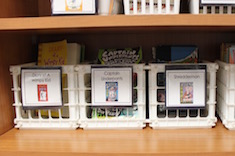
Yet with the joy and nostalgia that these books bring, my love and appreciation of the classroom library, and the books that fill it, has been challenged recently. With a shift placing a heavier emphasis on phonics instruction, decodable books have risen in popularity. And this has many of us educators questioning ourselves, our values, and our beliefs when it comes to our classroom libraries. Two of the questions swarming through the air and in our minds are
Should I replace the books in my classroom library to be decodable? and What do I do with my classroom library now?
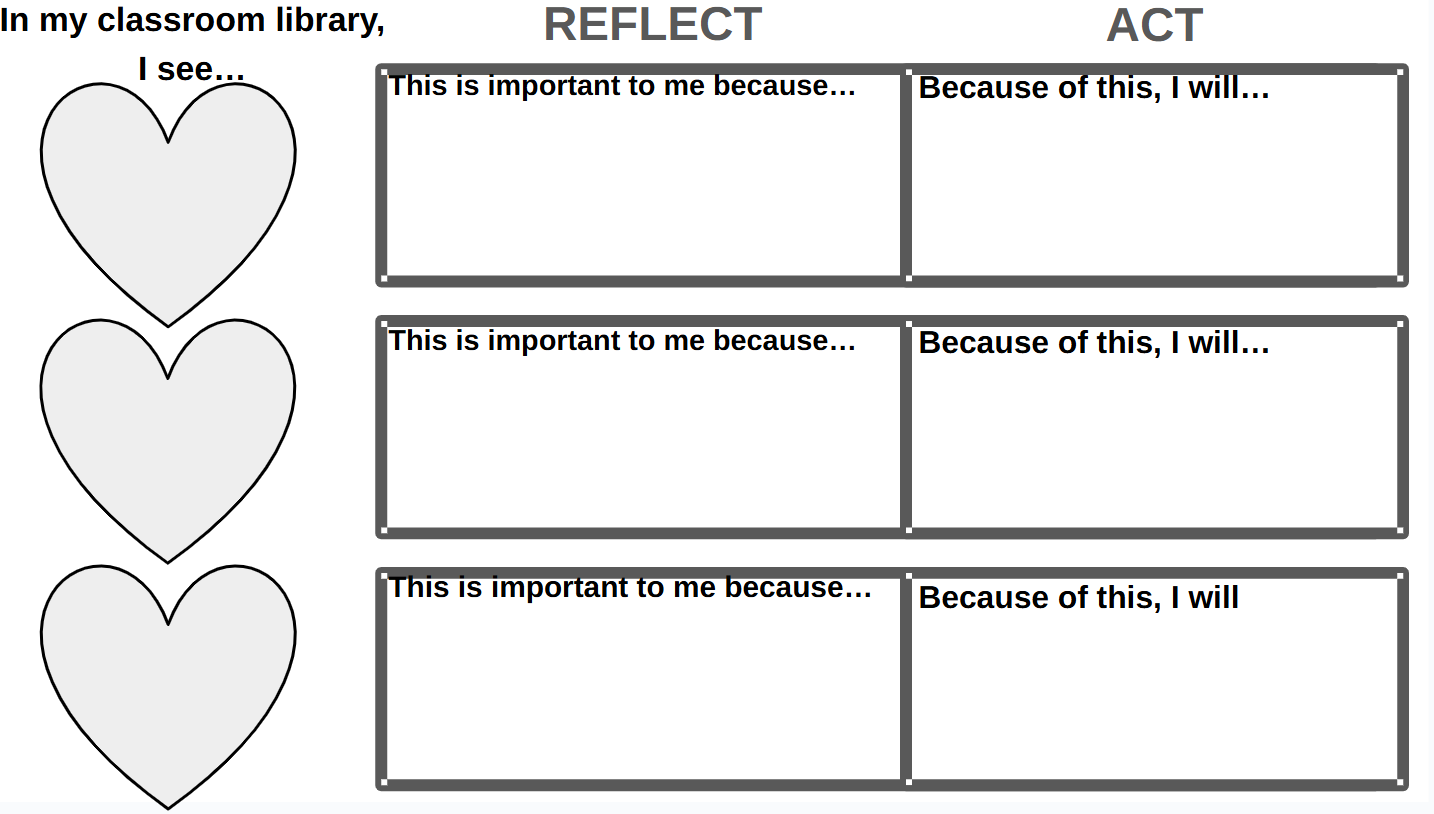
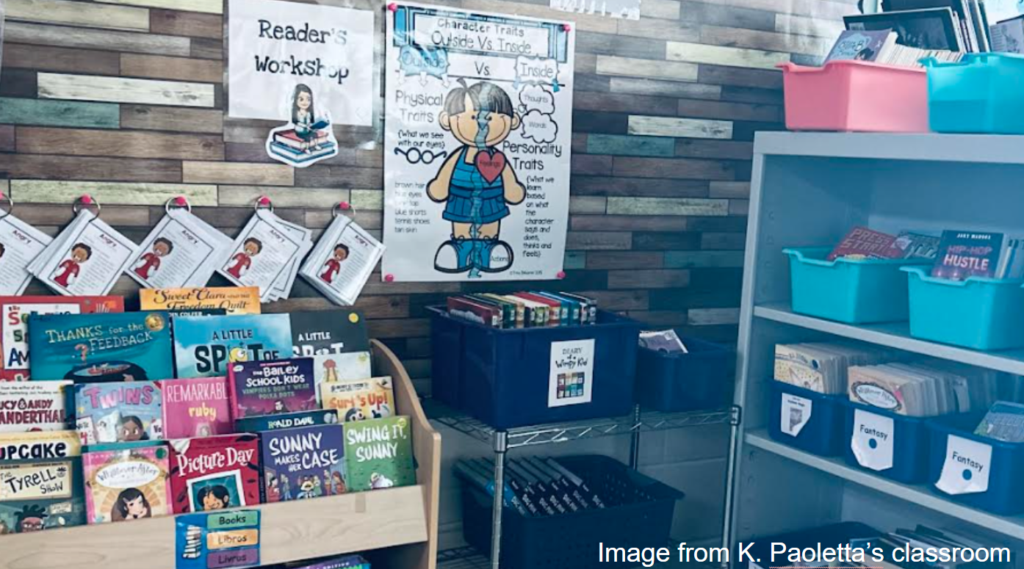
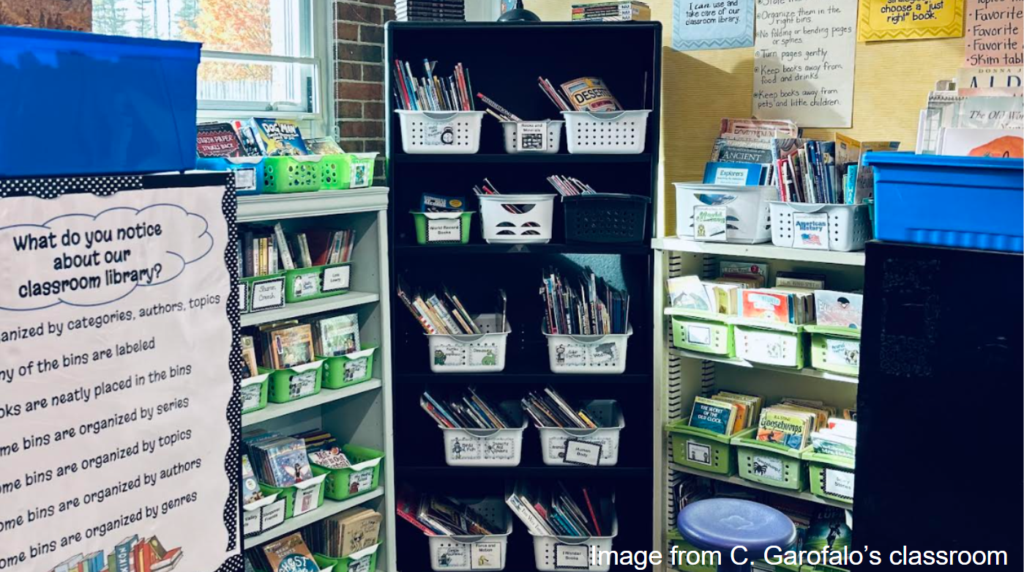
Searching for answers to these questions, I have found myself taking a time-out to reflect on what the classroom library means to me. In a podcast episode titled “Take Control of Your Mindset: Master Your Mental Habits for a Happier Life,” Mel Robbins shares an activity to help our minds become more intentional and purposeful in the moment. She introduces a first step to resetting our mindset in our daily lives, called Looking for Hearts. She encourages her listeners to engage in this activity to bring importance to things in our conscious mind. This exercise helps to manifest intentionality and bring deliberateness into our day. I decided to try it to bring purpose back to the classroom library. I began collecting images of classroom libraries and looking for “hearts.” I wasn’t searching for physical representations of a heart; I was instead searching for those pieces of the classroom library that are at the heart of our work and our responsibilities as educators.
Here I open up the hearts I discovered in the classroom libraries I visited:
The classroom library encapsulates much of our community, from our sports interests to our favorite authors. It is a place where we gather to share bits and pieces of our lives and make connections with one another. In the professional text It’s All About the Books, Claire Landrigan and Tammy Mulligan write, “The classroom library is the home of the class’ reading community… Its primary role is building a literacy community in each classroom and ensuring that each student is a member.” If our classroom library walls could talk, they would say to those walking into the space, “In this classroom, we treasure literacy, reading, and gathering together to grow as a community of learners.”
Dr. Rudine Sims Bishop (1990) coined the term Mirrors, Windows, and Sliding Glass Doors. Books can help students see themselves in the pages they read, just as if they are looking in a mirror. Books can show students the lives of those different from their own, learning about how their lives are shaped, as if they are peeking through a window. And books can send students to new places as they experience life through the characters’ thoughts, actions, and dialogue, as if they are sliding open a door and walking on through! In an Edutopia article titled “Why Diverse Classroom Libraries Matter” (14 June 2019; paragraph 6), Nora Fleming incorporates the words of teacher Natalya Gibbs of Oakland, California: “Once students ‘feel seen themselves,’ it’s also critical that they be exposed to characters and stories that are different—windows into the lives, customs, and beliefs of others—’so that when they grow up, they are able to work with all different kinds of people.'”
Grace Lin, author of Where the Mountain Meets the Moon, a Newbery Honor book, shares her experience of reaching the worlds of students through her books, some through a window and some a mirror, in a TedX Talk she gave in Natick, Massachusetts, in January 2016. Throughout her talk, she forms a “heart” in nurturing identities and empathy in her readers through her books. And where can these books be found? On the shelves in classroom libraries!
The mere presence of the classroom library and the assortment of texts inspires students to believe that they can and will read books like those. All of those books are building the purpose for learning to read… the why! The classroom library is the scaffolding that helps show students the way toward being a lifelong reader. As Adam Grant shares in his book Hidden Potential: The Science of Achieving Greater Things, “When people can’t see a path, they stop dreaming of the destination. To ignite their will, we need to show them the way. That’s what scaffolding can do.” We want our students to shuffle through the books in our libraries and think, Someday I want to (and will) read a book like this!
Should we replace the books in our classroom library to be decodable? What should we do with our classroom libraries now? I invite you to put on your “heart-shaped glasses” and head on into your classroom library. Enter in search of purposeful pieces that remain at the heart of our work and our responsibilities as educators. These are those treasured pieces that make reading come to life for our students and welcome all into our learning community. These are those pieces that remind us why we created and built our classroom libraries from the beginning. It will be there that you will find the answers to these timely questions.
What hearts will you find in your classroom library?