


Lucy Calkins shared on Twitter [now X], “The power of a reading and writing workshop is having teaching that is predictable, ongoing, consistent, so that we have time and space for personal interaction with kids.” Sharing writing is part of the predictable, ongoing, and consistent practices. The sharing and celebration of work allows students to feel the success of their efforts and contribute to the writing community. Here are 10 ways to position students to share their writing and strengthen a writing community.
1. The Partner Share
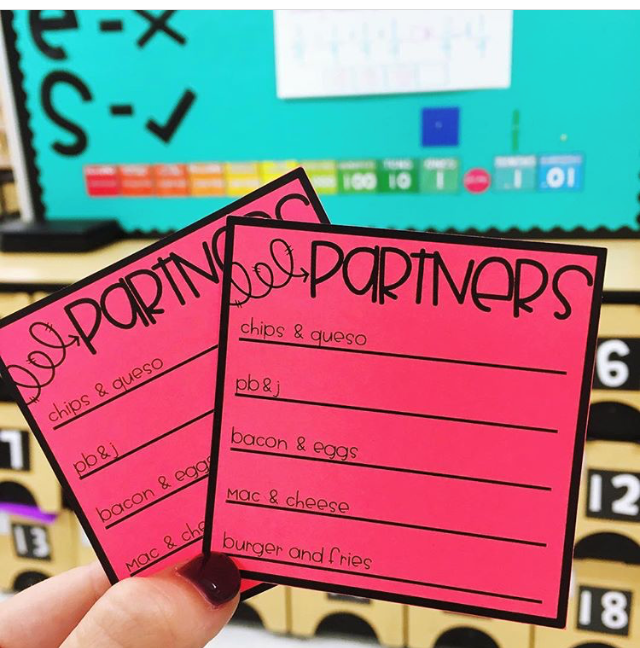
When students have consistent partners throughout a unit, they are able to get to know each other well enough to offer constructive feedback. Naming partnerships with catchy names like peanut butter and jelly or mac and cheese helps determine who should share first or get supplies. This type of share is effective at any point in the unit.
2. The Silent Gallery Walk
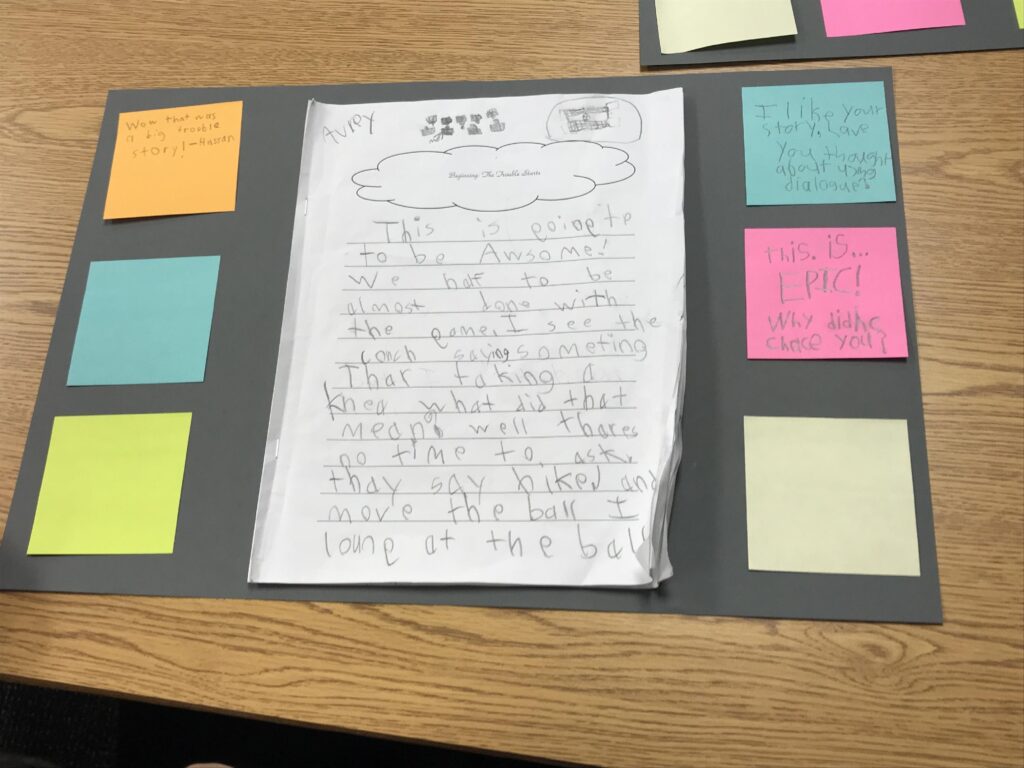
The silent gallery walk is a way for students to give each other written feedback in the middle of the writing process or after publication. The student writing is set up in the middle, and spaces for other students to provide feedback are available. The feedback has been modeled with student and teacher conferences. In some classrooms, an anchor chart of ways to give feedback is created to scaffold students and their responses. Students use the celebration time to read work from other students. The use of a timer to allow students time to read and respond is helpful in creating a structure to the process.
3. Sharing Student Work with QR Codes
After finishing a piece of writing to share with the class, students create a QR code, using a free online generator to share their work. The QR codes can be added to a class book, lockers, or the LMS for the whole class to listen. Students use their device to record themselves reading their work, and the QR code allows the audience to listen to the student.
4. Compliment Cards
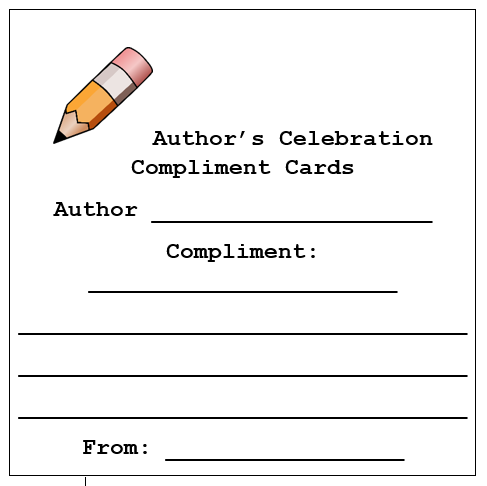
The compliment card is a great way for students to notice the new learning from a unit. First, as a class we spend time thinking about all the new learning we have done in our current unit. We list these ideas on chart paper as a reminder for students to notice these characteristics. This list is also a great way for the teacher to assess what students are holding on to from the unit of study.
5. Whip Share
When I want to get a feel for how students apply the minilesson I have taught, I often use the whip share with the whole class. Students determine the part of their writing that demonstrates the teaching point. Then we “whip” around the circle as each student shares a small part. As the teacher, I am able to gather information quickly about how my students were able to apply the skill.
6. Reflection on Writing after a Unit of Study
After we have completed a unit of study, a written reflection from the students can be a way to see the ways in which they think of themselves as writers and what they have learned. Students are provided with a reflection page with two prompts:
- I used to be the kind of writer who . . .
- But now I am the kind of writer who . . .
The anchor charts from our unit are still displayed, writing folders are still full, and conferring slips are still available for students to use as part of their reflection. These reflection pages create another way for a teacher to gain insight into how students view themselves as writers.
7. Share Your Work with the Wall
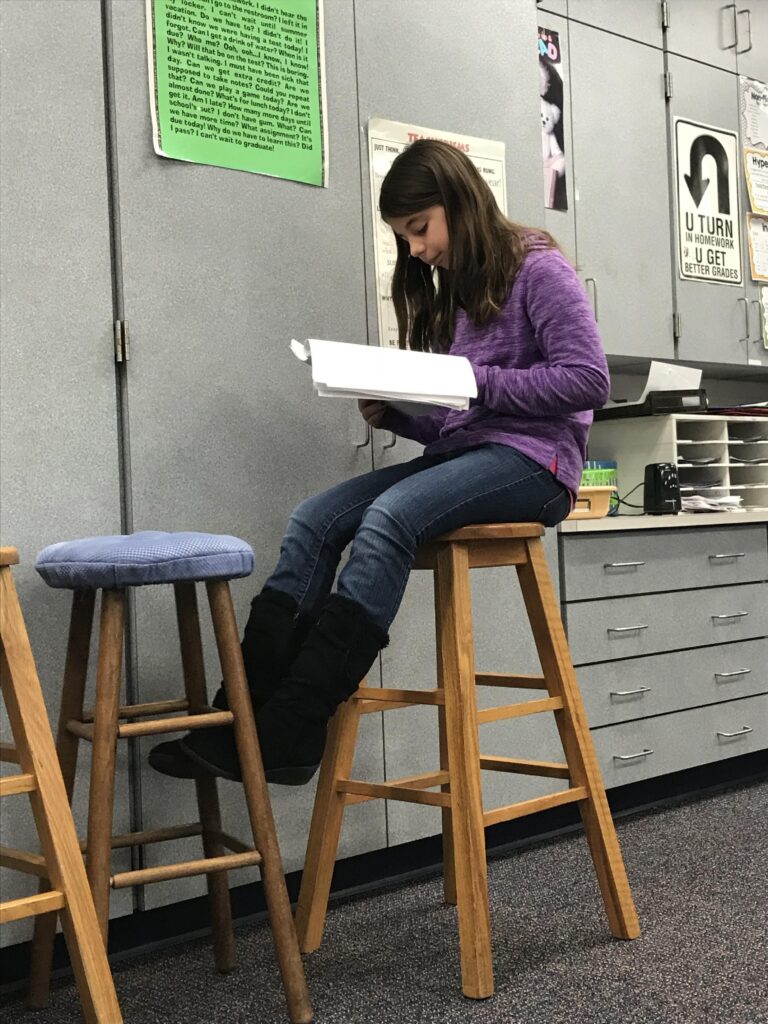
Often when students have been working in a unit of study and have pages of writing, sharing with the wall is a great way to hear their words. Students take their work, find a space in the room, and whisper-read their work to the wall. Writers often find ways to rework a sentence, fix spelling errors, or think of more to write when they share their work with the wall.
8. Bring It Back to the Anchor Chart
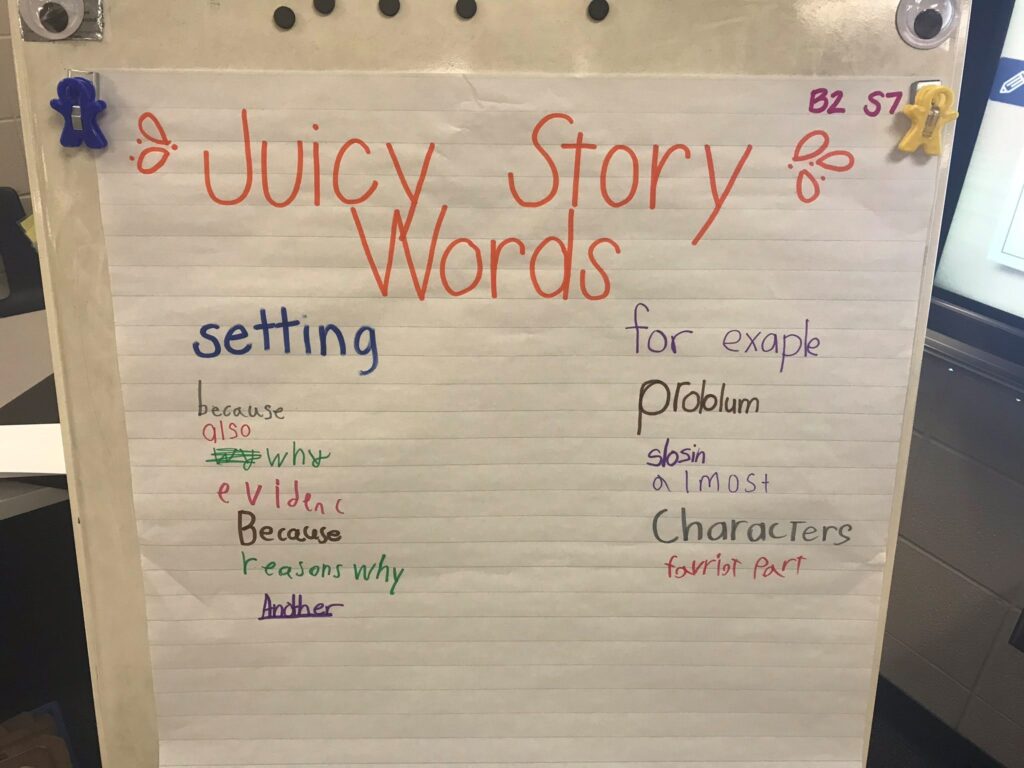
When teaching specific skills such as adding conventions to writing, bringing student work samples back to the anchor chart used in the lesson is a powerful way to have many examples of the work and to evaluate the level of students’ understanding. This type of share can be used as a quick check the same day the lesson was taught or as part of the unit to see how students are continuing to apply the skill.
9. Invite Special Guests to the Celebration or Share
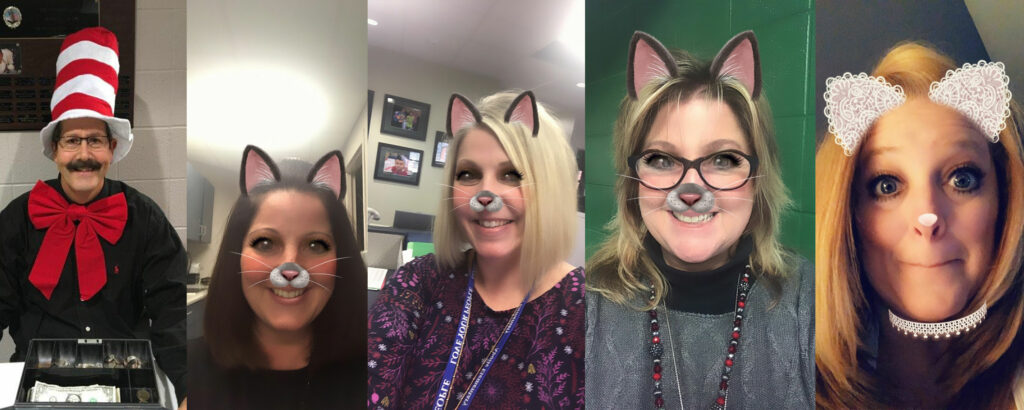
Using adults in the building to share work in small groups or individual partnerships is a way to build the writing community across the school. Inviting the principal, school counselor, nurse, secretary, instructional coaches, and others is a way to create an audience for student writers. Using the special adults as an audience was effective at the end of a unit to share final pieces in our class. The special adults were invited to the workshop, and each joined a group of four to six students. Students were excited to share their stories and a positive experience with them.
10. Teacher Share
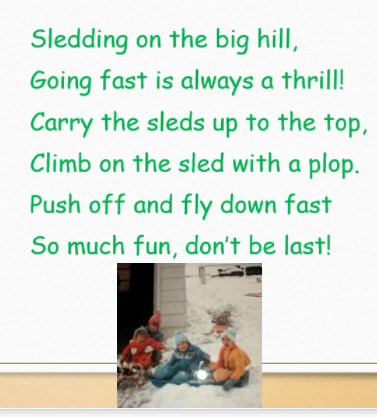
Creating a community of writers starts with the teacher in the room also sharing their work. Sharing drafts, stories, and seed ideas is important so that students see that the writing process is the same for adults.
Creating a community in which young writers can write and share is one of the important components of writing workshop. The sense of community builds confidence and fosters the acquisition of skills.
Downloads
