When it was time for me to take back the class from my student teacher, I contemplated starting up author studies. The idea overwhelmed me. The rhythm of this year was so different, and this routine had fallen by the wayside.
The Author-Study Routine
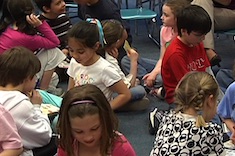
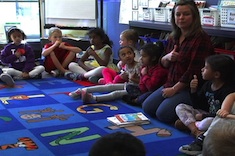
For years I’ve used the time after lunch to gather students on the rug for a story by our current featured author. We spend a month reading books by a particular author, getting to know their style and a bit about their life. As we enjoy the author’s stories, we notice the writing style and similarities between their books.
Throughout these studies, students become experts on the author’s body of work as well as sharpen their skills to read like thoughtful readers and writers. When the month is over, we add the bin of books to our author library and create a poster together to share what we know and can expect in the books written by this author. It’s fun to see the “author library” grow throughout the year and to see students become so engaged with particular authors.
But this year, midyear, I wasn’t sure where to start. I wanted to read all the missed authors and reread some who had been briefly studied, and didn’t know how to choose who to study of the author options that were left. So with a deep breath, I decided this was the year to try something different and let go of it. I would see what it felt like and whether it was time to switch up the after-lunch author study routine anyway. I wondered if students would still get to know favorite authors and if they would miss the focused read aloud part of the day. I also wondered if we would be relieved to have a new routine… Were author studies actually holding us back?
A New Nonroutine
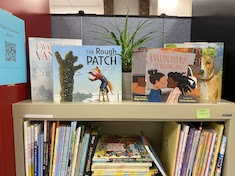
I was unsure where to start with after-lunch read alouds, so I began by reaching for the most recent additions to the class library, newly released books that I was loving and had checked out from the public library or purchased for the class. I also read some of my personal old favorites to see what students enjoyed. Every day I chose a book at random, and I felt a little lost. But I slowly found my way, because I listened to and watched my students react to the books. I listened to their thoughts when we talked about the book after reading it, and then I followed their interests. If I noticed that they enjoyed a topic, it would bring to mind other books on the topic and I would read those next. If I noticed they loved the author’s style, I would choose a few more by that author to read in the following days.
What began as a random free-for-all became spontaneous, but focused, text sets or mini-studies that lasted a week or two. I loved curating what I thought would fit next, and I loved the students’ reactions. Our conversations grew with students’ noticings and insights into the various texts. And often during students’ independent reading they would find books that reminded them of something we read and let me know that it should be included in the after-lunch read aloud time.
These are some of the text set topics I curated spontaneously, with student input, this past spring:
- Books with magic
- Books where the character has hard decisions to make
- Books with castles
- Particular authors
- Books with characters who don’t quite fit in
- Nonfiction topics, such as bees, worms, or scientists
- Books with young children characters and their grandparents
When I let go of author studies as an after-lunch read aloud routine, I realized that students still got to know authors and that author studies can fit into these spontaneously curated text sets. Parents commented at conferences on how students exclaimed over their favorite authors when at the library and bookstores. Students still saw patterns in texts by the same author and were able to articulate this thinking. I realized we didn’t need a whole month to learn about an author and that actually a whole month might be too long.
With spontaneous text sets, I became more responsive: I wasn’t reading a book just because it was by a certain author; I was reading it because I was following the lead of my students’ interests and using the read aloud to build on and stretch their thinking. All of us were more engaged!