

One of the first units we teach in seventh-grade language arts is on short stories. The unit begins with lessons on story elements that should be review from lessons the students have had in previous grades. As any teacher in the upper grades can tell you, students often lament that certain lessons haven’t been taught, when the reality is simply that they haven’t mastered that concept yet. A story element concept my students struggle to remember is the types of conflict that can be present in a story. I’ve found that using picture books really takes them from a casual relationship with this concept to mastering it.
Types of Conflict
To begin this unit we talk about the types of conflict that might be present in our stories. As soon as I begin to name them, you can see the light bulb turn on in a few faces: They do remember having these lessons, but they’d forgotten them.
I typically spend the first day reviewing the types of conflict and adding them to an anchor chart. Then I begin by reading our first picture book and asking students to think about the main conflict as I read. They can volunteer and share the evidence they have that the picture book fits with the conflict they selected.
Character Versus Self
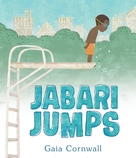
To teach character versus self I use Jabari Jumps, written and illustrated by Gaia Cornwall. Jabari is every kid I remember from my years of lifeguarding—excited to go off the diving board and completely intimidated once he actually tries to do it. Cornwall does an amazing job with illustrations in this book, changing the perspective so that we see what Jabari sees as he peers down from the high dive to the dots of people in the pool. As I read this one and Jabari gets nervous as his turn approaches on the diving board, even my seventh graders begin to shout out “character versus self” as they get into the story.
Character Versus Character
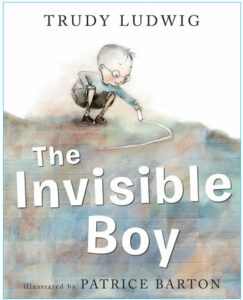
To teach character versus character, I use The Invisible Boy, written by Trudy Ludwig and illustrated by Patrice Barton. In Invisible Boy we meet the character Brian, who is so shy, he’s often invisible to others, until a new kid comes to school and sees Brian for who he truly is and stands up for him. My students typically have a great debate about this book, wondering if they should classify it as character versus self or character versus character. Ultimately, we land on the latter, though I think it could truly be both.
Character Versus Nature
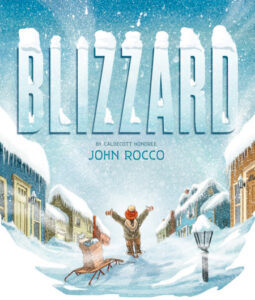
To teach character versus nature I use the picture book Blizzard, written and illustrated by John Rocco. Rocco tells of the blizzard of 1978, when more than 50 inches of snow fell on his hometown in Rhode Island. Kids love this book mainly for Rocco’s illustrations, which are clever and have hidden Easter eggs throughout. For instance, the amount of money the child spends on groceries is shown on the register as $19.78, the year of the story. It’s easy to figure out the main conflict with this one, to the point that the kids will even name it when I share the title. They love this book, though, and often go on to read Blackout by Rocco as well.
Character Versus Supernatural
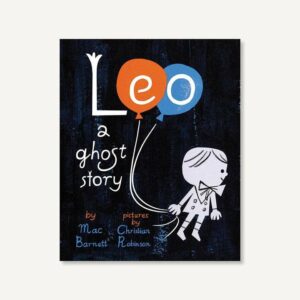
To teach character versus supernatural I use Leo: A Ghost Story, written by Mac Barnett and illustrated by Christian Robinson. In this book we have Leo, who has lived in his home as a ghost for years. A new family moves in, and when Leo tries to befriend them, they’re terrified and want him to leave. Hurt, Leo flees and moves about town until he meets Jane, who doesn’t care that he’s a ghost and accepts him for who he is. The students love to point out the conflict as I read the title on this one, too, but then they go on to point out other types of conflict as we move through it (character versus society, character versus character, character versus self).
Character Versus Society
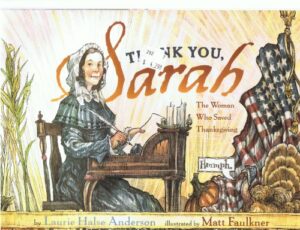
To teach character versus society I use Thank You, Sarah: The Woman Who Saved Thanksgiving, written by Laurie Halse Anderson and illustrated by Matt Faulkner. In this picture book, Laurie Halse Anderson tells us the story of Sarah Hale, who wanted America to come together and celebrate Thanksgiving as a national holiday. At the time, only certain states celebrated it, and the holiday was falling out of favor. Anderson writes about how Hale wrote letters to officials, including many presidents, for 38 years until President Abraham Lincoln declared it a national holiday. We talk about how the conflict here was Sarah Hale facing off against a country (society) that didn’t see things the same way she did. The kids love when the book says that Sarah used her mighty weapon, her pen. Side note: This book is fabulous to use for looking at sentence structure.
I love that we start our year with story elements and this lesson on conflict, because it is one I turn back to again and again as we read books throughout the year. There is nothing magical about the five books I picked. They were on my shelves, and I needed one book for each type of conflict. I read a lot of picture books throughout our year together, so conflict becomes one of the questions I ask the students as I read a book each day: “What conflict is present here?” And I can only hope that when an eighth-grade teacher asks them if they remember what conflict is, they actually have light bulb moments.
