

“Hey Siri, add bananas to my grocery list.”
“Got it, bananas added to your grocery list.”
“Hey Siri, remind me to get money for Ms. Christy tomorrow at 4 p.m.”
“Got it, I added a reminder to get money for Ms. Christy for tomorrow at 4 p.m.”
“Hey Siri, set a timer for five minutes.”
“Got it, timer set for five minutes.”
I find myself needing to set reminders all the time. This process almost always helps me stay on top of my tasks at both home and school.
In our classrooms, where are the spaces that can serve as reminders for the type of thinking we want students to be doing? Where are the spaces that can serve as workspace for the continuation of tasks that the class has already grappled with but that warrant additional time?
When we set up our learning spaces to be places where concepts are revisited over time and where students can independently access previously introduced learning materials, we build additional opportunities for students’ learning to go deeper.
Setting Up a Lingering Space
When I taught fourth grade, I had a full-length mirror in my classroom by the door. I would notice students standing and staring at themselves or getting distracted by it at random moments throughout the day. I also realized that there was “more life left” in many of the math tasks that we were engaging in as a class. Instead of spending one day on a task and then forgetting about it, I wanted a way to keep that learning and thinking going.
That mirror in my classroom became the space where I would tape up a math task and the extension questions students had brainstormed. It grew throughout the year. Students knew that if they finished early or had time to go back to a choice task, the mirror was where to go.
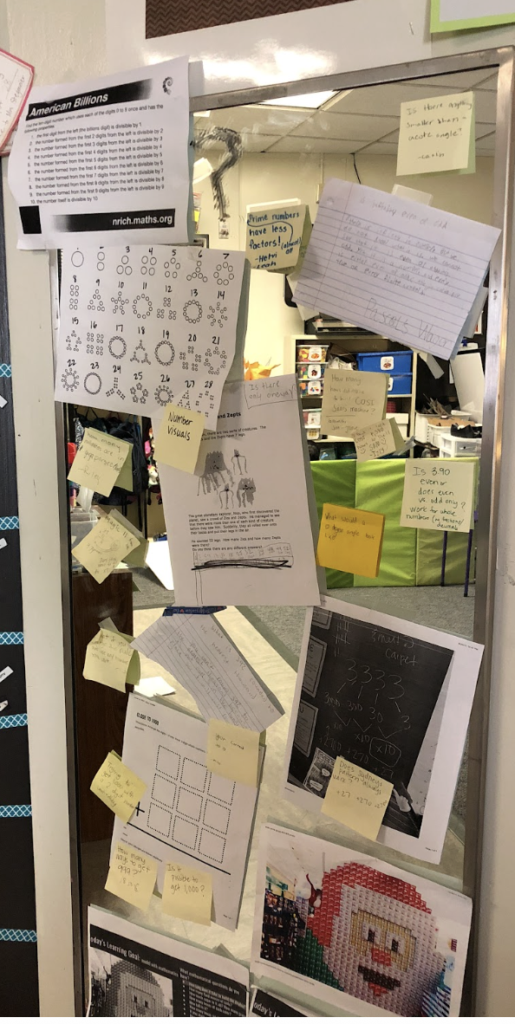
Think about your classroom and the spaces available. Where could you dedicate some wall space to house previous math tasks, questions students are wondering about, and other content you want students to have an opportunity to revisit?
Materials and Strategies to Allow the Math to Linger
There are many ways to keep the thinking going after introducing a math task or problem. Here are five examples.
|
Type of Material |
Strategy |
| Choral Count or other Pattern-Seeking activity
|
Students search for additional patterns to add to the ones the class has already found. |
| Math Problem, Math Task, or Math Game | Students brainstorm additional questions to keep the problem, task, or game going. |
| Task that asks students to find the Largest or Smallest or Closest To
|
Students work to find different combinations that will get them as close to the goal as possible. |
| Student-Created Math Riddles or Story Problems
|
Students create their own math riddles or story problems for classmates to solve. They can record a video of themselves or write down the riddle or problem. |
| Conjectures or Student-Generated Questions
|
Teacher listens for student-generated conjectures or questions. Record and post for students to work on proving, disproving, or answering. |
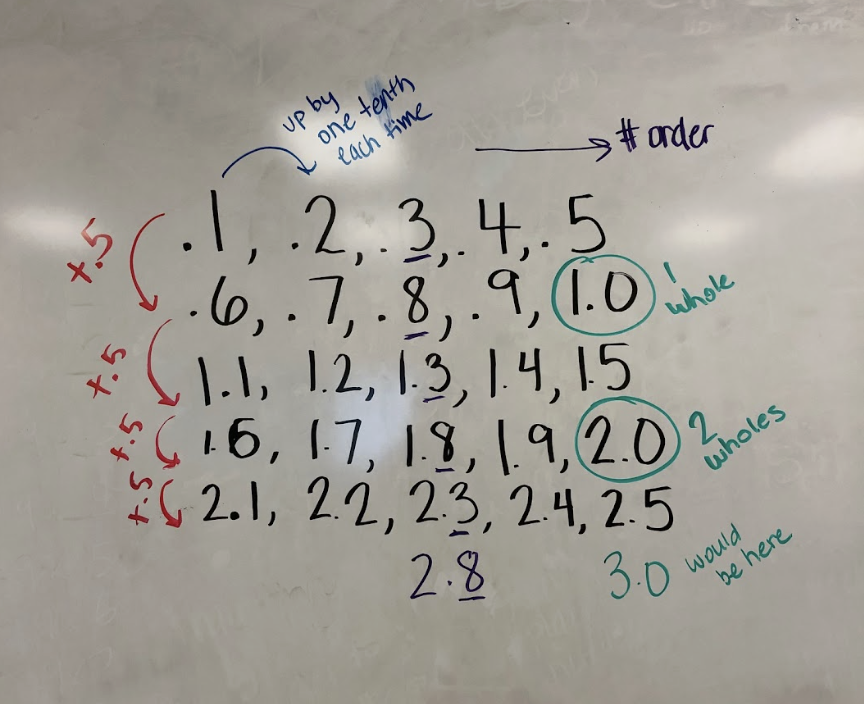
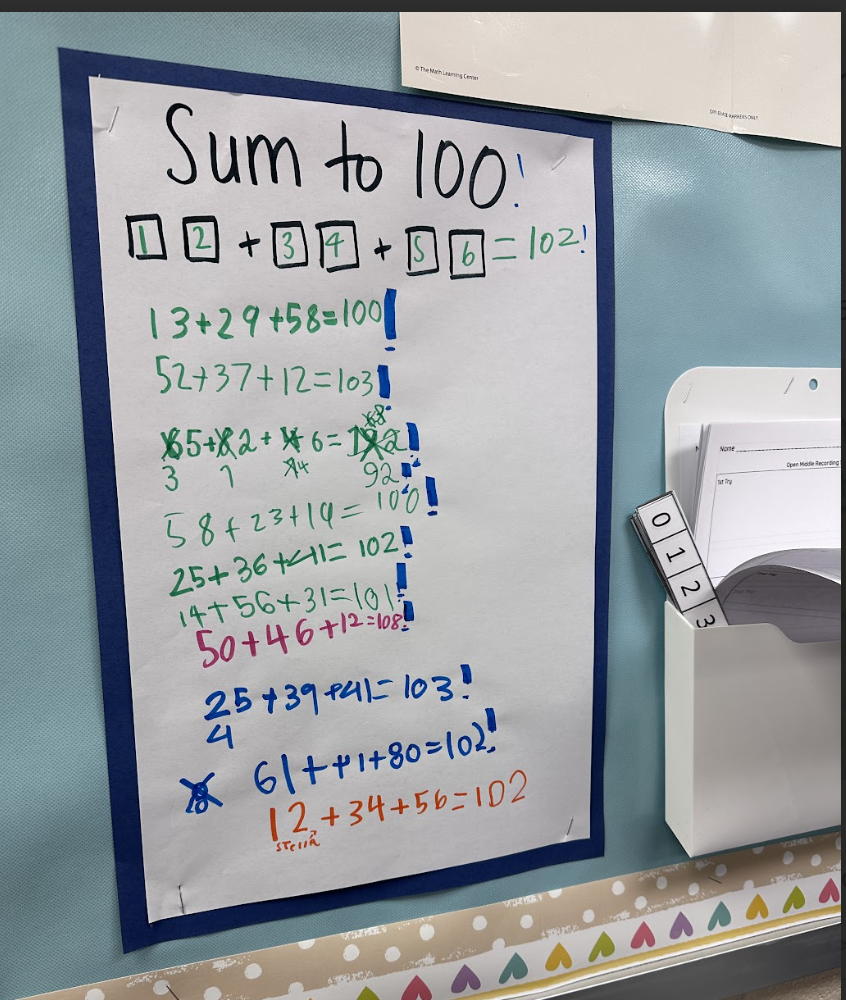
When students get invested in a math problem, that is a great time to consider having them brainstorm additional questions to keep the problem going. You may have allotted only one day for the task, but by allowing students to ask more questions related to the original problem, the learning can continue into the future.
Posting in the Space
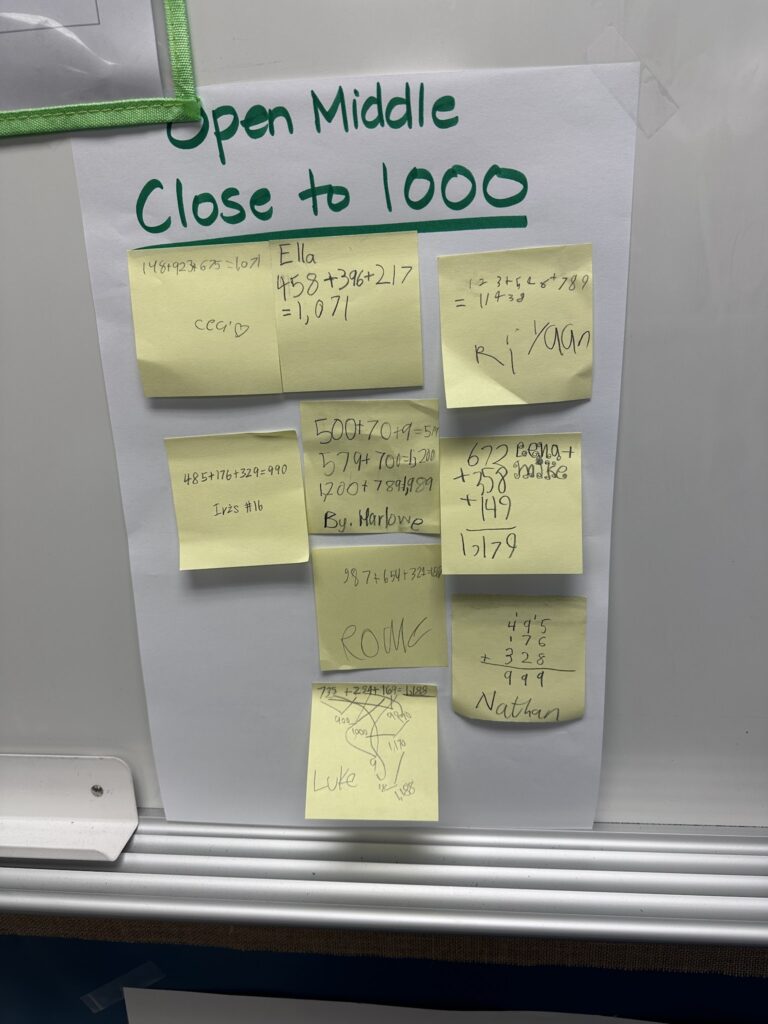
The purpose of posting the materials in the lingering space is to remind students about their previous experience(s) with the materials. Having a permanent space in the classroom allows students to more quickly access ideas for extending their learning when given the time. It also provides a bank of reference materials to which the teacher can refer. “Remember when Brock made the conjecture that…? Today, when you go to solve this task, be thinking about whether you agree or disagree with that conjecture.” This helps students see the connections between concepts and tasks.
Here are some of the different ways materials can be captured to then post for students to access:
- Posting a paper copy of the math problem/task/game
- Using a sticky note to write down a conjecture or question that has not been answered
- Taking a picture of a pattern or other class-generated content and printing it so that they can revisit and add to it over time
- Providing a designated space for students to post their best, closest to _____, or favorite answers for classmates to see and learn from
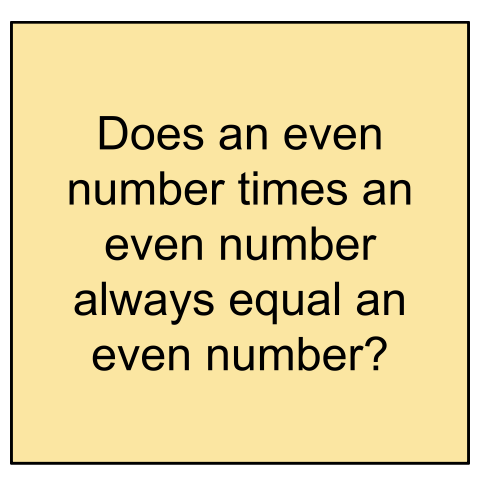
As I look back at the picture of the mirror included in this article, I am reminded of some of the brilliant curiosities students had that year by reading the sticky notes they wrote: Is 3.90 even or odd or does that apply only with whole numbers? Is there anything smaller than an acute angle? Does an even number times an even number always equal an even number? How many different rectangles have an area of 24 square units? What would a zero-degree angle look like?
It takes a listening stance by the teacher, ready to capitalize and capture for later attention, when students wonder out loud or share patterns they are seeing. It takes a physical space where problems can be secured. It takes student access to revisiting the materials and taking the learning to new levels through multiple exposures to the original context. By being intentional about the lingering experiences students have in math class, we can shift their view of math as isolated, daily math problems to connected math experiences ready for continued thinking and learning. Repurposing that mirror in my classroom gave students much more to be looking at and thinking about than whether they were having a good or bad hair day.
