


For my first teaching job, I was hired three days before the beginning of school. With boundless enthusiasm, I eagerly purchased decorations at the local teacher store and spent the weekend organizing and decorating my classroom. On the eve of the new school year, families came to meet teachers. I was crestfallen as children asked, “Why are our walls so empty?”
The only response I could manage was “Because you’re going to help me decorate them!”
After swallowing my disappointment that students were not able to see the hours and dollars I had already invested in our learning space, I remained true to my word. What initially felt like a failure turned out to be a tremendous gift. Students loved having the opportunity to construct the learning space along with me.
Carrying forward the lessons I learned from that first year, I continue having students help me decorate and organize our classroom. Just as blank pages encourage writing, blank walls entice students to fill the space. Opportunities this year included the following:
Building the identity of our community
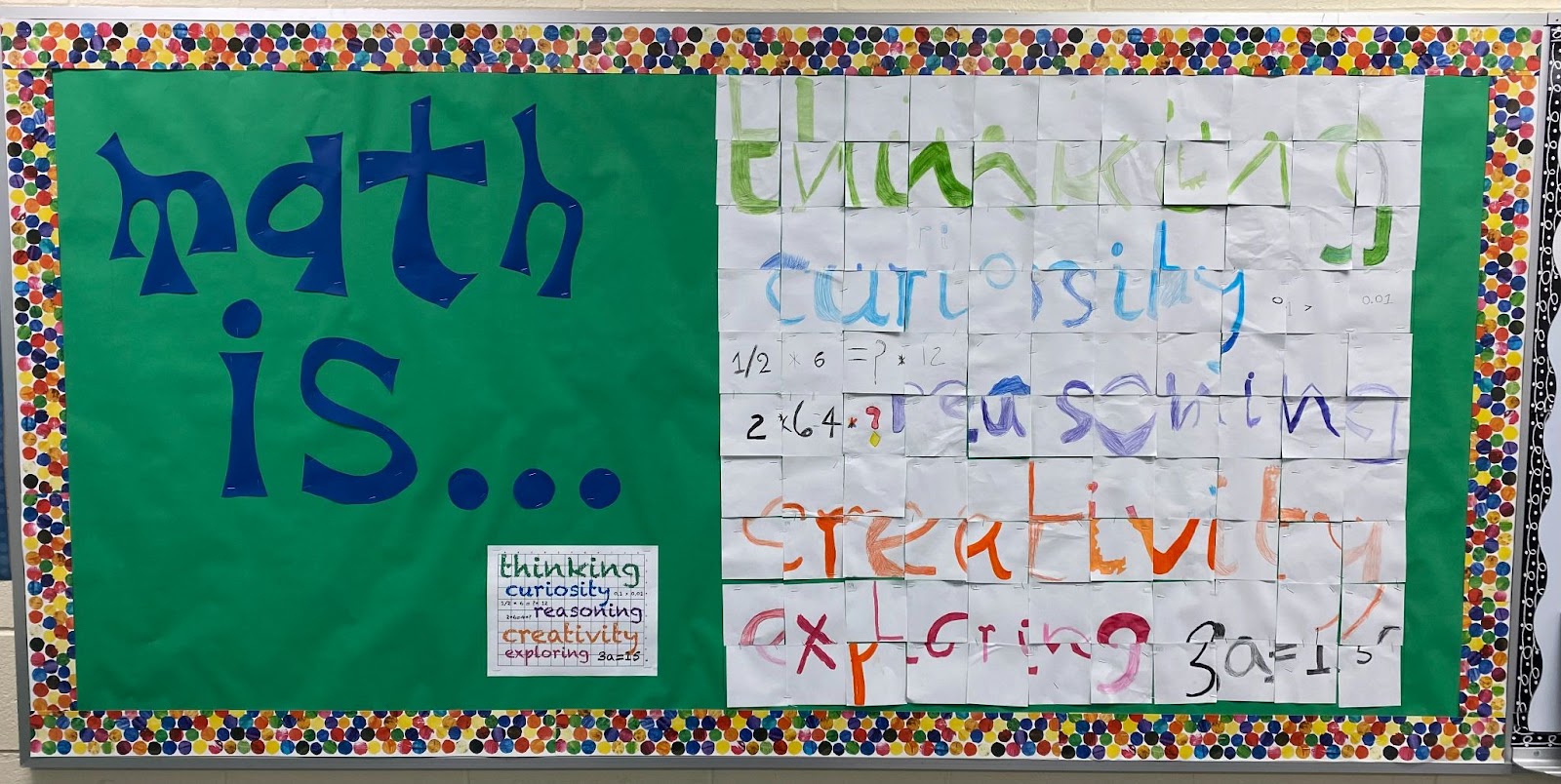
We brainstormed words and phrases to finish the statement “Math is . . .” After our brainstorming session, I selected actions that I wanted to reinforce and placed the words on a grid. We then created a mural with students each expanding a different part of the image. Later in the year, we can connect this mural to what students are learning about proportional relationships—an important foundational concept in middle school mathematics.
Honoring students’ observations
Students have conjectures to explore on a weekly basis. They need to provide evidence to support or disprove a given conjecture. Our first conjecture for this year was “When adding or multiplying, the order of the terms does not matter. However, when subtracting or dividing, the order does matter.” During their work time, a student tested using the same number for both terms and discovered an important exception!
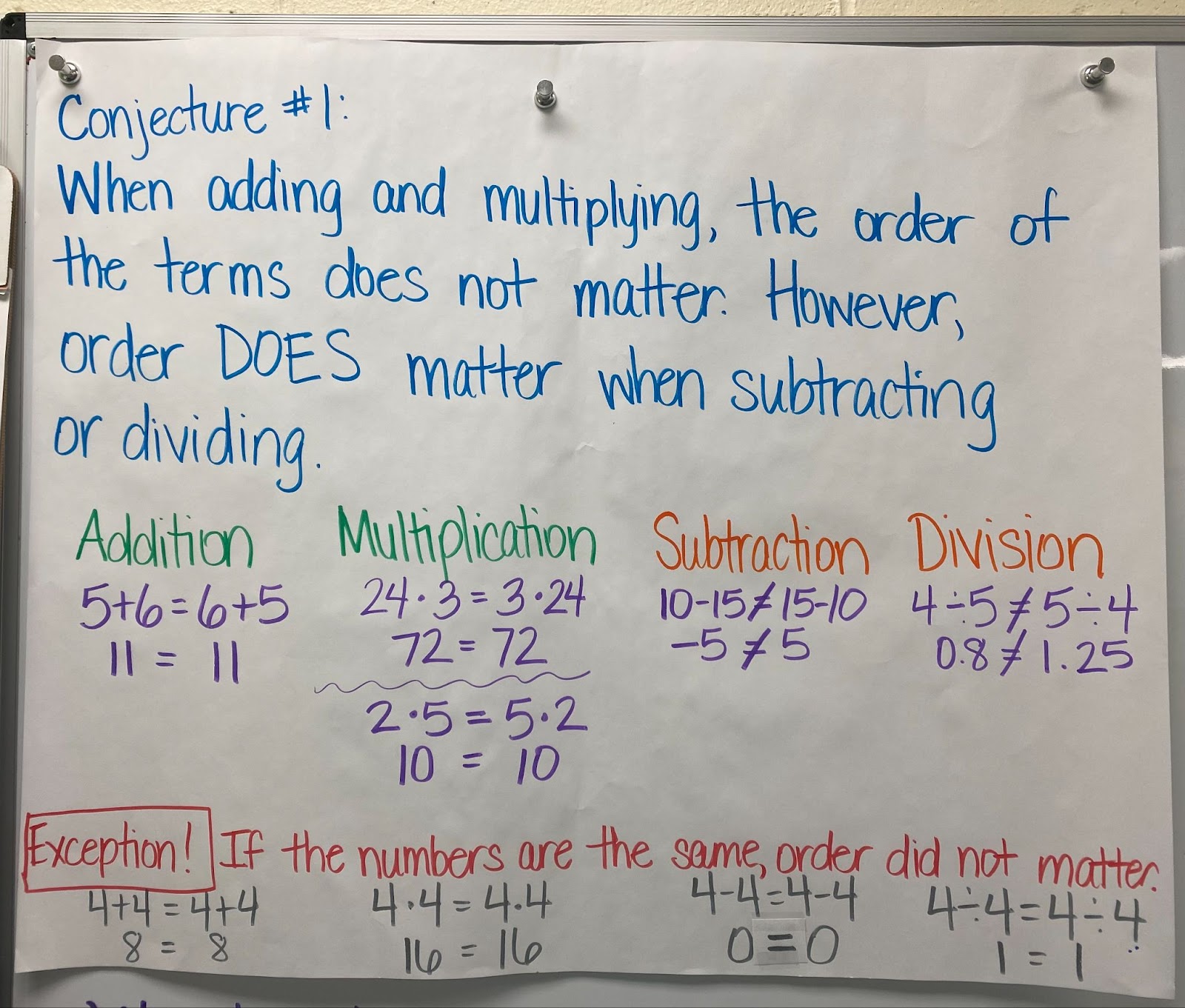
Another pattern students observed was that when changing the order of the terms in subtraction, the differences were opposites. For example, 15 – 8 = 7, whereas 8 – 15 = -7. This will be an important pattern to consider when working with integer operations in grade 7.
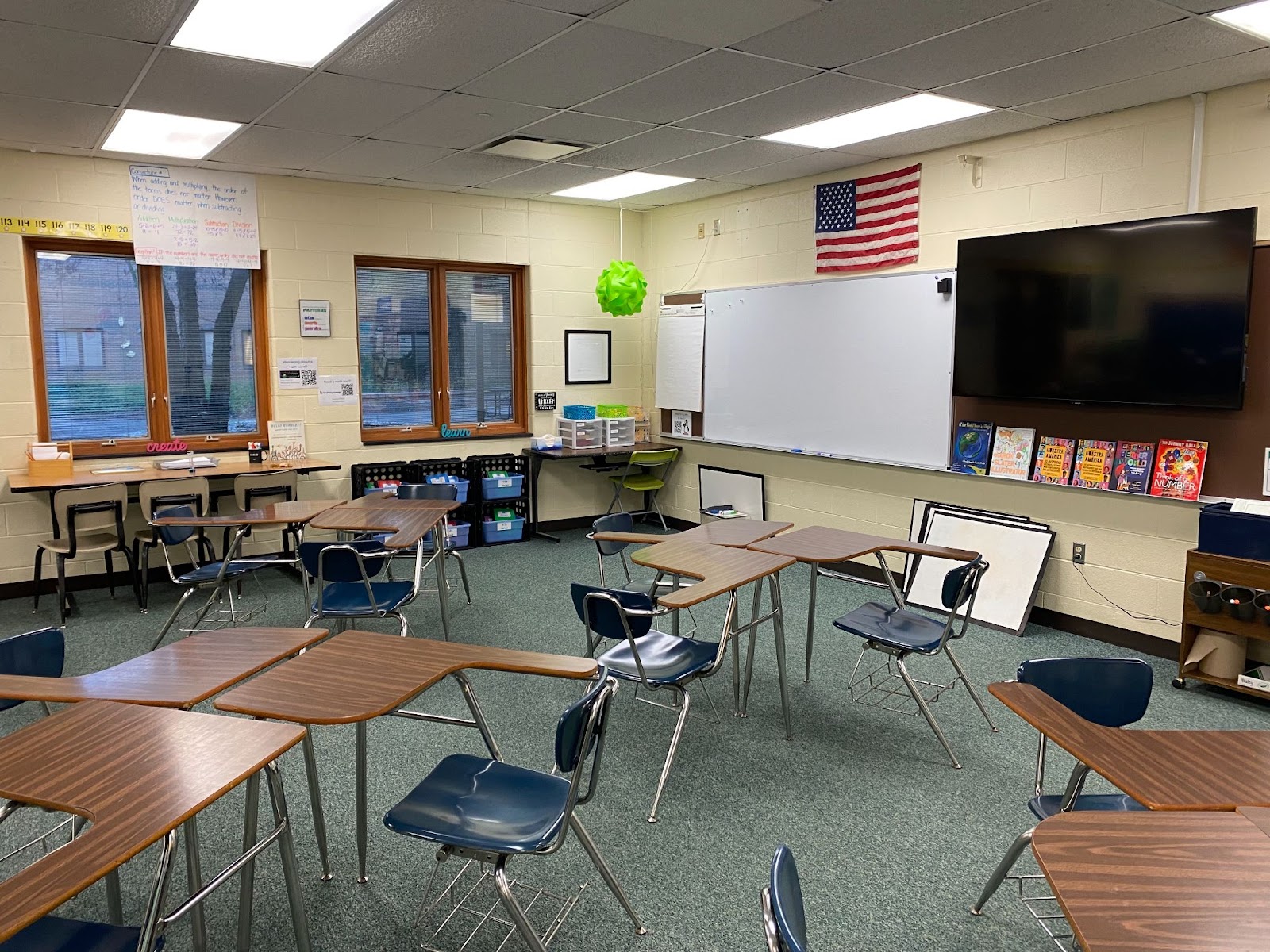
Blank whiteboard space where students can test their ideas
Many of my middle school students are still working to solidify knowledge of basic multiplication facts. In an effort to strengthen their fluency, we have explored patterns. For example, is it “always true, sometimes true, or never true” that multiplying a number by 10 and taking half is the same as multiplying the number by 5? Students enjoy having large whiteboard space to write and revise their thinking.
Refining vocabulary and attending to precision
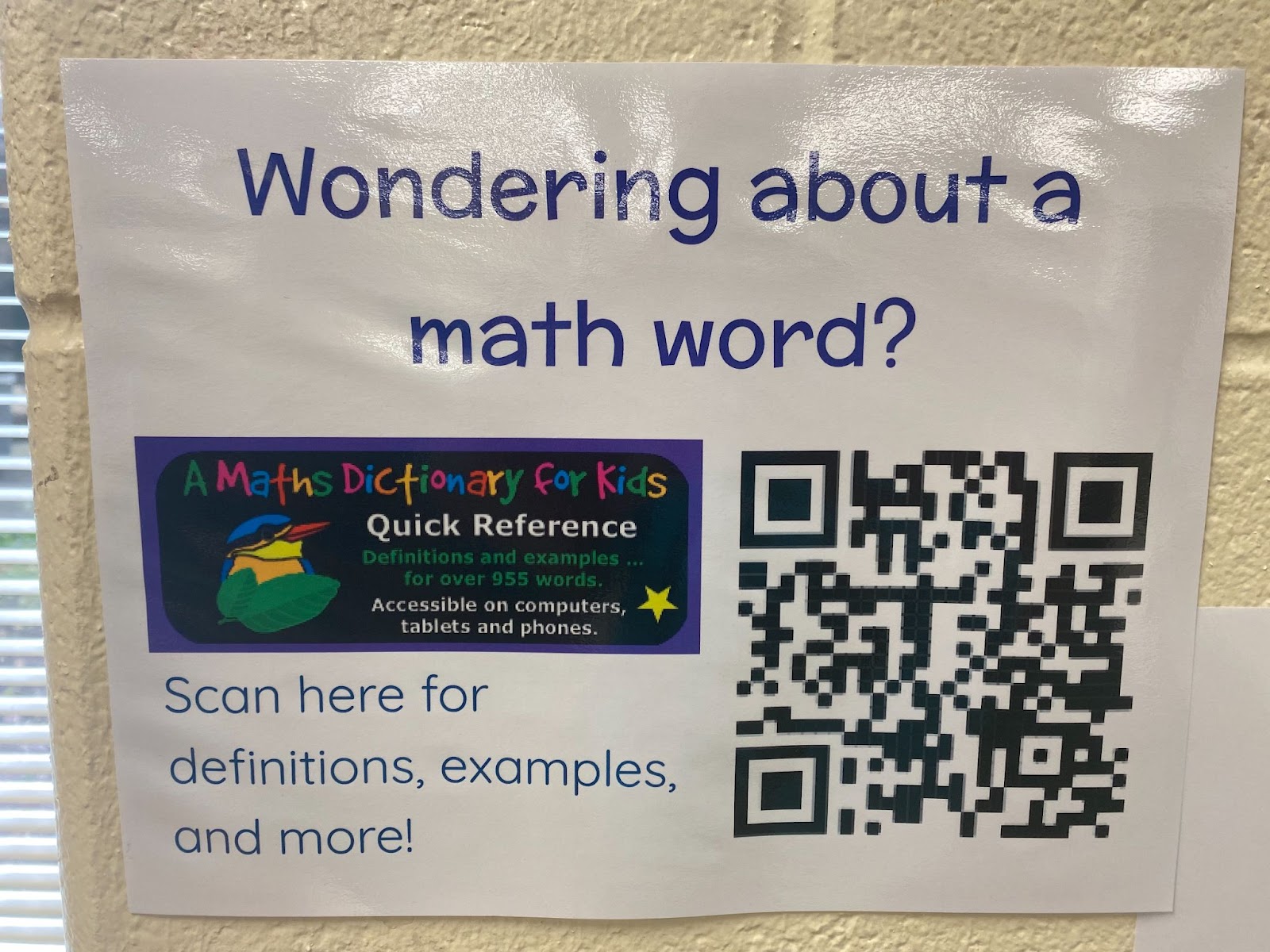
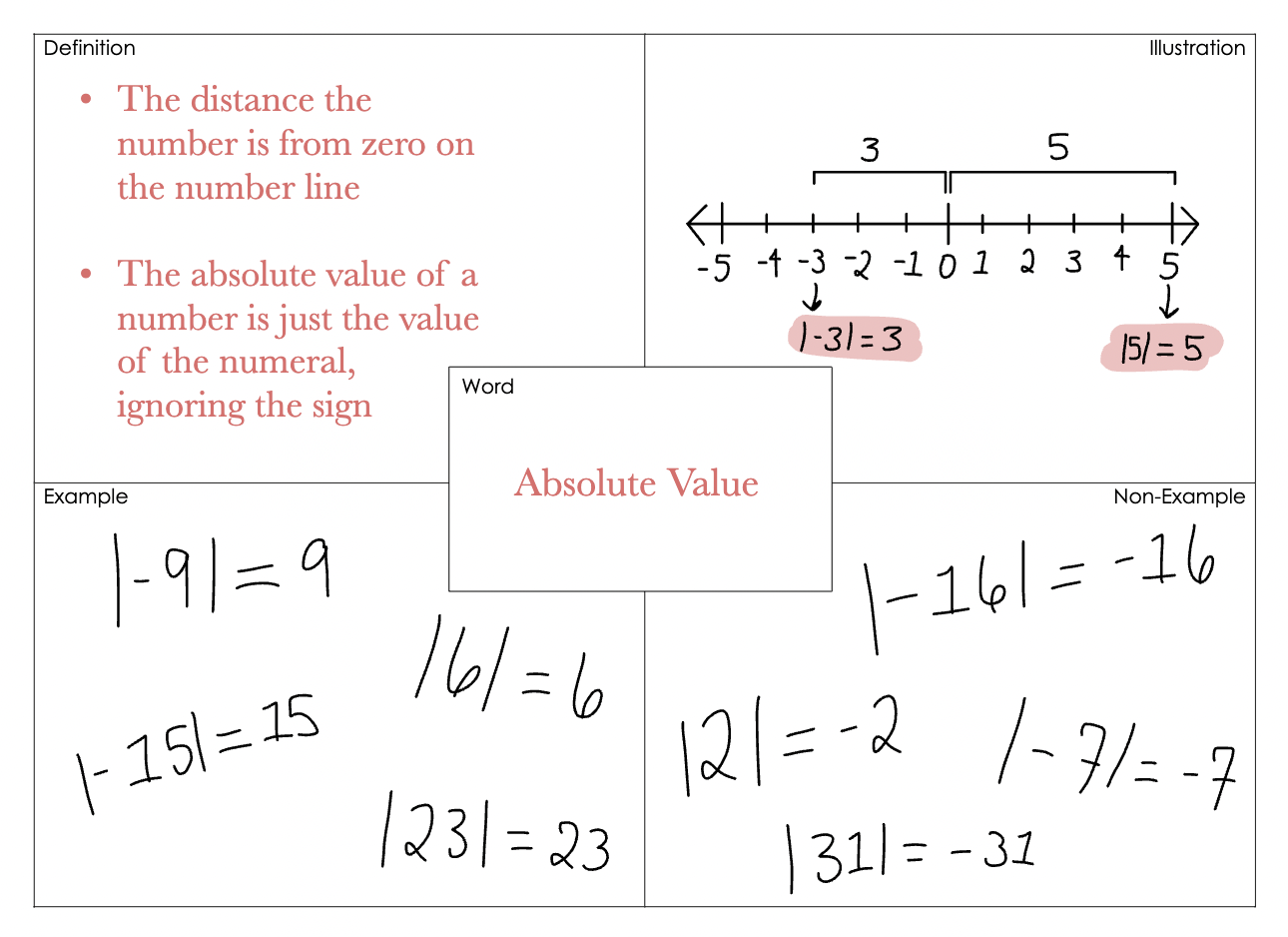
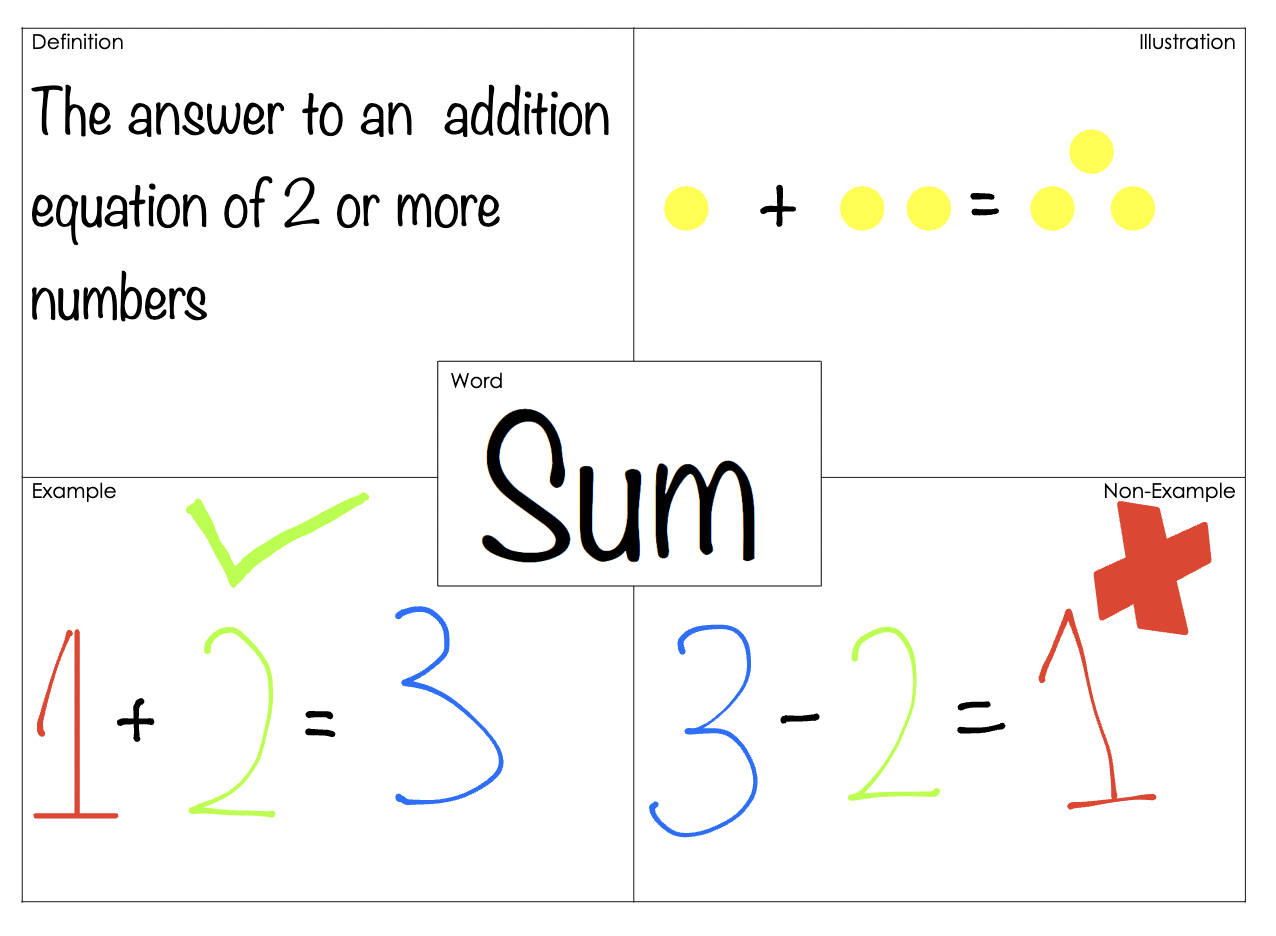
One of the Standards for Mathematical Practice is “Attend to precision.” Although many people interpret this standard to mean accuracy in calculations, its intent goes beyond calculations to include language. Students consider how they might best describe the patterns and mathematical ideas they are observing. As the year progresses, we build a word wall, with students creating visuals that help them recall the meanings of the words. A math dictionary is posted in our classroom so students have easy access to definitions, examples, and more.
Encouraging curiosity
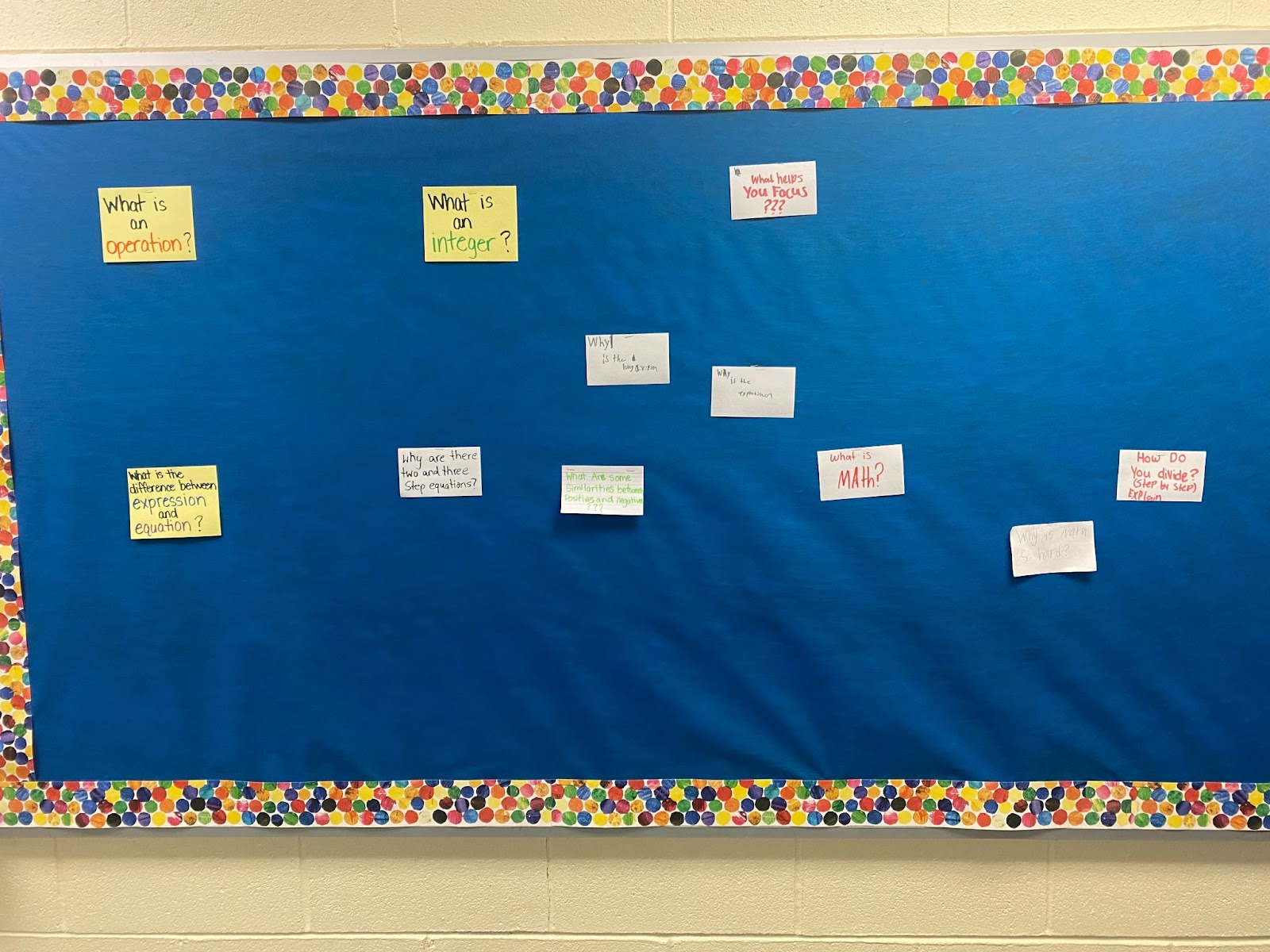
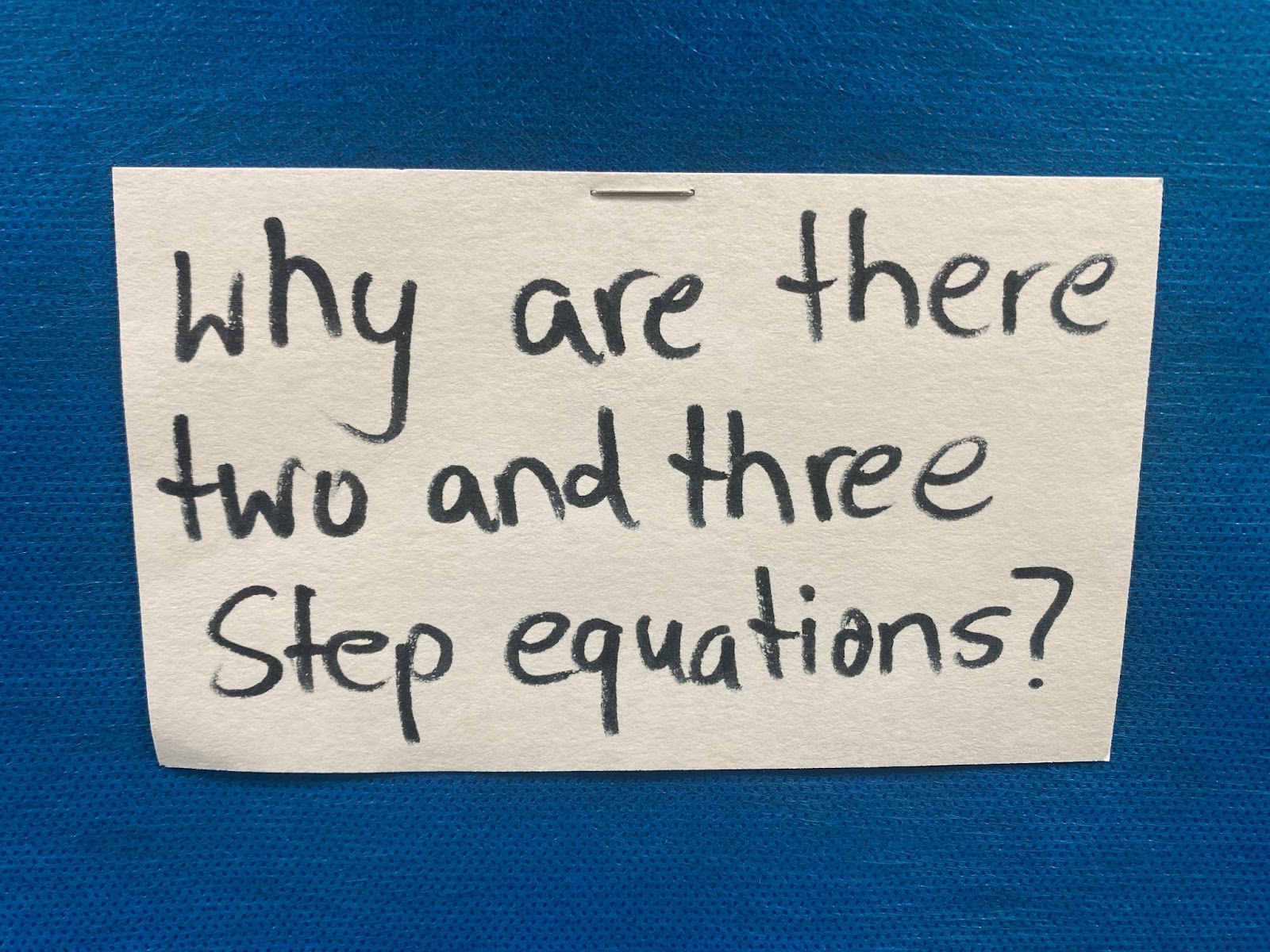
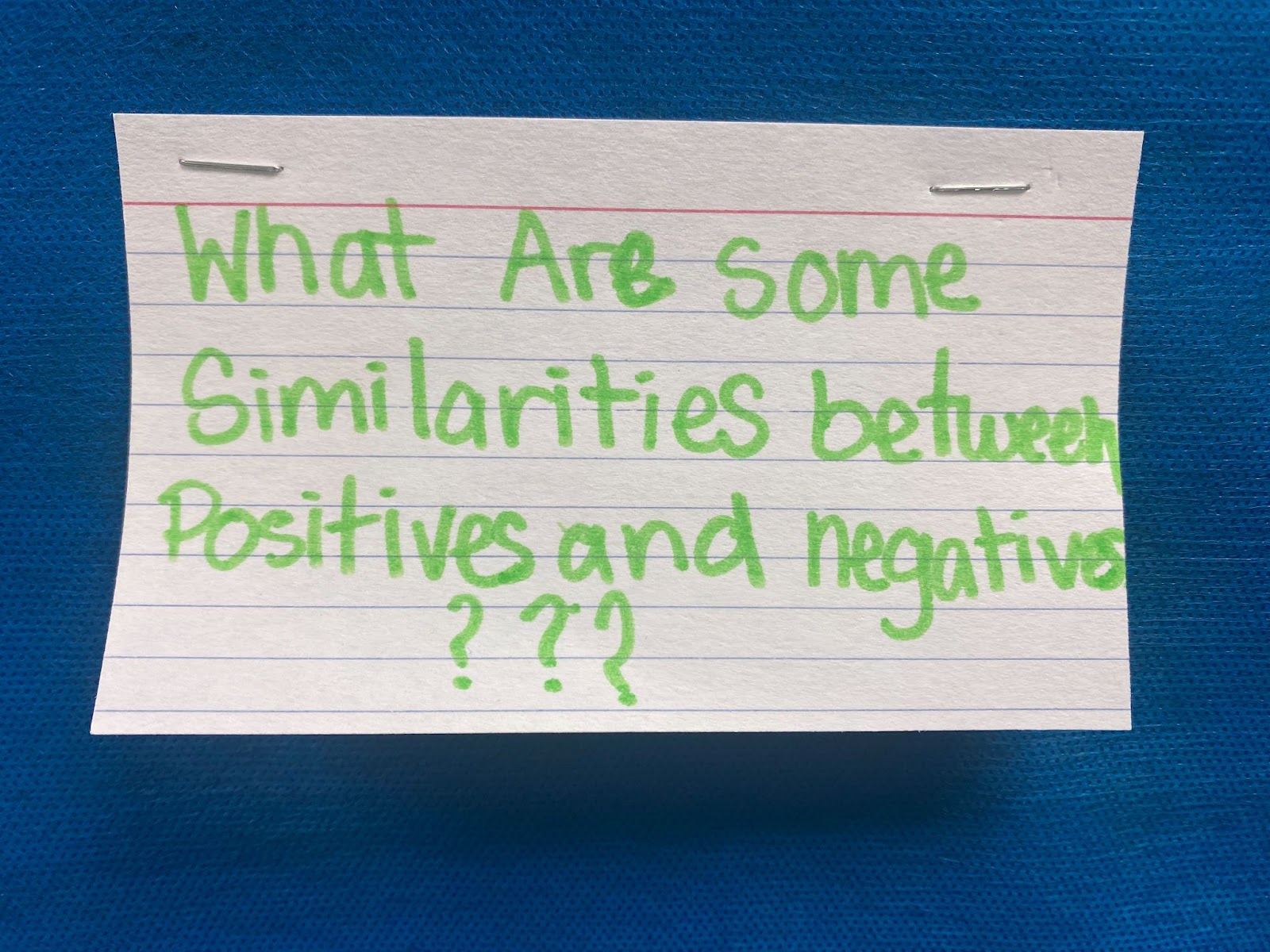
We have a “wonder wall” where students can post points they are pondering. Students have the opportunity to respond to one another in writing but typically use the posts as points for conversation with one another. Sometimes the questions are related to a topic we are learning, and other times the questions tell me about their mindset. Providing space to honor students’ contributions is a way to further build our community.
Each year, my classroom looks different because it is a reflection of the community of students. I am grateful all those years ago that a last-minute teaching job provided me the opportunity to discover how empowering a blank wall can be in developing students’ voices.
