
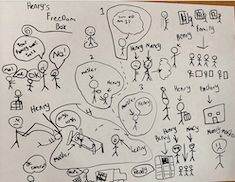

Drawing is putting a line [a]round an idea.
~ Henri Matisse
“Can we sketchnote?” Ella asks as I am about to start a read aloud during library class.
“Of course” is always my reply. “You know where the supplies are—grab what you need.” Ella heads to grab the paper and the caddie filled with colorful pencils, gel pens, and felt markers.
“Grab me some paper, too, Ella,” urges Jack, followed by a chorus of “Me toos” from the table.
This is a familiar scene in our library ever since I introduced the students in grades 2–5 to sketchnoting during read alouds.
I have to admit that I used to be strictly opposed to “drawing” during read aloud time. I believed that it was not possible for students to draw or doodle and maintain attention. I worried that they would draw inappropriate images or get other students off track with their drawings. I am not proud that I rarely let students doodle during read aloud when I was a classroom teacher, and I was hesitant to let them do so in the library.
I feel fortunate to be able to read aloud to children every day in my role as a librarian. It is a joyful and rewarding experience for the students and me, plus the learning benefits are too many to be listed. The vast majority of kids enjoy hearing a read aloud. They sit on the edge of their seats as they listen, eager to hear how the story unfolds. But in recent years I have begun to notice that many students in upper elementary grades struggle to attend even during a short read aloud. So when I noticed the students in grades 2–5 were starting to wiggle in their seats, trying to catch the eye of their friend across the room, fiddling with pencils, grabbing for the felt pens and writing on any surface available (even themselves) during read alouds, I knew it was time to reexamine my beliefs.
Drawing is something I rarely do. I find it difficult, and I don’t enjoy it. I was always the student who had terrible handwriting and the student who was asked to redo assignments because they were too messy. But I do sometimes find myself doodling shapes and patterns while I am on the phone or in a long meeting. It’s fun and doesn’t seem to impact my ability to pay attention. Although I was hesitant, I decided that perhaps my students would be able to doodle and pay attention after all.
After doing some reading, I learned that the benefits of sketchnoting are many:
- Increases retention of material
- Helps synthesize content
- Incorporates creativity
- Aids in attention
- FUN!
I had heard of sketchnoting, of course, and I have several friends who have the incredible ability to create gorgeous sketchnotes during conferences or PD sessions. I envy how they can listen and take beautiful notes that crystalize and synthesize the important takeaways from the PD. Although it is not a gift I possess yet, I decided to introduce basic sketchnoting to my students.
Before our next read aloud I introduced the concept of sketchnoting as a way to keep track of the important points of the story or topic and of character emotions (or their own), and a way to document what they would like to remember. I modeled some possible ways to create sketchnotes elements such as banners, frames/containers, arrows, drawings, and speech/thought bubbles.
What to Note
We brainstormed the kinds of things, aside from drawings, that the students might include in the sketchnotes and came up with this evolving list.
| Fiction | Nonfiction |
|
|
Structure
I created a rudimentary cheat sheet of some possibilities that students could include while sketchnoting, and we did some practice using some of the elements we had discussed before sketchnoting during a read aloud.
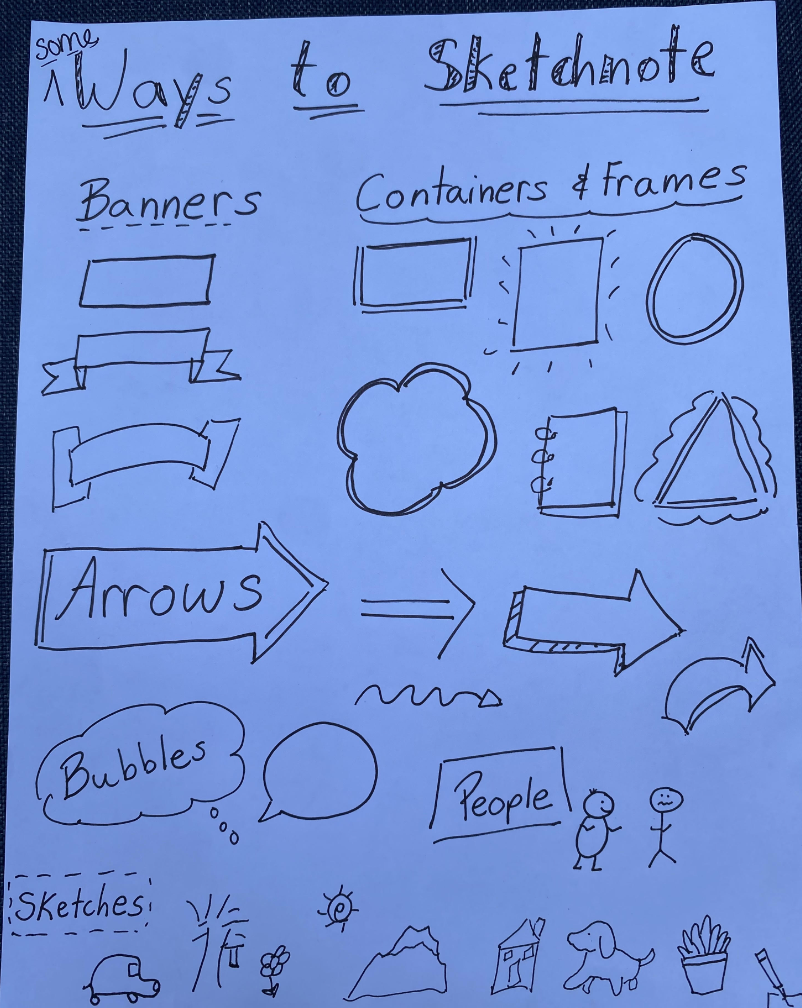
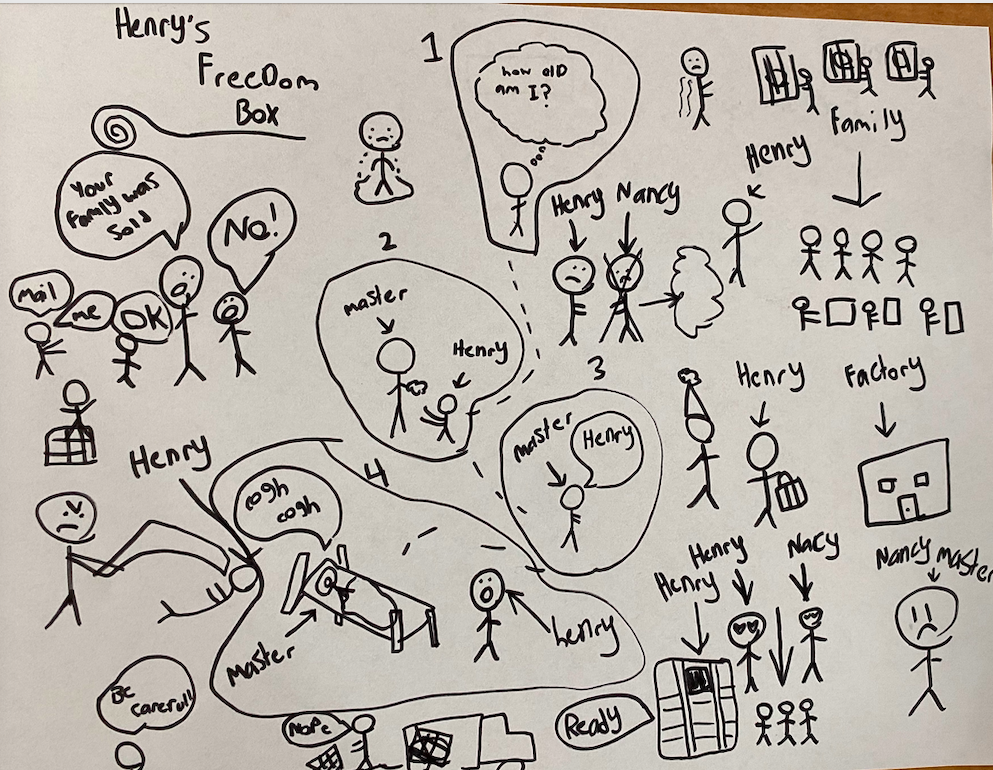
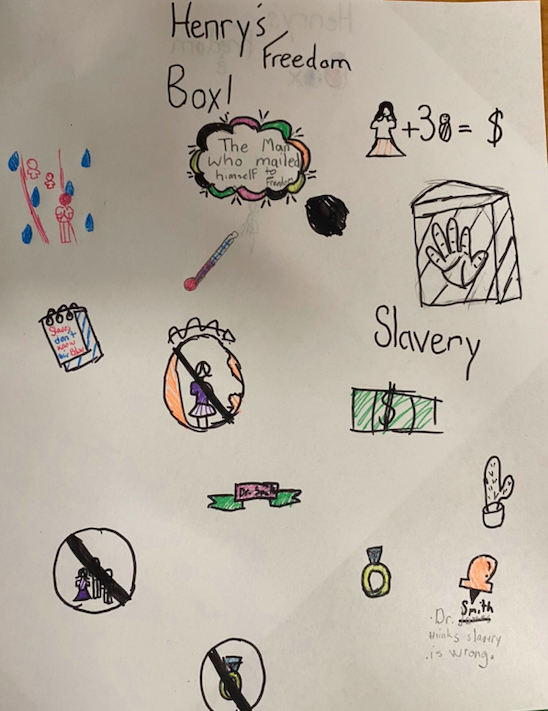
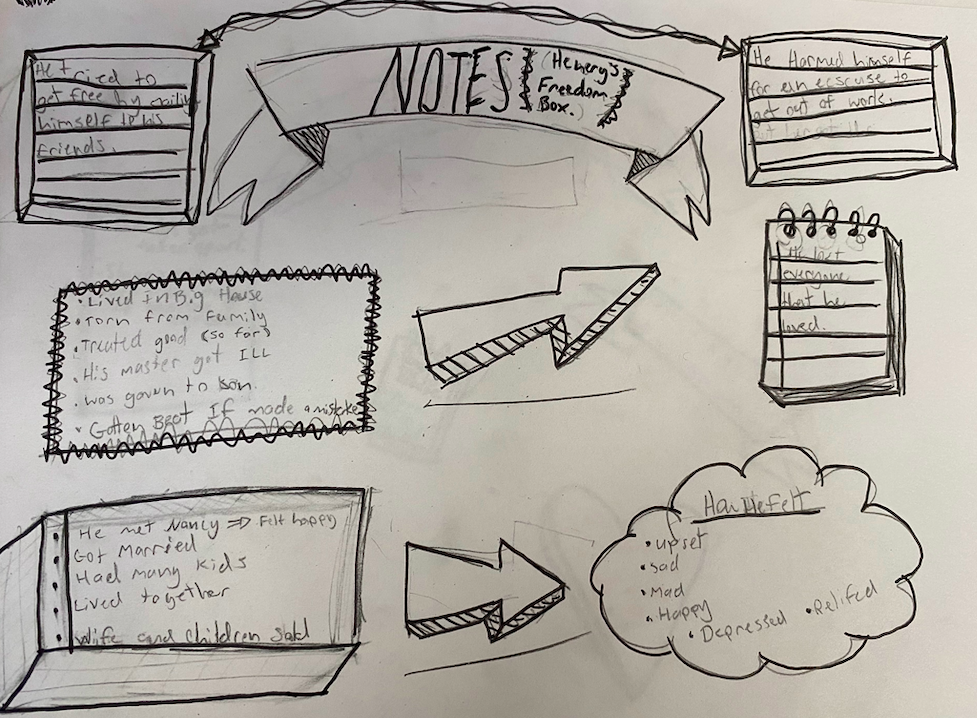
Then we launched our sketchnoting during a read aloud of Henry’s Freedom Box by Ellen Levine. I gave students a piece of blank white paper and provided them with tools such as pencils, gel pens, colored pencils, and felt markers. The increased engagement was immediately noticeable. While I read, the students were drawing, writing, coloring, and doodling. Heads were bent over their papers between pauses to look at the book’s illustrations.
But in addition to creating, they were listening and thinking! I was blown away by their sketchnotes. By the end of the story, every student had created some form of notes on their papers. I could tell by just glancing that all students’ notes were directly related to the read aloud and far surpassed my expectations.
Sharing
Because this was a new activity for us, we took some time to share our notes with table-mates if they wanted to and to debrief how the process felt to them. This sharing served as a way for students to verbalize their thinking process, celebrate their new skill, and give possible ideas to others. I listened in while they shared the thinking behind their notes.
“I wrote what was happening to Henry in boxes and then wrote about how I imagined he must have felt in a cloud connected by the arrow.”
“I kept track of the events using stick people and facial expressions.”
“I wrote down questions I had about his experience in the box.”
It became clear to me that introducing them to sketchnoting and giving them the freedom to create notes that made sense to them during read alouds did not impede their ability to listen as I had feared, but had quite the opposite effect. Sketchnoting allowed students to listen and more fully participate in the read aloud.
I’m sold! Moving forward I will absolutely continue to give students the option of sketchnoting in the library. I think I will have them collect their sketchnotes in a folder or bind them together as a celebration of their work throughout the year.
Here are some resources if you would like to read more about sketchnoting with students.
- ISTE: Sketchnoting Brings Power of Brain Research to the Classroom
- Edutopia: How—and Why—to Introduce Visual Note-Taking to Your Students
- Education Week: The Benefits of Using Doodling and Sketchnotes in the Classroom
