

The word just has really begun to get on my nerves.
When an administrator asks about scheduling a walk-through and asks, “Will you just be reading at the beginning of the period? Should I stop in later?”
When a student asks if we’ll “just be reading” in class.
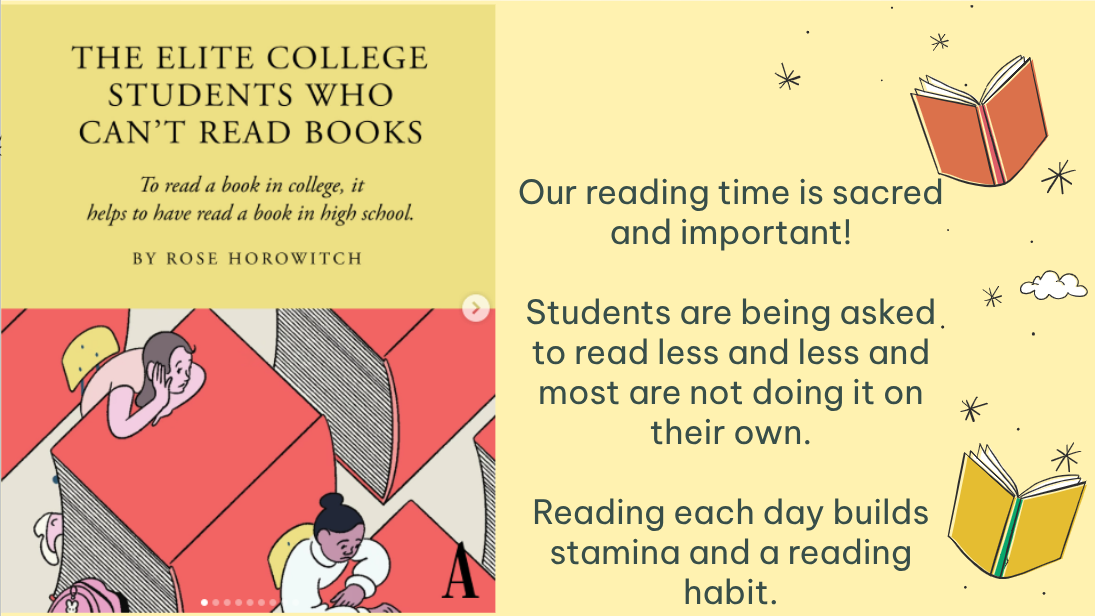
While I’m sure that these comments were made with no ill intent, the word just grates because it minimizes the importance of giving students time to read in class. In the two decades I’ve been in the classroom, I have seen the power of independent reading over and over again, and I know that it is a valuable use of my classroom time. Just because we are still and silent while we do it does not mean that there is not a wealth of things going on in our brains and our bodies. And if students find pleasure and enjoyment in their reading, it does not mean that it’s not “work.” In fact, that’s the point!
However, in online teacher groups and communities that I’m a part of, I consistently see people seeking advice for how to make the case for independent and silent reading in their classrooms, especially to administrators. I understand, because I also get that niggling feeling that I need to put on an elaborate song and dance when an administrator comes into the room, and a room full of silently reading people doesn’t seem that exciting on the surface.
I’ve always tried to be transparent with students and parents about my choices in the classroom. When I changed my late-work policy, I explained the circumstances that changed my thinking and how I weighed different options. When I shifted to a new way of approaching vocabulary, I shared the research that informed my decisions with parents and students. Somehow, despite being passionately committed to independent reading in my classroom, I had forgotten to make the case for it.
At the beginning of last school year, I decided to change that. For the first entry in our notebooks, I asked students to reflect on what they thought the benefits of reading were.
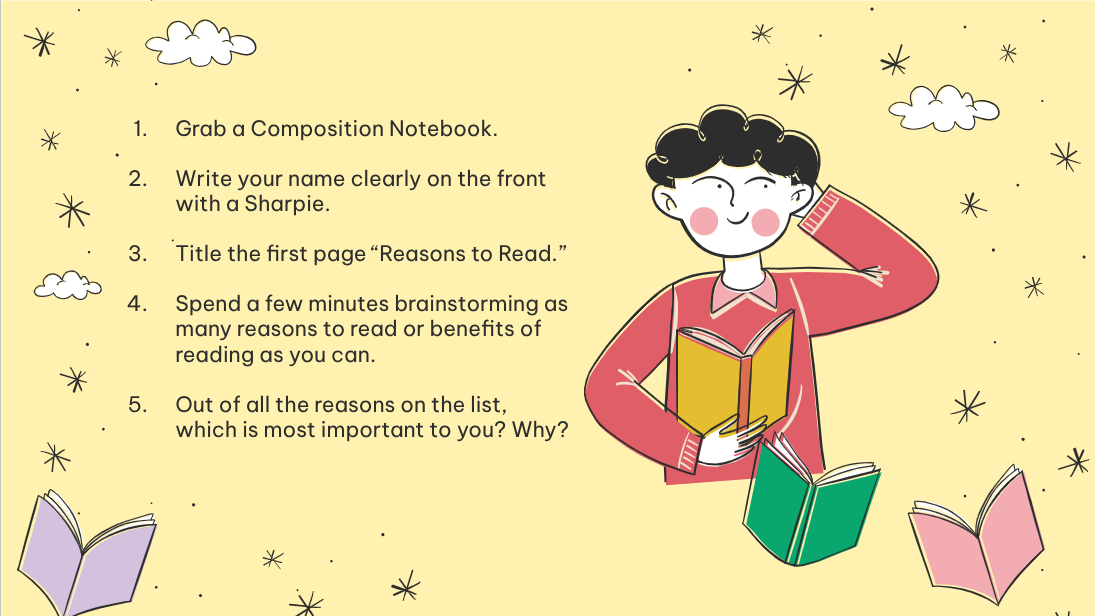
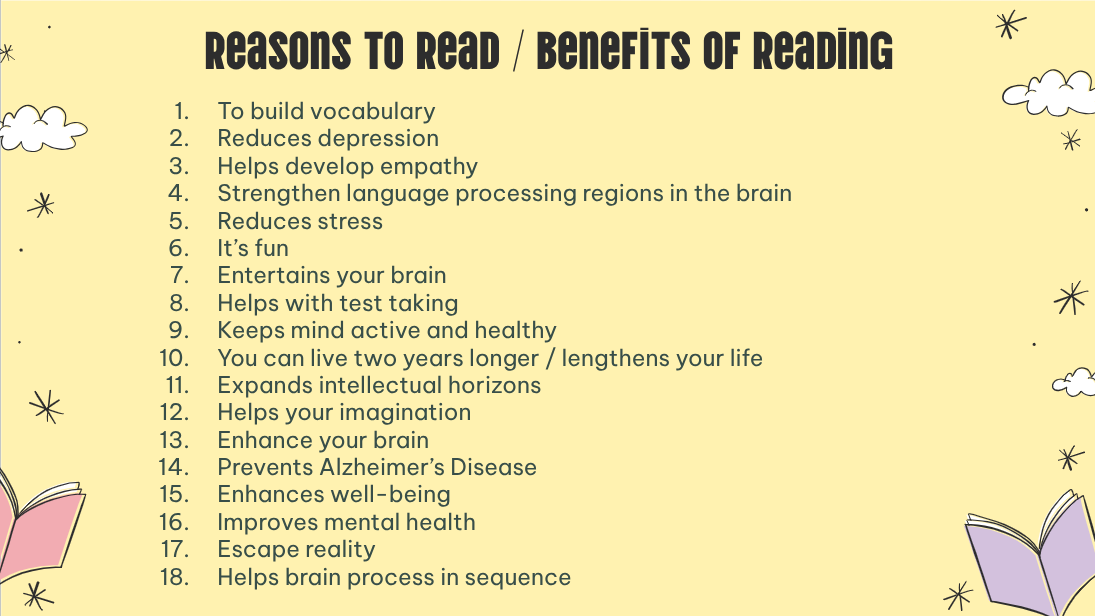
After they made their lists, I had them make their way around the room, sharing with their peers, and seeing how many more items they could add. Next, I gathered several articles that discussed different benefits of reading that students used to add to their growing lists. Here is our master class list:
To help students gain a more personal investment in their reading, I asked them to reflect in their notebooks on which reasons were most important to them and why.
I also shared some of my own reasons for making the time for reading in our classroom. While we are absorbing a good story, we are also adding to our vocabulary, learning about writing, empathizing with characters, and analyzing their decisions. Reading is the perfect complement to all of the skills in English language arts. Time and time again students reemerge as readers in my classroom simply because I give them time to read and access to books. I wouldn’t devote 10 of our precious 42 minutes of class to reading if it wasn’t providing a lot of bang for my buck!
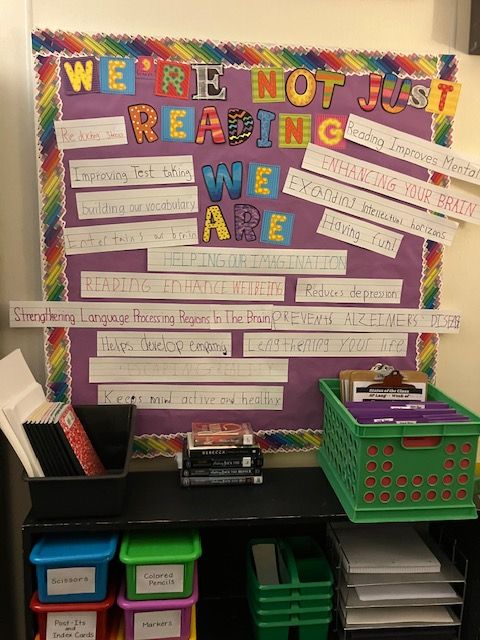
After this reflection, I got out some sentence strips and had students add their favorite “reading reason” to a bulletin board at the front of the classroom that proclaimed “We’re not just reading. We are…” I kept the bulletin board up all year long, so my students, my administrators, and I wouldn’t fall victim to thinking that we were ever just reading.